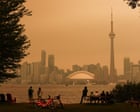
We have institutionalized indoor claustrophobia. Every time a forest fire coughs up a plume of gray haze across the continent, media outlets lose their minds, politicians dust off emergency mandates, and millions of otherwise rational adults lock themselves inside airtight boxes like medieval peasants bracing for the plague.
The standard narrative tells you that a single breath of wildfire smoke is a one-way ticket to an oxygen tent. It treats every particulate matter reading as an execution order.
That framing is pure, unadulterated nonsense.
I have spent two decades managing crisis communications and public health response metrics during major climate events. I have watched institutions blow millions of dollars on panic-driven messaging that achieves exactly one thing: terrorizing populations into complete behavioral paralysis while ignoring the actual physiological realities of acute air pollution exposure.
It is time to dismantle the hysterical consensus surrounding wildfire smoke and look at what the data actually tells us.
The Particulate Panic Industry
Let us clear up a foundational misunderstanding right away. PM2.5 is the boogeyman everyone loves to cite. These are microscopic particles measuring 2.5 micrometers or smaller. The standard line is that because they bypass your nose's natural filtration and lodge deep in your alveoli, every microgram per cubic meter is inherently catastrophic.
That is a child's understanding of toxicology. Dose dictates poison.
When researchers study chronic air pollution in urban environments, they are looking at a toxic chemical soup: diesel exhaust, heavy metal particulates, sulfur dioxide, and industrial benzene baked together over decades. That is chronic exposure. That destroys endothelial function and accelerates cardiovascular disease over a twenty-year horizon.
Wildfire smoke is fundamentally different. It is organic biomass. It is burning trees, cellulose, lignin, and chaparral. It is messy, pungent, and visually offensive, but treating a three-day smoke event from a boreal forest fire the same way you treat continuous coal-plant emissions in an industrial valley is scientific malpractice.
The human body is an evolutionary marvel designed to withstand periodic exposure to particulate anomalies. Our ancestors lived through millennia of campfires, hearth cooking, and regional fire seasons without dropping dead of myocardial infarctions en masse every autumn.
Yet today, we are told that opening a window for ten minutes during a smoke advisory is a reckless gamble with mortality.
The Hypocrisy of the Sealed Box Solution
The prescribed antidote to smoke is always the same: stay inside, crank the HVAC, seal your windows, and run a high-end HEPA filter on maximum.
Nobody talks about the biological cost of that recommendation.
Indoor air quality in a tightly sealed modern building is often significantly worse than the outdoor air you are hiding from. You trap volatile organic compounds from furniture, cleaning agents, cooking residues, off-gassing carpets, and carbon dioxide exhaled by every human in the room. When you lock down a home for two weeks straight to block out haze, you trade a transient outdoor particulate spike for a concentrated indoor chemical stew.
I have seen families spend small fortunes on commercial-grade air purifiers for every room, taping up window frames like disaster preppers, while their children develop chronic lethargy, headaches, and respiratory hypersensitivity directly caused by weeks of zero fresh air circulation and chemical accumulation indoors.
The cure is frequently more toxic than the disease.
Who is Actually at Risk
Let us be brutally honest about vulnerability, because public health messaging refuses to differentiate between demographics.
If you are an eighty-two-year-old with advanced chronic obstructive pulmonary disease and congestive heart failure, wildfire smoke is a genuine trigger. You need to manage your environment carefully.
If you are a healthy thirty-five-year-old accountant with no underlying pathology, staying glued to your couch with the blinds drawn because the Air Quality Index hit 165 is pathetic. You are trading physiological resilience for neurotic comfort.
We have flattened public health advice into a single, lowest-common-denominator warning label designed to protect institutions from liability rather than humans from harm. When warnings treat everyone as chronically fragile, people eventually stop listening to warnings altogether. That is how real safety protocols die—not from skepticism, but from institutional crying wolf.
The Mechanics of True Mitigation
If you want to survive a wildfire season with your sanity and your immune system intact, stop following the panic playbook. Apply actual risk management.
- Measure context, not just numbers: An AQI of 180 driven by a fast-moving grass fire that will clear out in twenty-four hours requires a completely different response than a month-long thermal inversion trapping stagnant industrial smog. Duration matters more than a single daily peak.
- Prioritize ventilation intervals: Do not seal your house into a tomb for weeks. Monitor wind shifts. When the plume lifts or shifts direction for a few hours, purge your indoor air completely. Flush out the CO2 and the indoor off-gassing.
- Train your respiratory defenses: The human airway adapts. Absolute avoidance of any environmental stressor leads to mucosal atrophy. When you finally do step outside, your system overreacts because it has been living in a sterile, pressurized terrarium.
- Stop confusing discomfort with damage: Your eyes stinging or a scratchy throat is an acute sensory annoyance, not systemic organ failure. Humans are allowed to experience physical discomfort without panicking that an ambulance needs to be called.
The Cost of Cowardice
The obsession with absolute zero-risk environments is destroying our physical and psychological adaptability. We are breeding a generation of indoor invalids who panic at the sight of a hazy horizon while ignoring the slow-motion decay of their own metabolic health sitting stationary on a couch.
The smoke clears. The trees grow back. The ecosystem resets itself through fire, as it has done for millions of years.
It is time we learned to do the same. Turn off the weather app alerts, open the window when the wind turns, and stop letting a cloud of campfire ash dictate how you live your life.