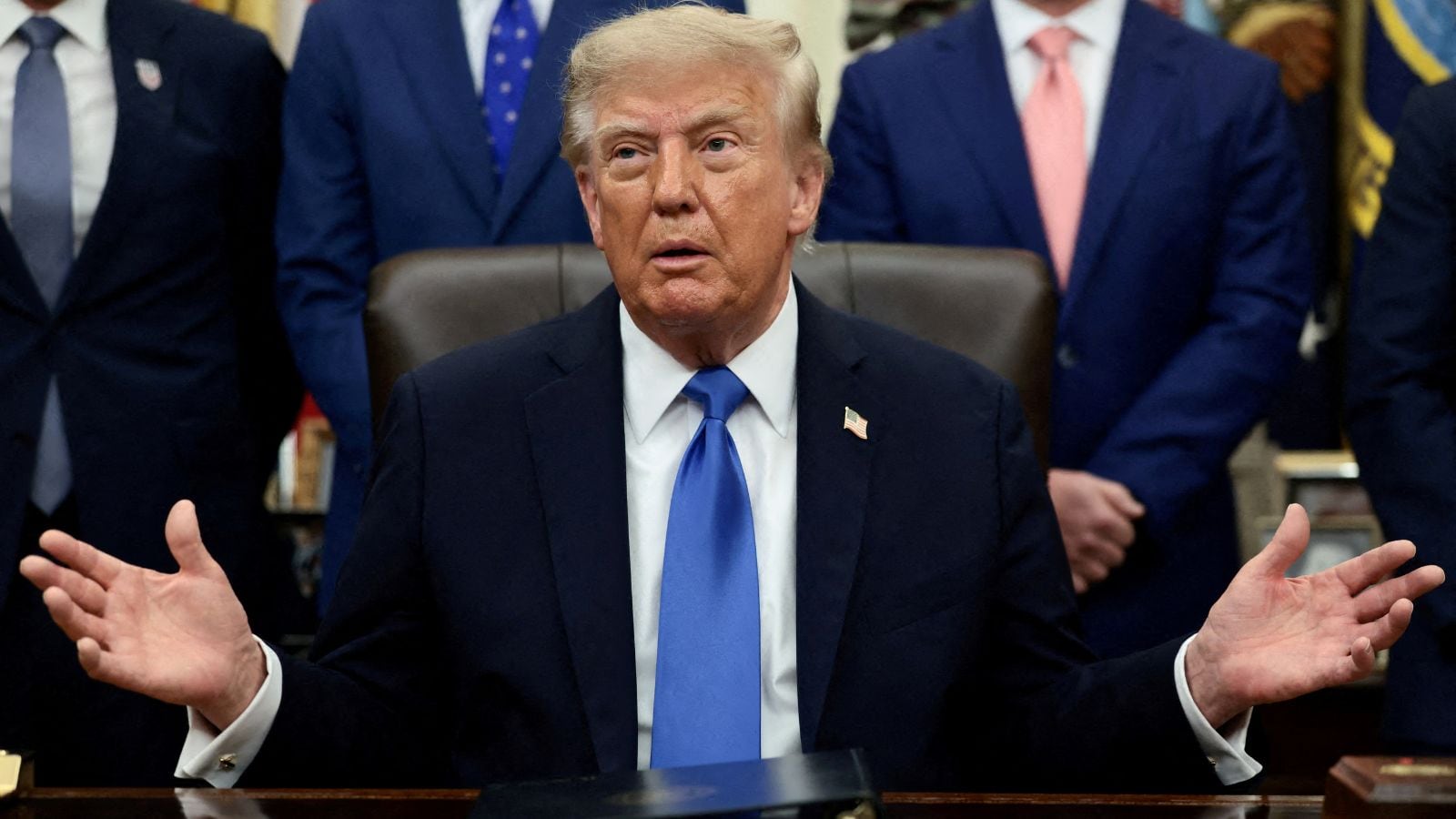
When the executive branch of the United States government decides which independent newsrooms are allowed to occupy physical workspace on federal property, the traditional mechanics of American political journalism break down entirely. CNN, MS Now, and Politico recently filed a federal lawsuit against the Trump administration following an unprecedented administrative decision to strip their reporters of White House hard passes and bar them from the grounds. This conflict is not merely a procedural dispute over badge access or a petty squabble between reporters and a hostile administration. It represents a fundamental restructuring of how power interacts with scrutiny, testing the absolute limits of First Amendment protections in an era where institutional guardrails are treated as negotiable nuisances.
For decades, the physical architecture of the White House press corps has operated on a foundational, if fragile, social contract. Credentialing decisions were historically managed through administrative channels, anchored by the press galleries themselves, insulating day-to-day access from the immediate political whims of whoever happened to occupy the Oval Office. While tensions between presidents and reporters are as old as the republic itself—ranging from Richard Nixon’s overt hostility to the quiet blacklisting tactics of various twentieth-century administrations—direct, wholesale revocation of physical access based explicitly on editorial content crosses a constitutional Rubicon. The administration made little effort to mask its motivations, openly stating that the targeted outlets produced coverage it deemed unacceptable.
This explicit admission forms the core of the legal vulnerability facing the White House. Under the enduring precedent established during past legal battles over press credentials, most notably the 2018 litigation involving CNN correspondent Jim Acosta, federal courts have repeatedly affirmed that while the executive branch possesses broad discretionary authority over national security and spatial capacity, it cannot constitutionally revoke press access purely as a viewpoint-based penalty. The First Amendment prohibits the government from utilizing public property and state power to punish specific speakers because officials dislike the substance of their reporting.
Yet focusing solely on the courtroom drama misses the structural decay happening in real time outside the gates. The immediate aftermath of the ban revealed a profound fracture within the broader media ecosystem. In an extraordinary display of solidarity, major television networks belonging to the rotating White House press pool temporarily suspended their joint coverage operations when CNN was blocked from traveling to cover presidential engagements. For a brief window, the traditional machinery of presidential travel reporting ground toward a halt, demonstrating that the logistical apparatus of modern governance relies heavily on cooperative, pooled resources.
However, solidarity in the American press corps has historically been fragile, frayed by intense corporate competition and shifting audience fragmentation. The modern information landscape is radically different from the one that confronted past administrations. Digital-native outlets, partisan media ecosystems, and legacy institutions operate under entirely different economic models and incentives. When a segment of the press corps is excised from the building, competing outlets are presented with a perverse commercial incentive: a sudden, unearned monopoly on physical proximity to power. While institutional bodies issue stern condemnations and file emergency injunctions, the underlying economic reality encourages baseline normalization of exclusion.
The legal battle playing out before federal judges in Washington, D.C. involves complex questions of administrative law and executive privilege. The administration has increasingly leaned on sweeping interpretations of national security and executive discretion to justify actions that previously would have triggered universal institutional panic. When federal courts grant temporary restraining orders and preliminary injunctions to restore credentials, they provide a vital procedural check, but they do not solve the underlying political reality. A court order can force the Secret Service to hand back a hard pass, but it cannot compel a hostile administration to answer questions in good faith, nor can it restore a shattered institutional norms environment.
Consider a hypothetical parallel: if a municipal government began revoking zoning permits exclusively for local newspapers that published critical editorials about city council corruption, the constitutional violation would be treated as an immediate existential threat to local democracy. Yet at the federal level, the sheer scale of the executive branch allows it to absorb legal setbacks as routine administrative friction while continuing to alter the practical daily conditions of reporting. The White House press briefing room is not merely a workspace; it is a symbol of public accountability. When access to that space becomes contingent on executive approval of editorial tone, the room ceases to be a forum for accountability and transforms into a stage for managed presentation.
The ultimate fallout of this litigation will extend far beyond the specific legal fate of CNN, MS Now, and Politico. It establishes a dangerous blueprint for future administrations of any political alignment. If an executive can successfully utilize credential revocation as a blunt instrument to discipline independent reporting—even if temporarily slowed by federal judges—the cost of aggressive investigative journalism rises steeply. News organizations facing immense financial pressures must calculate whether aggressive scrutiny is worth the existential risk of being locked entirely out of the primary source of national political news.
As the case winds its way through the appeals process, the physical reality on Pennsylvania Avenue remains altered. Reporters from banned outlets work from sidewalk positions and temporary setups, while inside the complex, the daily ritual of governance continues behind a narrower, more curated lens. The lawsuit will test whether constitutional text written in the eighteenth century retains the muscle to bind an executive determined to bypass the inconvenience of a free and independent press.