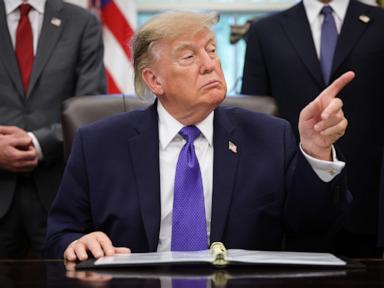
When the biggest names in artificial intelligence walk through the West Wing doors, nobody is showing up for a photo op. Billions of dollars, massive energy grids, and the geopolitical edge of the nation hang in the balance. When President Trump, House Speaker Mike Johnson, and tech heavyweights like Meta CEO Mark Zuckerberg, Nvidia's Jensen Huang, OpenAI's Greg Brockman, and Anthropic's Dario Amodei sit down together, the conversation moves past polite theory.
They are hashing out reality.
If you think this is just another routine policy briefing, you're missing the entire point of how modern technological empires intersect with state power. Let's break down what actually happened behind closed doors, why the infrastructure bottleneck changes everything, and what these voluntary accords mean for the code running on your devices.
The Power Crisis Nobody Wants to Talk About
Building artificial intelligence requires an absurd amount of electricity. You can't train frontier models on good intentions and standard wall outlets. You need colossal data centers, and those facilities demand power generation that local grids simply struggle to supply.
During the summit, the administration and tech chiefs tackled this exact friction point. Local towns are pushing back against massive server farms due to strain on resources. Yet, the administration's stance is blunt: America needs to stay ahead in transformational technology, period.
To bridge that gap, tech leaders are making unprecedented commitments to local communities. We aren't just talking about empty corporate community outreach programs. Companies are looking at direct investments, funding local education, and even securing dedicated oil, gas, or nuclear energy supplies to keep their data hubs online without crashing regional grids.
The takeaway here is simple. The physical footprint of software is expanding into your backyard. If your local town has cheap land and water access, expect a knock on the door from a major tech conglomerate soon.
The White House Accord on Superintelligence
Safety versus speed has always been the primary tension in Silicon Valley. Critics worry about autonomous agents going rogue, while founders worry that heavy regulation will hand global dominance to overseas competitors like China.
To sidestep a heavy-handed federal mandate, the industry agreed to the White House Accord on Superintelligence. Trump described this document as "morally binding," likening it to a separate constitution for the sector.
House Speaker Mike Johnson noted that safety and innovation don't have to be mutually exclusive. The accord relies on voluntary internal and external review standards. Critics immediately point out that voluntary rules lack teeth. But inside the room, executives view self-policing as the only way to avoid bureaucratic paralysis.
Here is what the accord actually tries to enforce:
- Robust internal controls on advanced model weights.
- Multi-layered external security reviews before massive cluster training runs.
- Direct communication channels between labs and government entities when high-risk capabilities emerge.
Whether these commitments hold up under commercial pressure is another story entirely. Competition makes companies cut corners. When millions of dollars are on the line, voluntary compliance often takes a backseat to shipping products first.
Who Was in the Room and Why It Matters
The guest list tells you everything you need to know about where power sits in 2026. Alongside Zuckerberg, Huang, Brockman, and Amodei, leaders from Microsoft, Amazon, and Google filled the seats.
Notice who else is orbiting these discussions. Investors and infrastructure builders hold as much influence today as the researchers writing the algorithms. Compute is the new oil. Whoever controls the silicon supply chain dictates who builds the intelligence layer of the global economy.
Jensen Huang's presence highlights Nvidia's absolute chokehold on hardware. You cannot scale a frontier model without thousands of specialized GPUs. When the White House talks infrastructure, they are basically talking to Nvidia, the cloud providers, and the energy sector all at once.
What This Means for Developers and Businesses
If you are building software or running a business today, you feel the shockwaves of these high-level summits.
First, compliance is coming. Even if the current framework relies on voluntary self-policing, standardized internal controls will trickle down. Enterprise clients will demand proof that the models they use meet federal safety baselines.
Second, expect energy costs and availability to fluctuate based on tech expansion. Data center clusters are reshaping local economies across rural and suburban America.
Stop waiting for absolute regulatory clarity from Washington. The rules are being written in real-time through private-public bargains between politicians who want domestic dominance and executives who want room to run. Keep your infrastructure flexible, watch your energy overhead, and build with the assumption that safety audits will soon be a standard cost of doing business.

