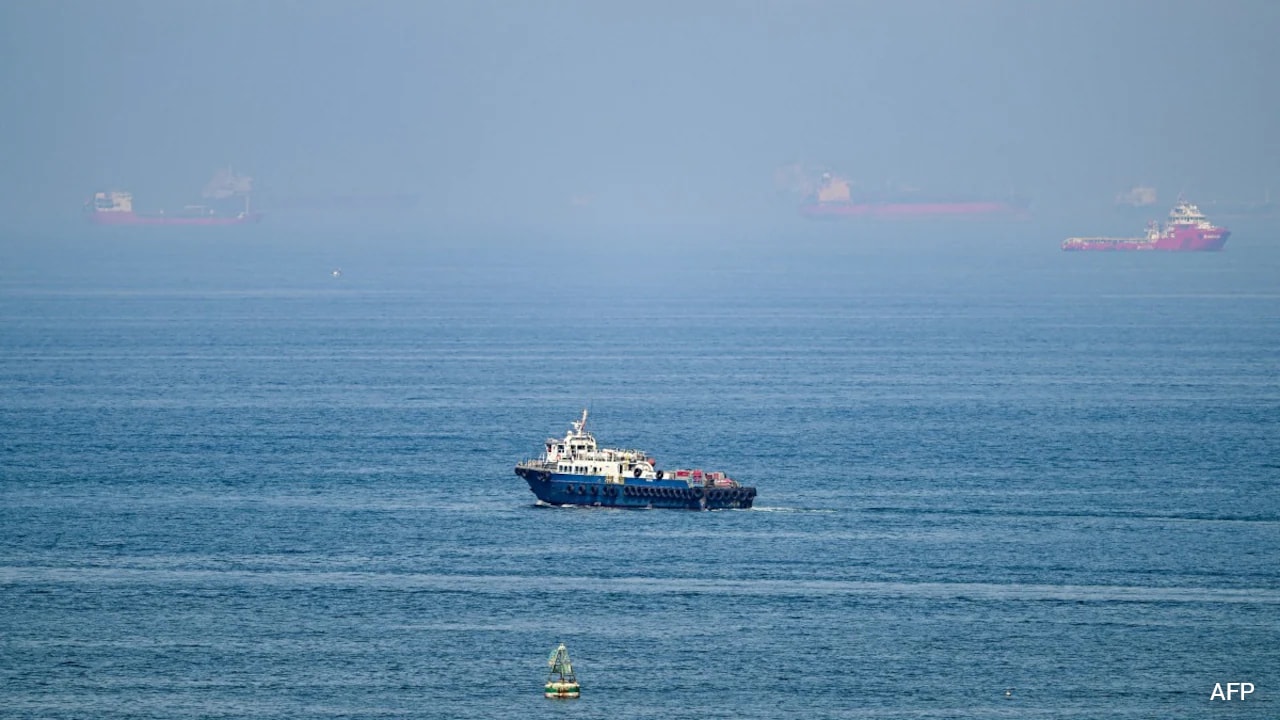
The radar screen does not care about diplomacy. On the bridge of a commercial oil tanker cutting through the Strait of Hormuz, the screen merely blips—green, steady, rhythmic. To the third mate watching it at three o'clock in the morning, each blip represents millions of dollars of crude oil, a crew of twenty-four sleeping men, and a thin steel hull separating everything they love from a dark, unpredictable sea.
If that radar screen goes dark, or if a sudden flash illuminates the horizon, the shockwaves do not stop at the coastlines of Oman or Iran. They vibrate through the stock tickers in New York, the gas pumps in Berlin, and the air-conditioned boardrooms of Abu Dhabi.
This narrow chink of water, just twenty-one miles wide at its tightest choke point, carries roughly a fifth of the world’s petroleum consumption daily. It is the jugular vein of global energy. For decades, the relationship between the giants flanking this waterway has been defined by a tense, icy silence.
Then, the phone rang.
The Unexpected Dial Tone
It was an unusual Sunday afternoon when Sheikh Abdullah bin Zayed Al Nahyan, the Foreign Minister of the United Arab Emirates, reached across a deep geopolitical chasm to speak directly with his Iranian counterpart, Ali Bagheri Kani.
Diplomacy in the Middle East usually moves like molasses—heavy, deliberate, and fiercely guarded behind layers of bureaucratic protocol. Bureaucrats prefer the safety of official statements drafted by committees. Direct phone calls between Abu Dhabi and Tehran, especially during times of regional friction, are rare beasts.
To understand why this call happened, look away from the map of the Gulf and look toward the recent, fragile ceasefires holding the wider region together. After months of devastating conflict across Gaza and Lebanon, the silence of falling artillery created an unexpected vacuum. In politics, a vacuum is never left empty. It is either filled by renewed hostility or by sudden, pragmatic conversations.
The UAE chose the conversation.
Consider the sheer vulnerability of a state built on seamless global trade. The Emirates have transformed themselves from a pearl-diving coast into a glittering metropolis of finance, tourism, and logistics. A single stray missile in the Gulf doesn't just threaten a boat; it threatens the very idea of safety that keeps international investors coming to Dubai. Tehran, strangled by years of economic sanctions, watches the same waters with a different kind of desperation. For Iran, control over Hormuz is its greatest leverage, a chokehold it can tighten whenever the pressure from the West becomes unbearable.
When these two worlds collide, or even gently brush against each other over a satellite phone line, the world needs to listen.
The Geometry of Tension
Imagine standing on a rooftop in the Omani enclave of Musandam, looking out over the strait. On a clear day, you can almost see the Iranian coast. The water looks peaceful, a deep, shimmering turquoise.
But beneath that beauty lies a complex chess board. The shipping lanes are remarkably narrow. Inbound traffic uses a two-mile-wide lane; outbound traffic uses another two-mile lane. Separating them is a mere two-mile buffer zone. If a tanker loses steering, or if a naval patrol boat miscalculates a turn, the margin for error is non-existent.
During the call, the official state media outlets reported the standard pleasantries. They spoke of "bilateral relations" and "ways to enhance security." But the real problem lies elsewhere, far beneath the starched language of diplomatic readouts.
The UAE is playing a delicate double game, and it is a masterclass in survival. On one hand, Abu Dhabi remains a close ally of the United States, hosting American troops and purchasing advanced Western defense systems. It signed the Abraham Accords, normalizing relations with Israel and rewriting the diplomatic rules of the region. On the other hand, the Emiratis know they cannot change their geography. Iran will always be their neighbor across the water.
When the US adopted a policy of maximum pressure against Iran in recent years, it was the Gulf states that felt the immediate blowback. Limpet mines clung to tankers. Drones swarmed Saudi oil facilities. The message from Tehran was clear: If we cannot export our oil safely, no one will.
The recent phone call was a direct acknowledgment of this reality. The UAE is not waiting for Washington to guarantee its safety. It is taking its security into its own hands, one awkward, high-stakes conversation at a time.
The Human Cost of High-Stakes Friction
We often talk about nations as if they are monolithic blocks of stone moving across a map. We say "Iran did this" or "The UAE decided that."
But nations are made of people.
Think of a hypothetical merchant sailor named Rajesh. He is from Kochi, India, working a contract on a Panamanian-flagged vessel. He hasn't seen his daughter in eight months. His salary sends her to school. When he sails through the Strait of Hormuz, he isn't thinking about the grand strategy of the Islamic Revolutionary Guard Corps or the economic vision of the Emirati leadership. He is looking at the horizon, wondering if the fast-moving speedboat approaching his ship carries pirates, coast guards, or something far worse.
In 2019, when multiple tankers were attacked in these very waters, the insurance premiums for maritime transit skyrocketed overnight. That isn't just a corporate statistic. It means smaller shipping companies went under. It means grocery prices rose in developing nations reliant on imported goods. It means men like Rajesh stood on the decks of their ships with life jackets tightly fastened, staring into the dark, wondering if today was the day their luck ran out.
The dialogue between the UAE and Iran is an attempt to lower the temperature for everyone on that water. It is a recognition that while ideological differences between a conservative Islamic republic and a forward-looking capitalist monarchy are deep, their mutual economic destruction is a shared guarantee if things go wrong.
The Ghost at the Table
You cannot talk about UAE-Iran relations without addressing the elephant in the room: the three disputed islands of Abu Musa, the Greater Tunb, and the Lesser Tunb.
Located near the deep-water shipping lanes of the strait, these tiny patches of rock have been a source of bitter contention since British forces withdrew from the Gulf in 1971. Iran seized them then, and has held them since. The UAE claims them as historical territory. To this day, any official meeting or call between the two nations carries the weight of this unresolved grievance.
Did the islands come up during the rare call? The official statements are quiet on the matter. When the stakes are this high, sometimes you have to set aside historical hurts to deal with immediate fires.
The ceasefire in the Levant provided a fleeting window of stability. With the regional proxy wars temporarily on pause, both nations saw an opportunity to recalibrate. Iran faces immense internal economic pressure and a changing leadership structure. The UAE is pushing ahead with massive economic developments that require absolute regional stability to succeed.
What Happens When the Lines Go Cold
The true test of this diplomatic outreach will not be measured by the pleasantries exchanged during a scheduled call. It will be tested during the next crisis.
In the past, when communication lines were broken, an isolated incident could trigger a cascade of military escalations. A seized vessel led to a retaliatory seizure. A shot fired in panic led to an international incident. By establishing a direct line of communication, Abu Dhabi and Tehran are building a circuit breaker into their relationship.
It is a fragile arrangement. A change in political winds in Washington, a sudden collapse of the regional ceasefires, or an unintended clash between naval vessels could shatter this veneer of cooperation in an instant.
But for now, the phone lines are working.
Back on the bridge of the commercial tanker, the third mate watches the green blip move slowly across the radar screen. The ship glides past the jagged cliffs of Musandam, heading out into the open Arabian Sea. The crew below deck continues to sleep, unaware of the quiet diplomatic dance keeping the waters beneath them still. The line between chaos and commerce in the modern world is impossibly thin, held together not by walls or weapons, but by the fragile sound of a human voice on the other end of a telephone line.