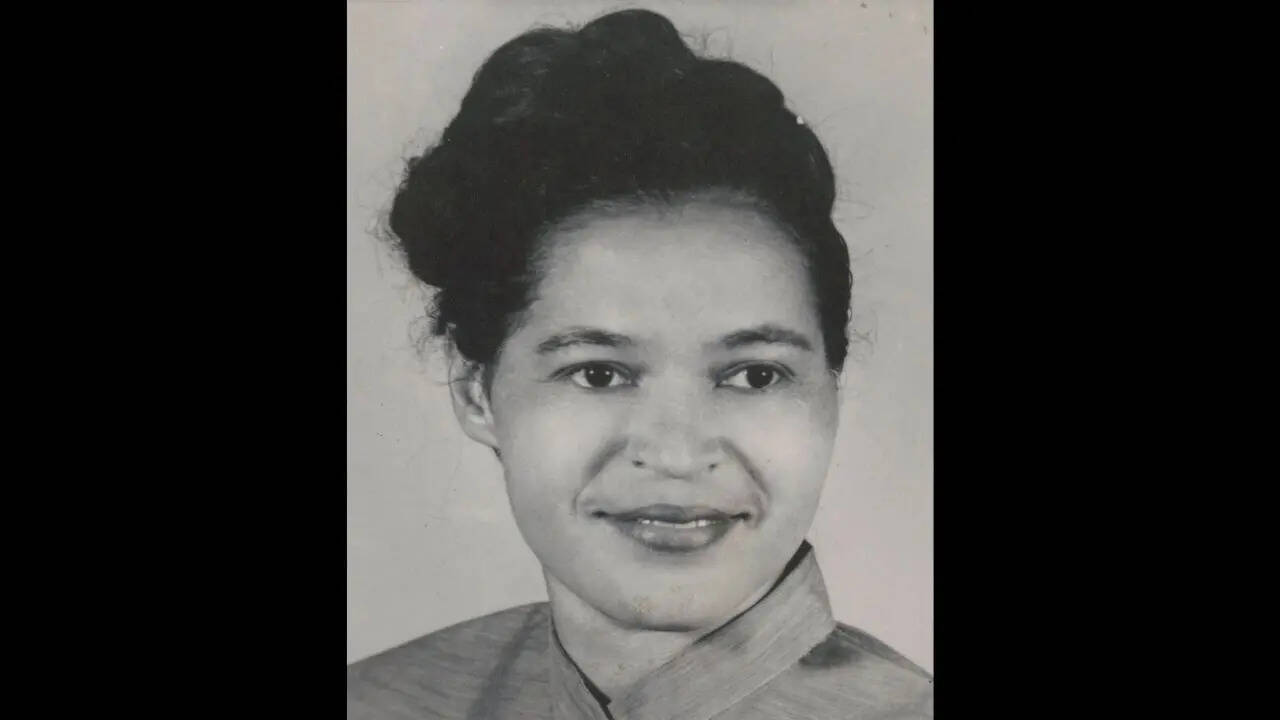
The winter air in Montgomery, Alabama, did not care about the moral arc of the universe. It was December 1, 1955, and the cold was the kind that settled into the joints of a person who had spent the day hunched over a sewing machine. Rosa Parks was forty-two years old. Her shoulders ached. Her feet, encased in sensible shoes that had paced the floor of the Montgomery Fair department store all day, felt heavy.
When she stepped onto the bus driven by James Blake, she was not looking to start a revolution. She was looking for a place to sit down.
We often paint historical figures in the flat, glowing hues of stained glass. We turn them into icons of effortless courage, as if they were born without the capacity for fear. But to understand the true gravity of the words she would later offer the world—that one must never be fearful when doing what is right—we have to look at the grime on the bus floor and the very real threat of the man standing over her.
Fear is a physical presence. It is the tightening of the throat and the quickening of the pulse. In 1955, for a Black woman in the South, fear was a survival mechanism. It was the biological alarm system that kept you alive in a system designed to break you.
The Anatomy of a Refusal
The bus began to fill. This was the tipping point, the moment where the arbitrary lines of a cruel law shifted. The "colored" section was full, and a white passenger was standing. James Blake, a man known for his hostility, called out for the four passengers in the first row of the dark section to stand up.
Three people moved. One did not.
Rosa Parks did not retreat into a fantasy of safety. She knew Blake. She had dealt with his venom before. She was acutely aware of the Montgomery city code and the police officers who would soon be summoned. When she said "No," it wasn't a shout. It was a soft, steady exhaling of a lifetime of indignity.
Consider the mechanics of that moment. If she had been "fearless" in the way we usually define it—as an absence of anxiety—the act would have been less significant. True bravery requires the presence of terror. It is the act of looking at the consequence, weighing it against the principle, and deciding that the principle is the only thing that allows you to live with yourself.
She was tired. Not physically tired, though her back surely throbbed. She was tired of the incremental surrender of her own humanity.
The Invisible Stakes
When we look at her quote today, it appears on inspirational posters and in social media captions. It is treated as a gentle nudge toward self-improvement. But the stakes in that Cleveland Avenue bus were not about "personal growth." They were about the structural integrity of a soul.
If Rosa had stood up, she would have arrived home sooner. She would have had dinner. She would have gone to work the next day. But the cost of that comfort would have been a silent, internal rot. Every time we do what is "wrong" because it is "safe," we shave a sliver off our own identity.
The right thing is rarely the easy thing. In fact, the difficulty is often the diagnostic tool we use to identify what is right. If a choice costs you nothing, it is likely a matter of preference, not a matter of justice.
Society often tells us to wait. We are told to wait for a better political climate, wait for more consensus, or wait until we are in a more secure position. But "right" does not have a calendar. It exists in the immediate present. By the time the police arrived and asked her why she didn't stand up, Rosa Parks had already crossed a threshold. She told them she didn't think she should have to.
She was arrested. She was processed. She was placed in a cell. The fear did not vanish once the handcuffs clicked shut; if anything, it intensified. Yet, she later described a sense of peace that surpassed the terror.
The Myth of the Perfect Moment
There is a common misconception that great movements begin with a grand strategy meetings and polished manifestos. The Montgomery Bus Boycott did eventually have those things, but it started with a single, unscripted decision made by a woman who wanted to go home and eat.
We often hold ourselves back from doing what is right because we feel unready. We think we need more credentials, more allies, or a more dramatic stage. We wait for the "right time" to speak up against an injustice in our workplace, or to stand by a friend who is being marginalized, or to change the course of our own lives.
Rosa Parks reminds us that the "right time" is usually the most inconvenient time possible.
The logic of her quote is a logic of alignment. When your actions align with your internal compass, the friction of fear begins to dissipate. It doesn't disappear, but it loses its power to paralyze. You become a conduit for something larger than your own safety.
The Echo of the Quiet Voice
The aftermath of that "No" was a 381-day boycott that crippled the city’s transit system and changed the legal fabric of the United States. It was a long, grueling stretch of walking in the rain, carpooling in the heat, and facing threats of violence.
The people of Montgomery took Parks' lead. They found that once they stopped being fearful of the walk, the bus lost its power over them.
This is the psychological trick of oppression: it relies on your cooperation. It relies on the assumption that you value your comfort more than your dignity. The moment a critical mass of people decides that the "right" thing is worth the "fearful" consequence, the walls of the status quo begin to crack.
We live in a world that is vastly different from 1955, yet the core struggle remains identical. We are constantly pressured to shave off pieces of our truth to fit into the shapes others have cut out for us. We stay silent in meetings where we should speak. We look away from small cruelties because intervention is awkward. We prioritize the "safe" path over the "right" path, and then we wonder why we feel hollow.
Rosa Parks was a seamstress. She was a secretary for the NAACP. She was a daughter and a wife. She was ordinary in every way that counts, which is exactly why her story is so haunting. It removes our excuses. If a woman with everything to lose could sit still in the face of a mounting storm, what are we doing with our own small opportunities for integrity?
The Weight of the Choice
Doing what is right is a heavy lift. It is a burden. But it is a burden that strengthens the person carrying it.
The fear she spoke of is a ghost. It looks like a mountain, but it is made of smoke. When you walk through it, you realize that the thing you were so afraid of—the social rejection, the financial risk, the discomfort—is far less damaging than the regret of having stayed silent.
The image of Rosa Parks on that bus is not just a historical photograph. It is a mirror. It asks us where our own "colored section" begins. It asks us what we are currently doing that we know is wrong, simply because we are too afraid to be the only one sitting down.
She lived to be ninety-two. She saw the world change in ways that must have seemed impossible on that cold December evening. But the world didn't change because of a miracle. It changed because one woman decided that her tired feet were less important than her upright soul.
The bus moved on. The driver grew old. The laws were rewritten. But that moment of stillness remains. It sits in the center of our history, a quiet, stubborn reminder that the only thing we should truly be afraid of is the day we stop caring about what is right.
When the police officer asked, "Why do you push us around?" and she replied, "I don't think I should have to stand up," she wasn't just talking about a seat. She was reclaiming the ground beneath her feet. She was proving that a single human being, bolstered by the truth, is a majority.
The ache in her shoulders eventually faded, but the "No" is still ringing.