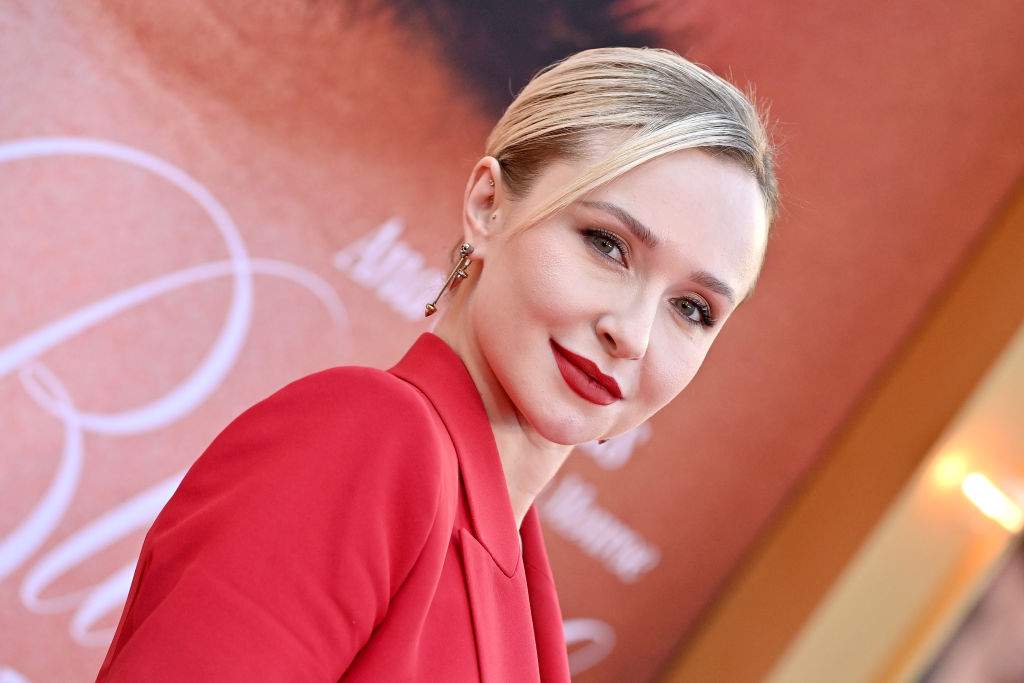
We first met her when she was barely eleven months old, staring into a camera lens for a commercial. Before most children learn to form complete sentences, Hayden Panettiere was already a fixture of American screens. By the time she was a teenager, millions knew her face as the immortal cheerleader in Heroes, the girl whose fictional superpower was invulnerability—the ability to heal instantly from any wound, no matter how catastrophic.
Irony is a cruel scriptwriter.
In real life, the boundaries of flesh and spirit do not possess cellular regeneration. When the emergency medical services rushed to a residence in Greenville, South Carolina, answering a frantic call reporting an unresponsive woman in cardiac arrest, they found a reality that no television network could script or edit. Despite the immediate administration of advanced life-saving measures, Hayden Panettiere was pronounced dead at the scene. She was thirty-six years old, just days away from celebrating her thirty-seventh birthday. Law enforcement officials confirmed that the preliminary investigation revealed no signs of trauma or foul play, leaving an autopsy and further medical studies to determine the precise cause.
Yet numbers and police blotters fail to capture the atmospheric pressure of growing up inside a glass house.
Imagine spending your formative years in an environment where your emotional reactions are currency. Grown-ups applauded when she cried on cue, rewarded her when she played the grieving daughter, and managed every minute of her waking existence. In her candid memoir, This Is Me: A Reckoning, released earlier this year, Panettiere laid bare the architecture of child stardom. She described a world where the line between genuine human emotion and performance blurred beyond recognition.
When the applause fades, the quiet is deafening.
For years, the public consumed her transitions—from Disney voice acting to high-stakes television dramas like Nashville—while remaining largely blind to the invisible fractures forming underneath. Behind the glamorous premieres and magazine layouts lay a punishing cycle of postpartum depression following the birth of her daughter in 2014, coupled with a grueling battle against substance addiction.
She did not hide from these battles in her later years. Instead, she spoke about them with a disarming, terrifying honesty. She wanted out of the darkness. She talked openly about the agonizing decision surrounding custody, the crushing weight of public scrutiny, and the profound, life-altering grief of losing her younger brother, Jansen, just three years prior. Grief, like addiction, does not care about box office ratings or fan mail. It sits in the chest, heavy and immovable.
Consider what happens when an entire industry demands perfection from someone who is simply trying to figure out how to breathe.
Tributes have flooded in from across Hollywood, remembering her fierce talent, her magnetic presence, and the sheer brightness she brought to her craft. Colleagues spoke of a phoenix rising, of a woman who had recently expressed excitement for new chapters, new doors opening, and a future she was eager to write for herself.
The tragedy lies not just in the suddenness of her departure, but in the exhaustion of a lifetime spent performing under a microscope. She spent decades saving the world on television, but the hardest battle was always keeping herself intact against the relentless tide of expectation.
The screen goes dark. The credits roll. But the human being behind the character leaves an echo that lingers long after the television turns off.