The frost arrives early in Wayne County. It clings to the rusted wire fences of shuttered auto plants and coats the windshields of cars idling outside shift changes at dawn. In this corner of America, the air tastes of sulfur and ambition, a chemical cocktail born of steel, coal, and the relentless hum of assembly lines that built an entire century. Here, politics is never an abstract parlor game played on cable news networks. It is the measure of a paycheck, the cost of an insulin vial, and the quiet prayer of a parent wondering if their children will inherit a town with a future or a monument to rust.
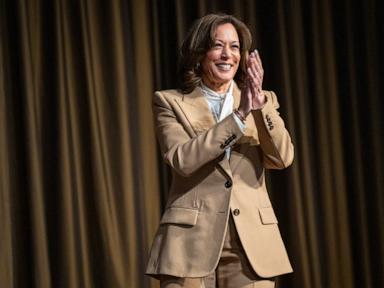
Into this crucible step figures whose names flash across national banners: Vice President Kamala Harris, traversing the tarmac in a motorcade that cuts through the gray Midwestern chill, and Abdul El-Sayed, a physician turned progressive standard-bearer whose voice carries the cadence of a generation unwilling to accept managed decline. Their joint appearance in Michigan is framed by pundits as a tactical deployment of political capital. A chess move. An exercise in math. Recently making headlines recently: The Mechanics of Congressional Contempt and Private Equity Exposure.
Numbers dominate the coverage. Poll aggregates, demographic shifts, suburban turnout models, and the elusive arithmetic of Arab-American voters in Dearborn. But numbers do not bleed. Numbers do not stay awake at night calculating whether to pay the electric bill or buy groceries.
To understand why this specific alignment matters, you have to sit where Maya sits. Additional insights into this topic are explored by BBC News.
Maya runs a community clinic off Michigan Avenue. Her family came from Lebanon three decades ago, trading the smoke of civil war for the promise of a quiet suburban street in Dearborn. On her desk sits a stethoscope, a pile of insurance denial forms, and a smartphone that buzzes constantly with local news alerts. Her patients are mechanics, teachers, students, and elders whose hands tremble with arthritis and worry.
In recent months, Maya’s clinic has become something more than a place of healing. It is an emotional pressure cooker. Her neighbors are hurting. They are watching world events unfold through screens that project devastation into their living rooms, and they are feeling a profound, bone-deep sense of invisibility. When political leaders descend from Washington, bearing talking points polished in the sterile conference rooms of the Potomac, Maya’s patients do not hear solutions. They hear static.
This is the chasm that the Harris and El-Sayed campaign stop attempts to bridge. It is an acknowledgment that the old coalitions are fraying at the seams, held together by little more than shared apprehension of the alternative.
Abdul El-Sayed represents a specific kind of political friction. He is a man who speaks fluent policy, translating healthcare equity and environmental justice not into technocratic jargon, but into moral imperatives. When he speaks to crowds in Ypsilanti or Detroit, he does not shy away from the hard truths of systemic inequality. He leans into them. He reminds people that the systems failing them were built by human hands, which means they can be dismantled by human hands.
When a progressive physician stands beside the sitting Vice President, the choreography is fraught with tension. It is a collision of two distinct political worlds. On one side stands institutional power, constrained by the heavy machinery of governance, cautious, defensive, holding the line against a rising tide of populist grievance. On the other side stands grassroots urgency, impatient, demanding radical transformation, unwilling to trade human lives for political expediency.
Critics watch this alliance with hawk-like suspicion. The moderate wing worries about alienating suburban centrists who recoil from progressive rhetoric. The progressive wing worries about co-optation, fearing that radical energy will be diluted into polite campaign rhetoric that changes nothing after the ballots are cast.
Yet, politics at its core is the art of addition, even when the numbers resist multiplication.
Consider the mechanics of a campaign rally in a swing state. The arena smells of stale popcorn, cheap coffee, and anxious sweat. Thousands of people packed shoulder to shoulder, holding placards that look identical from twenty rows up, yet represent a universe of disparate motivations.
There is the union ironworker whose pension fund was rescued by federal legislation, standing next to a college student whose eyes are wide with debt anxiety, standing two seats away from a grandmother who hasn't spoken to her relatives overseas in weeks because the airspace is closed and the bombs are falling.
When Kamala Harris takes the microphone, her voice carries the practiced cadence of a prosecutor-turned-politician. She speaks of fundamental freedoms, of bodily autonomy, of the unyielding architecture of democracy. She points to infrastructure investments, to caps on prescription drugs, to the fragile scaffolding of rights that took generations to construct.
And then, when Abdul El-Sayed steps forward, the register shifts. The tone becomes intimate, urgent, rooted in the dirt of local struggle. He talks about water shutoffs in Detroit. He talks about asthma rates in neighborhoods choked by freeway exhaust. He talks about dignity as a public utility.
It is a duet of contrasting styles. One voice urges preservation of the temple; the other demands remodeling from the basement up.
Why does this matter beyond the borders of Michigan? Because Michigan is a mirror. What happens in the industrial heartland is a preview of the national narrative. The fracture lines running through Wayne, Oakland, and Kent counties are the same fault lines splitting families in Pennsylvania, Wisconsin, and Arizona. The struggle to reconcile institutional loyalty with moral urgency is the defining dilemma of contemporary democratic politics.
For decades, the standard playbook relied on triangulation. Find the median voter. Speak in generalizations. Offend no one, inspire few, and let the machinery of party loyalty do the rest. But that playbook is gathering dust. The electorate has grown too tired, too cynical, and too keenly aware of the fractures beneath their feet to accept platitudes.
When voters look at a political stage featuring a diverse coalition, they are not just looking at policy platforms. They are looking for a reflection of their own internal conflicts. They are asking a silent, terrifying question: Do these people actually see me?
The answer, as is often the case in human affairs, is messy.
No single speech can heal the deep wounds of foreign policy disagreements or economic insecurity. No joint appearance can instantly dissolve the skepticism of a voter who has watched promises made and broken across multiple administrations. The applause lines fade. The banners come down. The motorcades roll away, leaving behind the cold wind off the lake and the empty streets of Dearborn and Detroit.
What remains is the work.
Maya returns to her clinic the next morning. The waiting room is full. An elderly man with a chronic cough sits in the corner, clutching a worn wool cap in his lap. A young mother tries to soothe a crying toddler while filling out paperwork with a pen that keeps running out of ink.
The political circus has moved on to the next media market, trailing its cameras and satellite trucks in its wake. But Maya’s patients are still here. Their lives have not magically transformed because two prominent figures shared a stage for an hour. The insulin still costs too much. The rent is still climbing. The world remains volatile, fractured, and precarious.
And yet, something subtle shifts in the room.
When Maya talks to her patients, she notices a slight change in the air. People are talking to each other across the aisle of chairs. They are debating what they heard on the news, arguing over whether the promises were real or theater. They are engaged. In a time when the easiest and most rational response to a broken political system is total withdrawal, engagement is an act of quiet defiance.
Democracy, viewed from the lofty heights of punditry, looks like a game of chess played by elites. Viewed from the ground, from the grease-stained floors of auto plants and the cramped waiting rooms of community clinics, it looks like something entirely different. It looks like endurance.
It is the stubborn belief that ordinary people, despite their profound disagreements and exhaustion, can somehow bend the arc of power toward justice through the sheer force of their collective attention.
The motorcades will return. The polls will fluctuate by decimal points. The pundits will parse every syllable uttered under the glare of television lights. But the ultimate verdict will not be rendered in television studios or campaign war rooms.
It will be decided in the quiet, sterile voting booth, behind a curtain that shuts out the noise of the world. There, standing alone with a pen and a paper ballot, a tired mechanic or a overworked physician will make a choice. Not because they believe salvation is at hand, but because they refuse to surrender the future to silence.
The ballot is small. The ink is light. But the weight of it is heavy enough to move a nation.