The desk is heavy. It always is when the files carry names that refuse to stay buried in filing cabinets, names that linger in the hum of fluorescent lights and the quiet ticking of a late-night clock.
When a district attorney sits down to look at a case involving sexual assault allegations on a college campus, the room changes. The air thins out. Every piece of paper is a fragile archive of trauma, contradiction, and legal thresholds that feel impossibly cold against the raw heat of human pain. We talk about the law as a scale—a precise instrument of balanced brass and measured weights. But inside the office of a prosecutor, the scale is often just a desk where someone has to decide whether a tragedy can be proven beyond a reasonable doubt to twelve strangers who were nowhere near the room when it happened. Meanwhile, you can find related stories here: Why North Korea at the UN is Just Theater and You Are Falling for It Every Single Time.
Consider the architecture of a campus allegation.
It rarely happens under a spotlight. There is no clear-cut framing of a cinematic crime. Instead, it happens in the muted corners of residential halls, after parties where alcohol has blurred the edges of memory, behind closed doors where the only witnesses are the two people living through the fallout. When a report finally lands on a desk months or years later, the prosecutor is not just reviewing testimony. They are navigating an invisible minefield of statute, credibility, and the heavy, unforgiving burden of proof. To see the bigger picture, we recommend the excellent analysis by NPR.
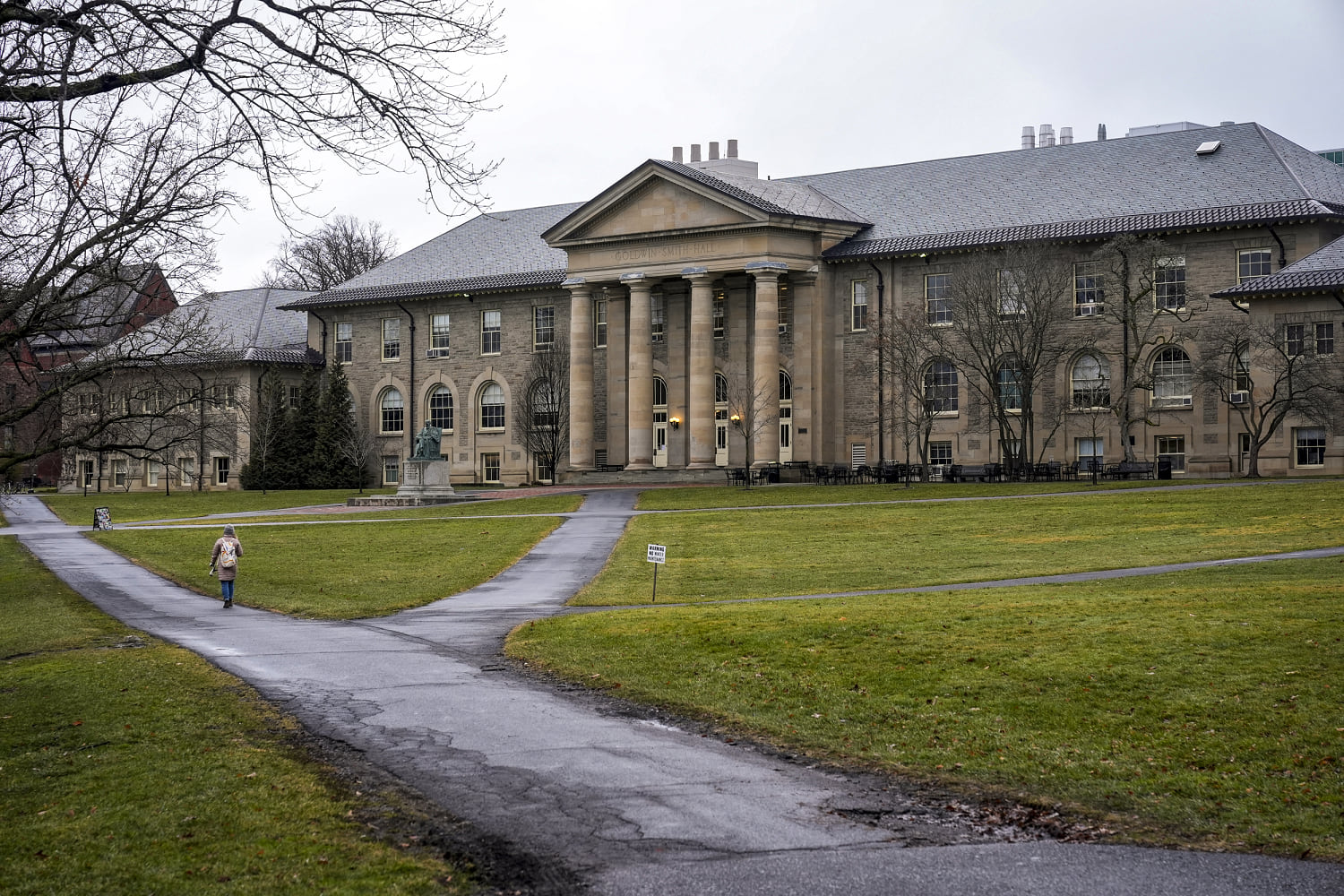
Recently, the public gaze turned sharply toward Ithaca, toward Cornell University, and toward a district attorney who found themselves defending a past decision not to press criminal charges in a high-profile rape allegation. The headlines flickered across screens with the usual quick, sharp staccato of modern outrage. People wanted a villain. People wanted a hero.
The reality was much quieter, and much more uncomfortable.
To understand why a prosecutor declines to file charges is not to excuse the act, nor is it to dismiss the survivor. It is to walk into the machinery of criminal law and stare directly at its limitations.
The law demands certainty. Human experience deals almost exclusively in gray.
Imagine walking into a courtroom with a case built on conflicting timelines, memory lapses exacerbated by trauma, and a lack of physical corroboration. To a layperson, an accusation itself feels like enough. It carries the weight of a lived nightmare. But a trial is not a moral validation ceremony. It is an adversarial contest where a defense attorney’s job is to dismantle every frayed edge of a victim's story. If a prosecutor knows that reasonable doubt is baked into the very fabric of the evidence—not because the assault didn't happen, but because the legal standard of proof cannot be met—they face an agonizing choice.
Do you put a survivor through the brutal, retraumatizing grinder of a public trial that you know, with professional certainty, will end in an acquittal?
Or do you absorb the public fury, the accusations of cowardice, and the searing disappointment of a community by saying no?
Neither choice is clean. Both leave blood on the floor.
When the district attorney stepped forward to defend that past decision, the words did not come easily. They never do. Bureaucratic language often sounds defensive because it is trying to compress a mountain of agonizing judicial calculus into a three-sentence soundbite for the evening news. Insufficient evidence. Legal threshold not met. Prosecutorial discretion.
These phrases sound like armor, but they are usually written in defeat.
They mean that the system, as currently constructed, failed to catch what the heart knows occurred.
We have built a criminal justice system that treats trial as the ultimate arbiter of truth. But criminal court is a blunt instrument. It is designed to protect the innocent from state overreach, which means its default setting is skepticism. When that skepticism collides with the deeply personal, often chaotic reality of sexual violence, the friction is devastating. Survivors step forward with immense courage, laying bare the most vulnerable moments of their lives, only to run up against a legal framework that asks questions designed to dissect, discredit, and doubt.
This is the hidden cost of our current paradigm.
When a prosecutor declines charges, the public often reads it as an institutional verdict on the survivor's honesty. That is a catastrophic misunderstanding. A decision not to prosecute is rarely a declaration that nothing happened. It is an admission that the state lacks the tools, the evidence, or the legal keys to unlock a conviction in a court of law.
Yet, the distinction is lost in the roar of social media.
We demand perfection from institutions that are fundamentally reactive, cobbled together from centuries-old precedents that never imagined the complexities of modern campus life, digital communication, and the neurological impacts of trauma on memory.
Think about how trauma alters the human brain.
Under extreme stress, the hippocampus—the brain's filing cabinet for sequential memory—does not record events like a documentary camera. It captures fragments. Flashes of light. A texture. A smell. A feeling of absolute terror. When a survivor tries to recount the timeline months later, those fragments can shift, overlap, or appear inconsistent on paper. To an investigator trained in cold logic, an inconsistent timeline is a red flag. To a psychologist, it is the textbook signature of a mind trying to survive an onslaught.
When these two worlds collide inside a prosecutor's office, the results are heartbreaking. The prosecutor is bound by the rules of evidence, not the science of trauma. If the timeline wobbles, the case wobbles. If the case wobbles, a defense attorney will tear it to pieces before a jury.
And so, the decision is made. The file is closed. The public protests.
And the silence that follows is deafening.
Defending a past decision in public is an exercise in vulnerability that few leaders handle well. It requires admitting that the law has blind spots wide enough to drive a truck through. It requires telling a grieving, angry community that the system they rely on for safety is fundamentally constrained by its own rules.
People do not want to hear about constraints when they are looking for justice. They want fire. They want retribution. They want a clear line drawn between right and wrong.
Instead, they get a lecture on jurisprudence.
But perhaps the real failure is not just in the prosecutor's office, and not just in the university's disciplinary committees. The failure is structural. We have placed the entire weight of societal accountability onto the criminal courts—a system uniquely unsuited to handle the nuances of interpersonal violation on college campuses. We ask the penal system to heal what it can only judge, and to validate what it can only measure in cold, hard evidence.
When we look back at the Cornell allegations and the defense offered by the district attorney, we should see past the immediate political fallout. We should look at the machinery itself.
The files do not close because someone stopped caring. They close because the walls of the room are too tight.
Until we find a way to bridge the chasm between legal proof and human truth, until we redesign the ways we investigate, support, and seek accountability for violations that happen in the dark, we will keep having the same press conferences. We will keep hearing the same defensive explanations. We will keep watching brave people step forward only to hit a wall of stone.
The desk remains heavy. The clock keeps ticking. And somewhere in the quiet of an office, another file is being opened, waiting to test the limits of what the law can bear.