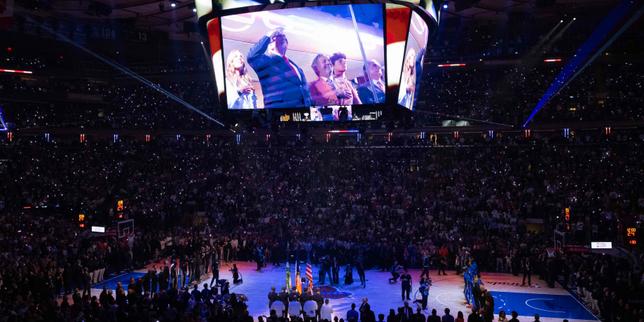
The stadium tunnel smells of damp concrete, wintergreen rub, and a suffocating brand of anxiety that money cannot buy. Outside, eighty thousand people are screaming in a language you only learned three years ago. Inside, your boots click against the floor. Every click sounds like a countdown. You are twenty years old. Back home, your mother still washes clothes by hand. But here, on the back of your jersey, hangs a name that belongs to a ghost.
They call you the new Maradona. Or the next Einstein of the midfield. Or, with a cruel sort of fondness, the Ant.
We consume the World Cup as a spectacle of finished products, a monthly gallery of masterpieces painted in sweat and national colors. But the scouting reports don’t show the rot of expectation. When a young player steps onto that grass for the first time, they aren't just playing against a backline of seasoned defenders. They are playing against the crushing weight of their own hype.
Look past the glittering marquee names you see on every billboard from Doha to Berlin. The real human drama of this tournament belongs to the twenty kids who arrived with nothing but a suitcase, a nickname, and a target on their backs.
The Ghost in the Jersey
To understand what happens to a boy when you label him a savior, you have to look at the mud.
Years before the scout from London or Madrid shows up with a pen and a life-altering contract, there is just a kid trying to survive a local derby. In Buenos Aires, in the favelas of Rio, or on the dirt pitches of Accra, genius is spotted early. It is a curse disguised as a blessing. The moment a teenager leaves three defenders tangled in their own legs with a single drop of the shoulder, the machinery starts turning.
"He plays like Diego," an uncle remarks from the sidelines.
A scout writes it down. A journalist tweets it. By the time the kid is nineteen, the comparison has hardened into concrete. It becomes an identity he never asked for and cannot escape.
Consider the tactical nightmare this creates. When a young playmaker is branded the next tactical genius, opposition managers do not smile and appreciate the art. They send a six-foot-two defensive midfielder with a scar across his bridge and instructions to introduce the boy to the turf within the first four minutes. The physical toll is measurable in bruises and torn ligaments. The mental toll is invisible. Every misplaced pass is treated as a betrayal of lineage. Every shot that skims the wrong side of the post becomes a national crisis.
The human brain does not fully develop its emotional regulation centers until age twenty-five. Yet, we demand that a twenty-year-old navigate the tactical nuances of a low-block defense while carrying the economic hopes of an entire family and the emotional pride of twenty million citizens.
The Strategy of the Microscopic
Then there are those who carry names meant to diminish them, names that eventually become armor.
When a player is dubbed "The Ant," it tells you everything about the Darwinian reality of modern football. You are small. You are meant to be stepped on. In a sport that increasingly prioritizes biological specimens—six-foot athletes who look like decathletes and run the hundred meters in eleven seconds flat—the small player must think three seconds faster than everyone else.
They do not survive by out-muscling the giant. They survive by knowing exactly when the giant is about to shift his weight.
Imagine standing in the center circle. The ball is traveling toward you at forty miles per hour. A defender is closing in from your blind spot, his studs aimed at your Achilles. If you trap the ball, you die. If you pass it back, you invite pressure. The "Ant" does neither. He lets the ball slide across his body, using the defender’s own momentum as a lever to open up thirty yards of green grass.
It looks like magic on television. In reality, it is a calculated risk born of a lifetime of being the smallest person in the room. It is a coping mechanism elevated to an art form. These are the players who dictate the tempo of a World Cup match not through brute force, but through an acute understanding of space and time. They are the ones who notice when an opposition left-back is breathing too heavily through his mouth, signaling a hamstring that is about to give way.
The Cost of the Identification Badge
We love these stories because they feed our desire for a neat narrative. We want the boy from the streets to conquer the world. We want the mathematical prodigy of the midfield to solve the game like an equation.
But the ledger always balances. For every teenager who thrives under the floodlights, three others are broken by them. The transition from a local prospect to a global commodity is violent. One day you are playing for the love of the game and the dinner that follows it; the next, your image rights are owned by a hedge fund based in the Cayman Islands.
The pressure changes the way a person moves. Watch closely during the group stages. You can see the exact moment the joy leaves a young player’s game. It is the moment they stop trying the audacious chip or the nutmeg that made them famous in the academy. They start playing it safe. They pass sideways. They look at the bench after every mistake, searching the manager’s eyes for signs of impending exile.
They become terrified of losing what they only just acquired.
The stakes at a World Cup are not measured in points or prize money. They are measured in the trajectory of a human life. A single ninety-minute performance can secure three generations of a family’s financial future, or it can relegate a young man to the scrapheap of "whatever happened to him" trivia questions.
The Unseen Architecture of the Pitch
The television camera follows the ball. It is a natural instinct, but it misses the entire play.
To truly appreciate the new generation entering this tournament, you must train your eyes on the off-ball movement. Watch the twenty-year-old winger when his team is defending a corner at the opposite end of the pitch. He isn’t resting. He is shifting three steps to the left, positioning himself in the exact crease between the opposition's defensive midfielder and their retreating full-back.
He is drawing a map in his mind.
If his team clears the ball, he knows exactly how many touches he has before the recovery tackle arrives. He knows the wind speed inside the bowl of the stadium. He knows whether the grass was watered at halftime, changing the skip of the ball.
This is the labor behind the luxury. The public sees the step-overs and the celebrations, but the real work is Done in the dark, in film rooms at three in the morning, studying the footwork of a Greek center-back you have never faced in your life.
The players who will define the next decade of this sport are not those who possess the most raw talent. They are those who possess the highest threshold for discomfort. They are the ones who can look at a stadium filled with hostile fans, realize that their childhood heroes are watching from the commentary box, and still have the audacity to try a Panenka penalty in the eighty-ninth minute.
The whistle blows. The noise returns in a deafening wave that shakes the concrete beneath your feet. The boy with the heavy nickname takes a deep breath, steps over the white line, and enters the arena where ghosts go to die and children are forced to grow up in public.