Rain on an airport tarmac does not fall; it slashes. It hits the reinforced polycarbonate windshield at a hundred miles an hour, fracturing into silver beads before the wipers sweep them away into the darkness.
Inside the flight deck, the world shrinks to a claustrophobic geometry of green glass, glowing dials, and the steady, rhythmic breathing of two human beings who hold seventy tons of metal, fuel, and human lives in their palms. Outside, the night is a blank slate. There are no stars. There are no landmarks. There is only the instrument landing system, the voice of ground control crackling through the headset like fried paper, and the cold, unyielding knowledge that mistakes do not afford second drafts. Recently making waves in related news: Inside the Thoracosaurus Discovery Threatening Everything We Know About Ancient Ecosystems.
Most passengers never think about this. They settle into synthetic leather seats, adjust their air vents, plug white earbuds into their ears, and scroll through downloaded movies while the engines whine into a steady, hypnotic roar. They trust the machine. They trust the uniform.
They rarely think about the human heartbeat behind the yoke. Additional details on this are detailed by NPR.
Yet, every takeoff is a quiet, deliberate act of defiance against gravity, executed by people who left their own quiet kitchens, sleeping children, and half-finished cups of coffee hours earlier. When Ghaith Al-Ghaith or any captain strapped into that left seat looks out at the weather, the calculation is never merely technical. It is moral.
Consider what happens next when the skies fracture.
The air does not care about schedules. It does not care about corporate quarterly earnings, slot times at crowded terminals, or the frantic schedule of a prime minister waiting on a tarmac. When monsoons swallow visibility whole, turning an international runway into a gray watercolor painting where earth and sky dissolve into one, the machine falls silent. It waits for a choice.
Years ago, standing on the observation deck of a busy hub while lightning split the horizon, I watched a wide-body jet abort its landing at the absolute last fraction of a second. The engines screamed—a sound that vibrates straight through the soles of your shoes and settles in the hollow of your ribs. It was violent. It was terrifying. To the passengers inside, tumbling forward against their seatbelts, it must have felt like a catastrophic failure.
It was actually the purest form of success.
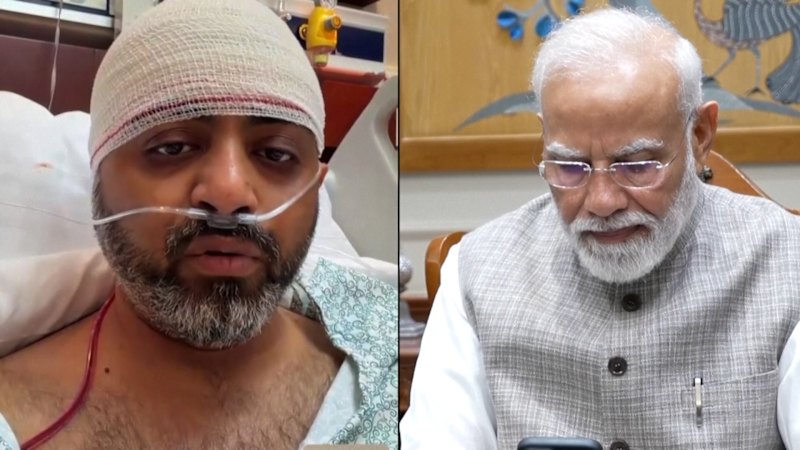
That is the hidden truth of commercial aviation that standard news reports miss when they boil a crisis down to a dry ticker tape. They tell you that a flydubai pilot spoke to Indian Prime Minister Narendra Modi. They tell you about diplomatic channels, geopolitical air corridors, and bilateral aviation agreements.
They miss the sweat.
They miss the dry mouth that comes with making a split-second decision when the fuel gauges are ticking downward and the alternate airfield is socked in by fog. They miss the heavy silence that settles over the flight deck after a near-miss, when the autopilot is finally clicked back on and neither pilot speaks for five minutes because both of them are metabolizing the sheer, fragile weight of what they just survived.
When a pilot looks up from the controls and addresses national leadership, or when their words ripple outward through diplomatic cables, the message is rarely about politics. It is an urgent plea for baseline human safety. It is an insistence that above the clouds, nation-states dissolve into shared air, and a crisis in one sector cascades instantly into every other.
"I cannot let anyone die."
The sentence is stark. It strips away the corporate jargon, the PR polish, and the diplomatic euphemisms. It returns aviation to its primal denominator: survival.
We live in an era obsessed with automation. Algorithms promise us frictionless travel, predictive maintenance, and autonomous flight paths that theoretically remove human error from the equation. Tech evangelists dream of empty cockpits, guided entirely by invisible code dancing across satellite links. But code cannot feel the shudder of a wing spar hitting a pocket of severe wind shear. Code does not hesitate when the runway lights flicker out. Code has no stomach, no conscience, and no capacity for mercy.
When the unexpected strikes—whether it is sudden airspace closures, volcanic ash plumes drifting across traditional routes, or regional geopolitical flashpoints that turn friendly skies hostile overnight—the burden shifts entirely back to the human nervous system.
I remember talking to a veteran captain over lukewarm airport coffee years ago. He had silver temples, hands that looked like leather maps, and eyes that had seen every weather pattern the northern hemisphere could throw at a fuselage. He stirred his black coffee slowly, staring down into the dark liquid as if searching for a memory.
People think flying is about the destination, he told me. It is not. Flying is an exercise in managing fear. My job isn't to push through the storm because the schedule says so. My job is to be the coward so the passengers don't have to be.
That perspective changes how you read the news. It transforms a sterile headline about international negotiations into a human drama played out ten thousand feet in the air.
When regional tensions spike and airspace turns into a chessboard of restricted zones and emergency corridors, pilots become diplomatic instruments whether they want the title or not. They are the ones navigating the narrow margins between international law and immediate physical catastrophe. Every heading change is a negotiation with physics. Every radio call to air traffic control is a lifeline thrown across a political chasm.
The mechanics of this are grindingly complex. Modern aircraft burn thousands of pounds of jet fuel an hour. Rerouting around a closed sector isn't as simple as tapping a screen; it requires recalculating weight balances, checking alternate weather minimums across three different countries, coordinating with dispatchers on the ground who are watching live radar feeds, and managing crew fatigue limits that are enforced by strict international law.
If a captain misjudges the fuel reserve because an emergency rerouting added two hundred miles to a transcontinental leg, there are no roadside gas stations in the upper troposphere. There is only the silence of descending engines and the ticking clock.
And yet, behind every windshield, the human element remains stubbornly resilient.
Think of the flight attendants standing at the cabin doors during boarding, greeting hundreds of distracted strangers with a calm, practiced smile while mentally running through emergency evacuation procedures. Think of the maintenance engineer standing on the freezing tarmac at three in the morning, shining a flashlight into the dark belly of a turbine, double-checking a sensor reading that was flagged by a computer thirty minutes before landing.
None of them make the front page when things go right. They only appear in the history books when something breaks.
Which brings us back to the core of the matter. When a pilot steps forward to state the obvious—that human lives are not bargaining chips, that safety cannot be traded for expediency—it sounds revolutionary only because we have grown so accustomed to systems that prioritize everything else.
We have built a globalized economy that demands absolute speed. We want overnight shipping, two-hour flight connections, and seamless borders that vanish at the wave of a passport. We treat movement as a utility, like running water or electricity, forgetting entirely that every time we leave the ground, we are committing an act of profound artificiality.
We were not built to fly. We were built to walk on solid dirt, surrounded by trees and mountains, bound by the horizon.
To overcome that limitation, we invented a fragile civilization of glass and aluminum, held together by mutual trust. We trust the mechanic who tightened the bolt on the rudder actuator. We trust the air traffic controller tracking twenty tiny green blips on a radar screen while running on four hours of sleep. We trust the person in the left seat who looks out at the gathering storm, draws a breath, and decides that today, everyone goes home.
The rain continues to beat against the glass. The engines hum with a deep, subterranean vibration that rattles the coffee cup in the console.
Far below, the runway lights stretch out like a string of amber pearls, cutting through the dark. Up here, there are no shortcuts, no easy answers, and no margin for error. There is only the next decision, the next cloud bank, and the quiet, unyielding weight of the responsibility carried by the hands on the yoke.