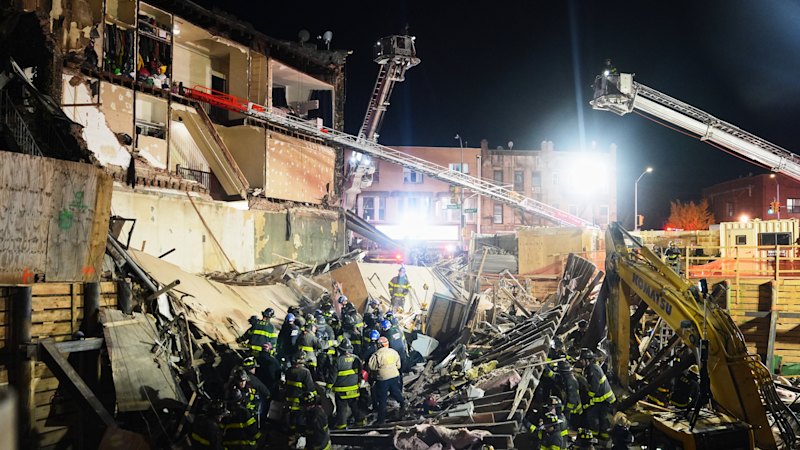
Dust.
That is the first thing you notice when a five-story brick building decides, without warning, that it can no longer hold up the sky. Not the sound—though people blocks away will later swear it sounded like a freight train derailing inside their living rooms—and not the sirens, which take four agonizing minutes to pierce the afternoon air. It is the pulverized lime mortar and century-old plaster hanging suspended in the sunlight, turning a Tuesday afternoon on a residential Brooklyn block into a monochrome photograph of grief. Meanwhile, you can find other events here: What Really Happened When Pete Hegseth's Entourage Crossed the Line at Arlington.
When a building collapses in New York City, the headlines follow a familiar, sterile script. They give you the street address, the number of fatalities, the count of the injured, and a quote from a fire chief standing behind a yellow barricade. They treat the rubble as a logistical problem to be solved by heavy machinery and cadaver dogs.
They miss the true story. A building collapse is never an accident of physics alone; it is a failure of memory, a slow-motion betrayal written in unfiled permits and ignored hairline fractures long before the first brick hits the pavement. To explore the bigger picture, check out the detailed report by NBC News.
The Architecture of a Tuesday Afternoon
To understand what happens in the hours after a structural failure, consider a hypothetical tenant—let’s call her Elena—who lives on the third floor of a pre-war walk-up in Crown Heights or Sunset Park. At 2:14 PM, Elena is not thinking about load-bearing walls or the shear strength of aging masonry. She is boiling water for tea. Her floorboards have always sloped slightly toward the radiator; her bathroom door has stuck every August since she moved in four years ago. In New York, renters are trained to view structural decay as neighborhood charm. We call a sagging ceiling "character." We call a cracked facade "historic."
Then, the floor drops six inches in a fraction of a second.
When the central support column gives way, the building does not fall outward like a felled tree. It pancakes. The fourth floor slams onto the third, which crushes the second, compressing four thousand square feet of kitchens, cribs, bookshelves, and human lives into a jagged mountain of timber and brick no taller than a city bus.
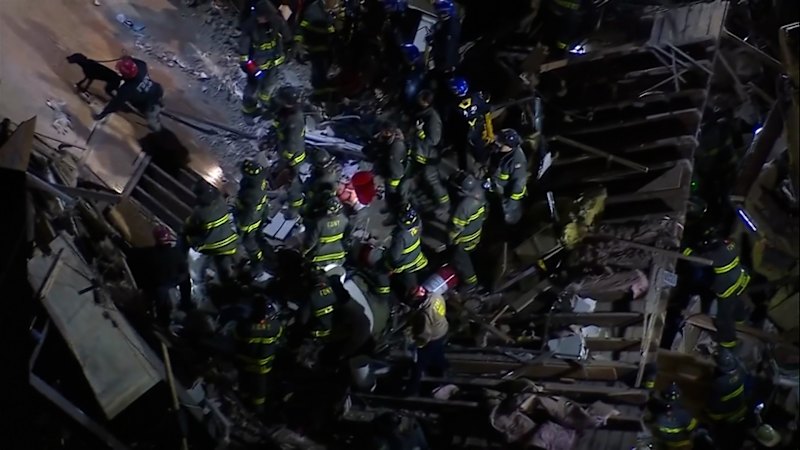
Outside, the search for survivors begins immediately, driven by an urgency that borders on desperation. In those first sixty minutes, the rescue operation is chaotic, intimate, and terrifyingly fragile. Neighbors climb onto the unstable mound with bare hands, clawing at splintered floorboards before the specialized Urban Search and Rescue teams even arrive. Everyone knows the unspoken rule of structural collapse: the rubble is still alive, and it is still hungry. One shifted beam can trigger a secondary collapse that buries the rescuers alongside the trapped.
Inside the Void Space
If you have never stood beside a collapsed structure while firefighters cut their engines to listen for a tap on a pipe, you cannot fully grasp the weight of silence.
I have stood on the perimeter of urban demolitions and structural failures, watching the way seasoned battalion chiefs tilt their heads when the generators go quiet. You realize quickly that human survival inside a pancake collapse comes down to geometry and luck. Rescue engineers call them void spaces—the accidental triangles formed when a heavy concrete lintel or a cast-iron bathtub catches on a lower wall, creating a pocket of breathable air just large enough for a human chest to rise and fall.
Think of a house of cards collapsing onto a coffee table. Most cards lie flat, suffocating everything beneath them. A few lean against an ashtray or a mug, leaving a tiny, dark tent underneath. Inside that tent, time stretches out like taffy.
For the rescuers outside, the work becomes a agonizing paradox of brute force and surgical precision. You cannot bring in an excavator to scoop away the debris; the weight of the claw would crush anyone alive in the voids below. Instead, crews use thermal imaging cameras, acoustic listening devices sensitive enough to pick up a heartbeat through three feet of brick, and hydraulic struts to shore up the rubble inch by excruciating inch. Every cinderblock must be passed hand-to-hand down a human chain.
Meanwhile, the clock ticks down on the golden window—the roughly seventy-two hours a trapped person can survive without water before dehydration and crush syndrome begin to shut down the kidneys. Crush syndrome is the cruelest trick of a building collapse. When a heavy beam pins a person’s legs for hours, muscle tissue breaks down, flooding the bloodstream with toxins held back only by the pressure of the beam itself. Lift the beam too fast without an IV drip already running, and the sudden release sends a lethal wave of potassium straight to the heart. Rescuers must literally treat the patient inside the tomb before they can free them.
The Anatomy of an Avoidable Tragedy
Why do buildings in one of the wealthiest cities on earth simply fold in on themselves?
The answer rarely lies in a sudden earthquake or a freak storm. Across Brooklyn, the Bronx, and upper Manhattan, tens of thousands of structures built between 1890 and 1930 are quietly groaning under the weight of deferred maintenance and aggressive, poorly regulated renovations.
Consider how a typical Brooklyn brownstone or brick tenement is altered over a century. Originally designed for two or three families, its weight is distributed carefully down exterior masonry walls and a central timber spine. Then comes a modern developer or a corner-cutting landlord looking to maximize square footage. Someone removes a ground-floor partition wall to create an "open-concept" commercial storefront. Someone else adds a rooftop deck, or stacks heavy pallets of tile on the fourth floor during a gut renovation without calculating the dead load on century-old joists.
Water does the rest of the work. A clogged roof drain allows rainwater to seep behind the brick veneer. Winter arrives, the water freezes, expands, and pushes the outer wall outward by a millimeter. Spring melts it; next winter pushes it another millimeter. Over twenty years, the steel ties holding the brick facade to the building’s frame rust into orange dust.
By the time the Department of Buildings receives a 311 complaint about a bulging wall, the structure is already balanced on a knife’s edge.
New York City maintains a massive, intricate web of building codes, facade inspection laws, and emergency vacate orders. Yet enforcement remains perpetually reactive. Inspectors cannot see behind fresh drywall slapped over a crumbling foundation. Fines are often treated by negligent landlords as a routine cost of doing business—cheaper than hiring a structural engineer to underpin a failing basement wall.
The Human Ledger
When the dust finally settles and the search shifts from rescue to recovery, the city always promises accountability. Press conferences are held. Subpoenas are issued. Neighbors tape handwritten flyers to lampposts, asking if anyone has seen a missing brother, a home health aide who was working on the second floor, a dog that slipped out when the walls came down.
The tragedy of a deadly collapse in Brooklyn is not just the lives extinguished in an instant, nor the dozens of families displaced onto Red Cross cots with nothing left but the clothes they wore to work that morning. It is the realization that every single brick in that pile gave a warning first.
Buildings do not lie. They speak in cracked plaster, in doors that suddenly refuse to latch, in mortar turning to sand beneath a fingernail, and in the low, ominous groan of timber under unnatural strain.
Right now, somewhere on a quiet, tree-lined block in Brooklyn, a tenant is walking past a fresh diagonal crack running above their lobby doorframe, stepping over a small pile of red brick dust on the sidewalk, and heading upstairs to make dinner.