The tech press is treating Waymo’s recent decision to halt robotaxi operations in Atlanta and parts of Texas due to severe flooding like a responsible safety protocol. They call it a prudent pause. They praise the abundance of caution.
They are missing the entire point.
When a legacy ride-hailing driver logs off during a storm, it’s a temporary labor shortage. When an autonomous vehicle fleet grounds itself because of heavy rainfall, it’s an architectural failure. Halting service due to a localized weather event isn’t a sign of a mature safety culture; it is an admission that the multi-billion-dollar sensor suites we were promised would out-human humans are still fundamentally blind when things get messy.
The mainstream consensus loves a clean narrative about incremental progress. The reality is far uglier. We are witnessing the hard ceiling of the LiDAR-heavy, hyper-mapped approach to self-driving technology.
The Blind Spot of the Sensor Elite
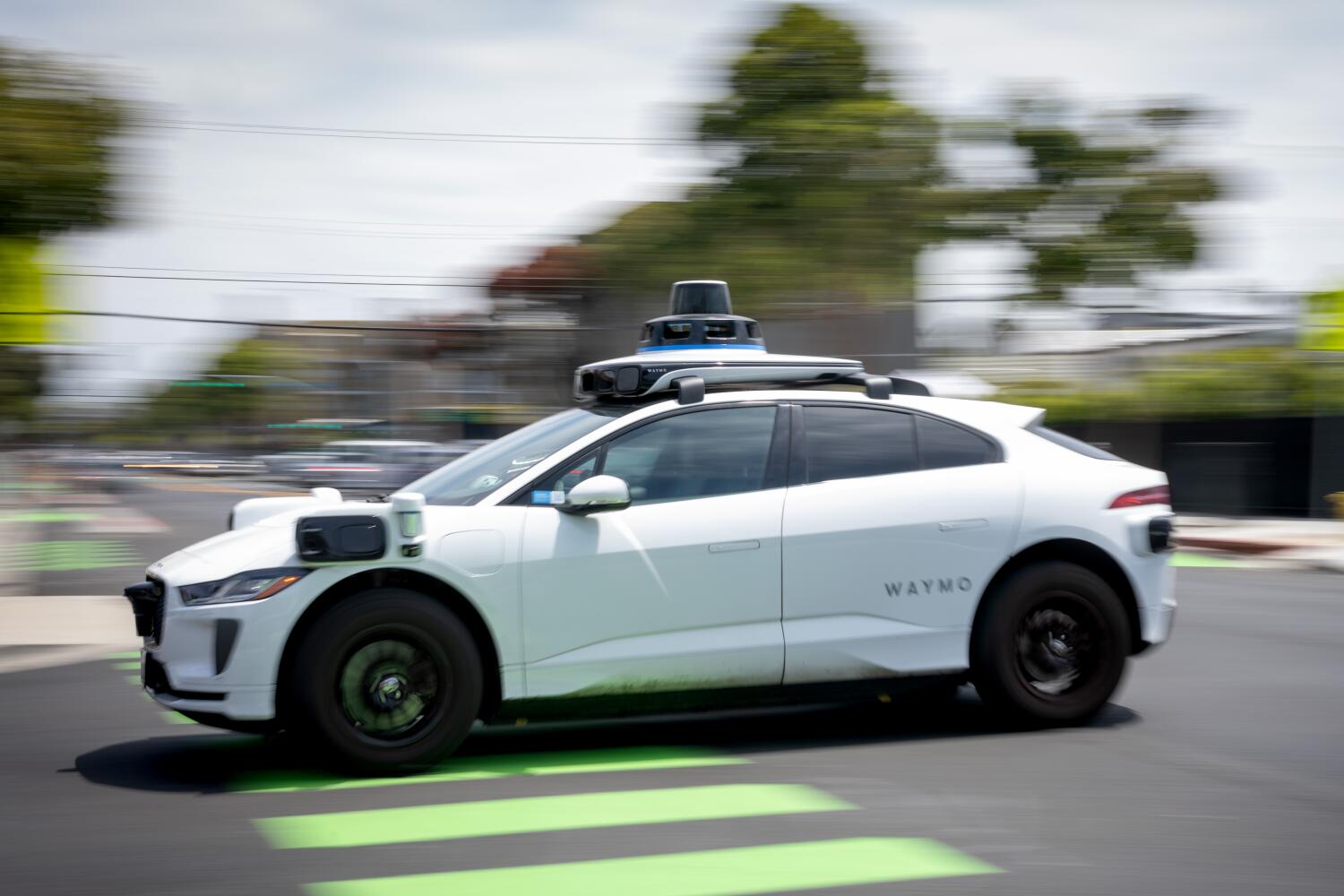
For a decade, the autonomous vehicle industry has operated on a foundational premise: stack enough expensive hardware on a roof rack, and you can solve the edge cases. Waymo vehicles are rolling labs, bristling with custom LiDAR, radar, and cameras.
Yet, the moment the clouds open up over Austin or Atlanta, the math changes.
Heavy rain and standing water degrade sensor performance through a mix of scattering and occlusion.
- LiDAR attenuation: Laser pulses hit raindrops or thick mist and scatter, creating a cloud of "noise" that the perception system has to filter out. If the filter is too aggressive, you miss actual obstacles. If it’s too passive, the car brakes for ghosts.
- Active refraction: Standing water on asphalt acts like a mirror, wreaking havoc on ground-plane estimation and depth perception.
- Camera blindness: Water droplets on lenses distort the visual feed, rendering high-resolution optical arrays about as useful as a smeared windshield.
I have spent years analyzing fleet telemetry and talking to engineers who have walked away from the major autonomy labs. The open secret in Silicon Valley is that we have optimized these vehicles for the most forgiving environments on earth. Phoenix sunshine doesn't challenge an algorithm. A sudden flash flood on an unmapped Texas secondary road does.
By pulling cars off the road the moment the weather turns sour, operators aren't just protecting their sheet metal. They are hiding their technical debt.
The Mapping Trap: Why ODD is a Golden Cage
To understand why a flooded street paralyzes a robotaxi, you have to understand the concept of the Operational Design Domain (ODD). This is the strict set of conditions—geography, time of day, weather—under which a driverless vehicle is legally and technically allowed to function.
The industry relies on Prioritized HD Mapping. Before a robotaxi ever picks up a passenger in Atlanta, the company drives those streets repeatedly, creating a centimeter-accurate 3D map of the world. The car doesn’t just see the road in real-time; it compares what it sees to this static, perfect blueprint.
When a flood hits, that blueprint becomes useless.
[Static HD Map Baseline] <--- Discrepancy ---> [Real-World Flooded Reality]
       |                                                 |
       v                                                 v
  Fixed curbs, lanes                               Submerged lanes, debris
If a lane is submerged under six inches of water, or if temporary barriers divert traffic onto a sidewalk, the real-world environment no longer matches the internal map. The vehicle experiences a localization mismatch. When the software cannot reconcile its pre-baked map with the fluid, chaotic reality of a storm, it faces a choice: risk a catastrophic routing error, or brick itself in the middle of an intersection.
Suspending the service entirely is just a macro-level version of bricking the car. It proves that the vehicle cannot navigate the world dynamically. It can only navigate its own memory of the world.
Dismantling the Practicality Myth
Go look at the online forums or the "People Also Ask" sections on search engines. You will find variations of the same naive questions:
Why can’t robotaxis just use better windshield wipers or hydrophobic coatings?
This question fundamentally misunderstands the physics of the problem. You can clear a camera lens with a puff of air or a coating, but you cannot clear the air between the car and an object fifty meters away when it is saturated with downpour. The limitation isn't mud on the lens; it's physics in the atmosphere.
Isn't it safer for everyone if autonomous cars stay off the road during disasters?
💡 You might also like: Samsung and the AI Dealmaking Trap
This is the most insidious argument of all because it sounds ethical. But let's look at the actual utility of a transportation network.
During a severe weather event, human-driven ride-hail networks see a massive spike in demand. People are trying to get home to their families. Workers are fleeing flooded commercial zones. Emergency situations require dynamic, resilient mobility.
If your revolutionary transport system vanishes the exact moment the environment becomes hostile, it is not a utility. It is a fair-weather luxury. A city that builds its transit infrastructure around vehicles that quit when it rains is a city engineered for gridlock during a crisis.
The High Cost of the Wrong Architecture
The defense of the status quo always comes down to safety data. Operators will point to millions of miles driven with fewer collisions than human drivers.
But those miles are curated. They are cherry-picked by weather patterns and geofenced perimeters.
If you only deploy your asset when the environment is near-perfect, your safety metrics are artificially inflated. It’s the equivalent of a pilot bragging about a perfect safety record while only flying in clear skies during daylight hours. The true test of an autonomous system isn't how it handles a standard left turn in Scottsdale; it's how it handles an unexpected detour down a murky road during an Atlanta deluge when GPS signals are degrading.
The hard truth is that the current sensor-and-map paradigm is reaching a point of diminishing returns.
- Adding more sensors increases cost, weight, and power consumption.
- More data requires more compute power, draining the vehicle's battery faster.
- Heavier reliance on HD maps requires an army of continuous mapping vehicles to update local data after every minor construction shift or storm.
This model does not scale globally. It scales only to wealthy, flat, sun-drenched metropolises.
The Hard Choice Ahead
Am I saying human drivers are flawless in floods? Absolutely not. Humans hydroplane, make terrible judgments about water depth, and crash regularly in heavy rain.
But a human driver has a generalized intelligence system that allows them to look at a flooded street, observe a civilian wading through it, judge the depth relative to a mailbox, and formulate a novel path forward—all without needing an updated 3D map from a corporate server.
Autonomous vehicle companies face a fork in the road. They can continue to refine their current approach, accepting that their business model will always be vulnerable to the whims of the local meteorologist. They can treat major metropolitan areas as intermittent service zones where operations halt whenever nature gets volatile.
Or they can admit that the current architecture is a dead end for true, universal autonomy.
Until these vehicles can operate through the mud, the rain, and the chaos of an unmapped, changing world, they aren't replacing the personal automobile. They are just a highly complex, incredibly expensive amusement park ride that closes at the first sign of rain.
Stop celebrating the safety of the shutdown. Call it what it actually is: a white flag.