Every time Washington rolls out another package of financial restrictions against Tehran, the financial press runs the exact same script. A new low for the Iranian rial. Panic in the bazaar. Economists wringing their hands over another currency milestone breached. It is a lazy narrative built on a fundamental misunderstanding of how isolated economies actually operate after decades of stress-testing.
Focusing on the nominal exchange rate of a heavily embargoed currency is like measuring the health of a submarine by watching the paint peel. Don't miss our previous coverage on this related article.
I spent years analyzing frontier market currency structures and watching desks panic over headline digits while missing the plumbing underneath. I have seen compliance officers blow millions building tracking models for sanctions evasion that become obsolete the week they go live. The lazy consensus says that every drop in the rial brings the state closer to collapse. The reality is far more clinical, far more adaptive, and entirely immune to the standard playbook coming out of the Treasury Department.
The Mirage of the Official Exchange Rate
Let us clear up the basic definition trap right away. When headlines scream that the rial has hit a record low, they are usually quoting an informal market rate tracked by street traders in Ferdowsi Square or specialized web portals. They are almost never talking about the heavily subsidized tier-one rates used for essential state imports like wheat and pharmaceuticals. To read more about the background here, The Motley Fool offers an in-depth summary.
By treating the parallel market rate as a universal barometer of economic health, analysts make a rookie error. They assume an economy behaves like a traditional open-market democracy where currency depreciation triggers immediate, uniform domestic inflation across all sectors.
Iran is not a typical emerging market. It is a siege economy. Over forty years of external pressure have forced the creation of parallel financial ecosystems that insulate the core state apparatus from foreign exchange shocks. When the rial drops against the dollar on the street, domestic asset prices do not simply adjust in a linear line. Instead, value migrates. It moves into real estate, domestic equities, cryptocurrencies, and regional trade barter networks.
Imagine a scenario where a retail merchant in Tehran watches the rial lose ten percent of its value in a week. Under standard economic theory, that merchant raises prices instantly and hoards hard currency. In reality, that merchant likely holds zero dollars. They hold inventory priced in replacement cost, backed by informal credit lines denominated in commodities or regional currencies like the Iraqi dinar or the United Emirati Dirham.
The exchange rate tracked by Western terminals is a footnote to them. It is a statistic for foreign journalists.
Why More Restrictions Fail the Math Test
The standard policy prescription in Washington relies on an intuitive but deeply flawed premise. The logic goes like this: if you squeeze the financial pipes hard enough, inflation will spike, the population will revolt, and the regime will sue for terms.
It sounds clean on paper. In practice, it ignores the mechanics of adaptive systems.
Every time the Office of Foreign Assets Control adds another tier of entities to the Specially Designated Nationals list, it forces a structural evolution in black-market logistics. The financial networks do not disappear; they get more decentralized, more opaque, and more expensive to monitor.
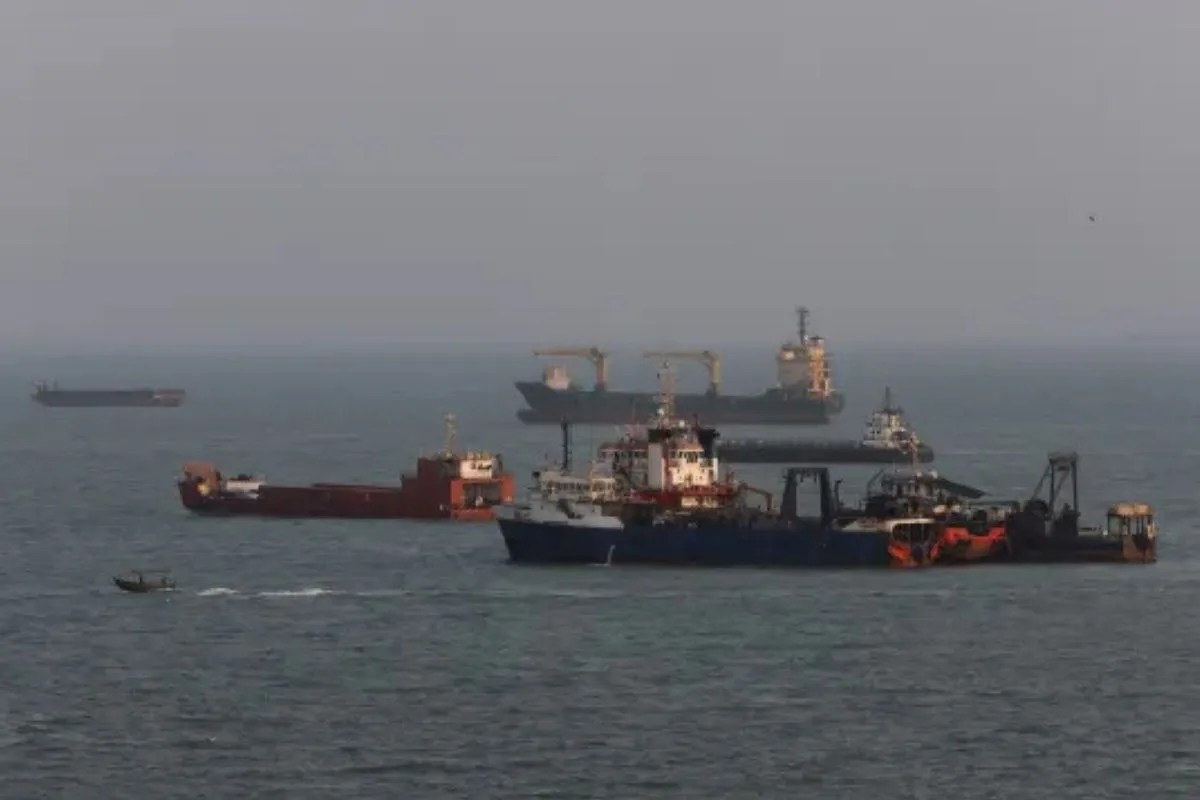
Consider the mechanics of oil sales. When primary banking channels close, transactions move to shadow fleets, ship-to-ship transfers, and localized settlement mechanisms. Buyers in Asia do not pay in greenbacks clearing through New York correspondent banks. They settle in local currencies, through small-scale regional intermediaries, or via crude-for-goods swaps.
The marginal cost of enforcement rises exponentially for the regulator, while the marginal cost of evasion rises linearly for the evader. Washington is playing an expensive game of Whac-A-Mole where the holes multiply faster than the mallets.
This brings us to the core irony of modern economic statecraft. By cutting a country out of the dollar-denominated global financial architecture, sanctions remove the primary leverage the United States holds. If a state has nothing left to lose in the Western financial system, SWIFT disconnection ceases to be a punishment and becomes a permanent state of exile that they simply learn to build around.
The rial hits a new record low because the official domestic monetary policy is chronically mismanaged, plagued by structural deficits, and fueled by domestic money printing to cover state budget gaps. It has very little to do with the latest press release from the Treasury Department. Pinning every currency milestone on the latest sanctions announcement is comforting for policymakers who want to claim credit for market movements, but it is analytically lazy.
The Alternative Financial Architecture You Are Ignoring
While Western analysts obsess over the nominal value of the rial, real economic actors are building alternative settlement layers.
Regional integration is the blind spot of traditional sanctions analysis. Iran shares borders with nations that have their own complex relationships with Western hegemony. Trade corridors through Iraq, the United Arab Emirates, Turkey, and Central Asia form a resilient web of economic survival.
When you look at trade volume rather than currency valuation, a different picture emerges. Goods move across borders via hawala networks—centuries-old informal value transfer systems that bypass traditional banking entirely. You cannot freeze a hawala ledger with a software update. You cannot issue a compliance advisory against a network of trusted family merchants operating across three time zones.
To understand why the Iranian economy refuses to collapse despite the apocalyptic forecasts of currency traders, look at balance sheets, not exchange rates. Look at domestic industrial output in non-oil sectors like petrochemicals and steel. These industries have learned to operate behind a natural tariff wall created by the sanctions themselves. Domestic manufacturers often find it cheaper to source inputs locally or through regional partners because importing Western goods became legally and logistically impossible years ago.
This is not a sign of prosperity. It is a sign of entrenched adaptation. The economy has calcified around the embargoes.
The Flawed Premise of Economic Coercion
People often ask why the Iranian public does not overthrow the government if inflation is high and the currency is worthless. The question itself is flawed. It assumes that economic distress translates directly into political transformation in a security state.
History shows the opposite. Severe economic isolation often increases citizen reliance on the state for basic survival subsidies, rationing, and employment. When the private sector shrinks due to external shocks, the state expands its footprint as the employer of last resort. The middle class gets squeezed into compliance or emigration, leaving a population focused entirely on immediate subsistence rather than macro-level political restructuring.
Furthermore, decades of living with a depreciating currency have taught the Iranian population advanced survival heuristics. Citizens are hyper-financialized. They understand inflation hedging better than the average retail investor in London or New York. Gold coins, real estate, and foreign exchange are household portfolio staples. They do not park their savings in a local bank account earning negative real yields; they convert value instantly into hard assets.
When a society reaches this level of institutionalized distrust in its own currency, the official exchange rate loses its psychological power over the population. It becomes background noise.
What Real Risk Management Looks Like
If you are running an international enterprise, the takeaway from the ongoing collapse of the rial is not that a sudden political opening is around the corner. The takeaway is that sanctions regimes are permanent structural fixtures, not temporary disruptions.
Stop waiting for the currency crash to solve your geopolitical strategy. Stop building compliance models that treat sanctions as a temporary compliance hurdle before returning to business as usual.
The companies that succeed in frontier environments are those that understand structural resilience. They map the informal networks. They recognize that nominal currency metrics in isolated states are domestic political theater rather than external trade determinants.
The next time a headline breaks about the rial touching an all-time low against the dollar, ignore the noise. Look at the logistics chains. Look at the regional trade balances. Look at the informal settlement layers that keep the lights on while Washington drafts its next press release.
The system has already adapted. The only people still surprised by the depreciation are the ones reading the reports from a desk in Manhattan.