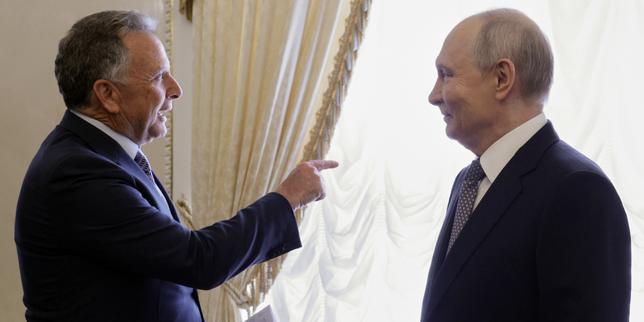
Vladimir Putin isn't backing down in Ukraine, even after standing beside Donald Trump and Xi Jinping at the APEC summit in Shenzhen.
Diplomatic optics can look like momentum. They aren't the same thing as a real shift on the ground. In mid-November 2026, Trump and Putin held their first face-to-face talks since their August 2025 meeting in Alaska, and then joined Xi Jinping for a rare three-way gathering around APEC in southern China. Trump called Putin his "friend" and insisted the trio was writing history, while Putin talked up shared interests in regional conflicts, including Ukraine.
Yet when you strip away the cameras and motorcades, the Kremlin's core terms haven't budged. Irish Foreign Minister Helen McEntee put it plainly this week: there has been no change in Russia's position even as strikes hit major infrastructure. Putin wants diplomatic legitimacy, a weakened Western front, and Ukrainian capitulation, not a compromise settlement.
Why Putin Refuses to Budge in Ukraine
To understand why Moscow stays rigid, look at what a high-profile summit gives Putin before he ever signs a single clause. For years after the 2022 full-scale invasion, Western capitals treated him as a pariah, and he faced an International Criminal Court arrest warrant. Standing in Shenzhen alongside the leaders of the United States and China lets him project superpower equality at home and abroad, even while Russia remains under heavy sanctions.
Trump's style plays straight into that dynamic. Trump approaches foreign policy through personal rapport and top-down bargaining between big powers, often treating formal multilateral coalitions as secondary. After the midterm elections at home, looking for a dramatic foreign policy win adds pressure on Washington to keep talking. From Putin's chair, a US president eager for a deal—and a Chinese host happy to play central broker—reduces Moscow's urgency to concede anything.
Analysts who have watched the Kremlin closely note a classic pattern: Putin often uses high-level summits to project inevitability and stretch out talks while keeping maximalist demands intact.
There's also a deeper trap for Kyiv and its partners. Whenever Washington talks directly with Moscow and Beijing without European and Ukrainian voices firmly in the room, fears spike in Brussels and Kyiv that big-power bargains could trade away Ukrainian security. Even when no immediate deal is announced after Shenzhen, the mere prospect of side-channel bargaining splits attention and strains unity.
What the Battlefield Actually Shows
If you only listen to Kremlin talking points, you'd think Russian victory is inevitable and Ukraine should fold right now. Honestly, the battlefield data tells a much messier story.
Daily assessments from the Institute for the Study of War show grinding friction rather than a sweeping Russian breakthrough. Around mid-November 2026, Russian forces pushed near Lyman, Borova, Velykyi Burluk, and Oleksandrivka, and kept pressing toward Ukraine's fortress belt in Donetsk Oblast, yet gains remained limited or stalled across major axes. Meanwhile, Ukrainian units continued holding positions in contested areas like Kostyantynivka and hitting back well behind the lines.
Deep strikes have become a central part of how Kyiv pushes back. Ukrainian forces struck the Kerch Strait Bridge repeatedly in mid-November, targeting a vital artery for Russian logistics into Crimea despite Moscow's insistence that the span is purely civilian. Ukrainian strikes have also reached oil refineries in Krasnodar Krai and military repair facilities deep inside Russia, such as the 123rd Aircraft Repair Plant in Staraya Russa, Novgorod Oblast.
At the same time, Russia's aerial campaign against Ukraine hasn't let up. Large barrages of long-range drones—including jet-powered drones—have pounded Ukrainian cities and infrastructure, with attacks in mid-November hitting Kyiv and Odesa and damaging buildings and diplomatic compounds. That mutual attrition explains why neither side is waving a white flag: Moscow still thinks long-range pressure and political division can break Ukraine's will, while Kyiv refuses to reward aggression with surrender.
Europe, Washington, and the Negotiation Maze
Diplomacy around the war hasn't stopped—it's just tangled across competing tracks. Earlier in 2026, trilateral contacts in Abu Dhabi and Geneva produced prisoner-exchange movement without unlocking a broader peace settlement. Envoys like Steve Witkoff and Jared Kushner have held talks with Kremlin figures including Yuri Ushakov, raising questions about how European representatives would fit into future rounds—a point Moscow has publicly pushed back on.
In Washington, Ukraine aid is also entangled in domestic politics. With a shifting congressional landscape after the midterms, lawmakers are wrestling over oversight, funding, and how much leverage the United States wants to keep or trade away. That uncertainty makes European capitals nervous. German Chancellor Friedrich Merz warned ahead of the Shenzhen talks against unwelcome surprises made over Europe's head, and Ukraine's allies gathered in Berlin to lock in 2027 financial and military support.
What most people get wrong about peace talks is assuming momentum in diplomacy automatically means compromise is near. Sometimes talks are just another front in the war. Moscow can use negotiations to probe for cracks between Washington and Brussels, buy time, and portray Kyiv as the obstacle whenever Ukraine strikes Russian logistics or energy targets.
Practical Steps to Track What Happens Next
If you're following this conflict closely—whether for policy research, risk analysis, or plain situational awareness—don't get swept up in headline quotes from summits alone. A few practical habits keep you grounded:
- Separate optics from binding commitments: Treat joint photo ops and warm remarks at summits like APEC as signals of leverage and status, not proof of a territorial or security settlement.
- Watch logistics and air-defense attrition: Track strikes on key supply links like the Kerch Strait Bridge, fuel refineries, and air bases alongside drone barrage trends, since logistics constraints shape what either army can actually sustain.
- Follow concrete 2027 funding and European coordination: Pay attention to outcomes from Berlin and Washington on multi-year weapons, air defense, and budget aid rather than trial balloons floated in speeches.
- Verify claims against multiple primary and analytical sources: Cross-check Kremlin statements and social-media claims against independent reporting from outlets like Al Jazeera and Reuters, plus daily campaign assessments from the Institute for the Study of War.



