Memoirs by dissident heroes sell hope. They rarely sell clarity.
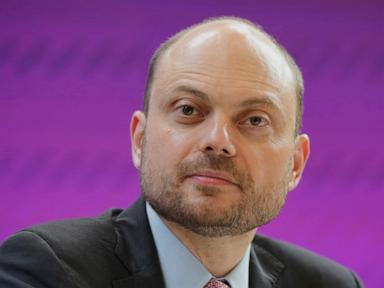
When PublicAffairs announced that Vladimir Kara-Murza’s One Day Free will hit shelves on May 18, 2027, the predictable coverage arrived on cue. Headlines treated the book like a feel-good victory lap. A former political prisoner who survived poisonings and prison cells writes a personal history of Putin’s Russia and insists no nation is "destined" to unfreedom. Cue the applause. Cue the uplifting quotes about resilience and the arc of history bending toward democracy.
That reaction is lazy. Worse, it is dangerous.
Treat One Day Free as a straightforward story of moral triumph, and you miss the brutal mechanics of how authoritarianism survives—and how Western commentators keep getting duped by their own wishful thinking. Kara-Murza has earned every ounce of respect for his physical courage and endurance. Surviving what he survived takes grit most pundits will never possess. Yet celebrating a book announcement as proof that democratic renewal is inevitable confuses personal bravery with political inevitability.
The Lazy Consensus Around One Day Free
Most coverage of One Day Free leans on three comforting clichés:
- Heroic martyrdom equals political momentum. Because Kara-Murza stood up to the Kremlin and lived to write about it, observers act as if moral witness automatically weakens an entrenched regime.
- Historical analogy guarantees a democratic ending. Pointing to regimes that once looked unshakeable before collapsing leads people to assume Russia will follow the same script.
- Western complicity was merely a policy mistake. When articles mention Kara-Murza’s scrutiny of Russians and Westerners who enabled Putin’s rule, they treat it like a polite footnote rather than an indictment of an entire political-economic ecosystem.
I have watched policy institutes, newsrooms, and donor networks spend tens of millions of dollars over two decades chasing that exact comforting narrative. Every time a brave Russian speaks out or a new opposition figure emerges, Western observers project their own electoral habits onto a system built to crush them. I have seen serious analysts treat a single protest, a book deal, or a prison release as a turning point—only to watch the apparatus tighten its grip six months later.
Defining the Terms Before We Argue About Russia
Before arguing over what One Day Free means for Russia’s future, get the definitions straight. People throw around words like authoritarianism, personalist rule, and historical inevitability as if they are interchangeable. They are not.
Authoritarianism does not require total brainwashing of every citizen; it relies on atomization, co-optation, selective repression, and raising the personal cost of collective action until staying quiet feels rational. When political scientists like Milan Svolik or Barbara Geddes study authoritarian survival, they emphasize elite incentives and coercive capacity—not just public grumbling. Even widespread private dissatisfaction rarely translates into regime collapse without elite fractures, institutional breakdown, or severe economic and security shocks.
Historical inevitability is a seductive myth. Political systems are not pendulums that swing back to liberty on a schedule just because enough time passes or because a historian cites past transitions. Germany after 1945 or Spain after Franco did not become stable democracies by accident; they required specific institutional engineering, external anchors, generational shifts, and the defeat or exhaustion of old ruling coalitions.
When Kara-Murza argues that no country is forever destined for unfreedom, he is making a vital moral and philosophical claim against fatalism. Fatalism is a trap. Yet turning "not destined for unfreedom" into "bound to become a peaceful, civilized democracy" is a leap of faith that the evidence does not support.
Are We Asking the Wrong Question About Russia?
"People Also Ask" queries around this memoir usually sound like this: Will One Day Free inspire a new wave of Russian opposition? Does Putin’s grip weaken when dissidents tell their stories? How can Western readers support Russian democracy?
Those questions start from a flawed premise: that information, inspiration, or moral clarity is the missing ingredient inside Russia.
Inside a tightly controlled media and legal environment, a book published in English by a Western imprint does not land like a match in dry grass inside Moscow. Censorship, foreign-agent laws, blocked platforms, and fear of severe prison sentences create massive friction between writing truth and shifting domestic power. Even when people know the regime lies—and many Russians are far more cynical and clear-eyed than Western caricatures suggest—knowing a system is corrupt is not the same as having the tools, safety, or leadership to replace it.
A sharper question is this: What keeps an authoritarian coalition intact, and what happens to the incentives of the people enforcing it?
If you want a brutal answer to how these systems persist, look at the everyday math for a mid-level official, a prosecutor, or a state media producer. Challenging the system carries immediate, concrete costs: lost livelihood, prison, exile, danger to family. Supporting or ignoring the system brings salary, status, safety, and predictable routine. Moral essays do not rewrite that balance sheet on their own.
Imagine a scenario where a Russian mid-level bureaucrat reads a translation of One Day Free in a quiet apartment. He nods at the abuses described on the page. He feels a pang of conscience. Then Monday morning arrives, his mortgage is due, his child is in school, and his boss asks him to sign off on a routine administrative order that quietly hurts a critic. Conscience loses to immediate survival almost every single time unless the structure of incentives changes.
What the Memoir Gets Right That Pundits Ignore
To give Kara-Murza his due, the most explosive part of One Day Free isn’t uplifting platitudes—it’s the examination of enablers, both inside Russia and in the West.
For years, convenient excuses dominated Western capitals. Business leaders claimed trade and engagement would liberalize the Kremlin from within. Diplomats treated autocratic stability as preferable to messy uncertainty. Financial centers welcomed dirty or semi-dirty money with a wink and a compliance checklist. Meanwhile, domestic institutions hollowed out piece by piece while people told themselves not to get involved in politics.
Calling out those enablers cuts straight against polite establishment consensus. It forces uncomfortable questions:
- Who profited while civil society was dismantled?
- Which Western institutions treated warnings from dissidents as "too emotional" or "unrealistic" until crisis hit?
- How often did outside observers mistake short-term transactional calm for long-term stability?
That is where One Day Free can do real intellectual damage to complacency—if readers actually pay attention to the anatomy of complicity rather than treating the book like a bedtime story about freedom.
Actionable Shifts for Readers, Analysts, and Policymakers
If you care about Russia, authoritarianism, or serious political analysis, stop treating book announcements as political forecasts. Change how you read and act:
- Separate moral courage from strategic leverage. Honor dissidents for their sacrifice, and still ask cold, hard questions about coalitions, institutions, and power dynamics. Admiration is not analysis.
- Track elite incentives and institutional cracks, not just speeches. Watch where money flows, how loyalty is rewarded or punished, and how state capacity holds up under strain. Moral condemnation rarely moves a regime; altered incentives do.
- Audit your own blind spots on "pragmatism." Whenever a pundit or executive calls a compromise "realistic," ask who pays the price and what precedent it sets. Short-term convenience has a long habit of becoming a permanent trap.
- Read history without rose-colored glasses. Look closely at how past transitions actually happened—the messy bargains, economic pressures, outside shocks, and failures—instead of cherry-picking inspiring slogans.
The Honest Downside of This Contrarian Stance
Pushing back against uplifting narratives carries its own risks, and I won’t pretend otherwise.
Lean too hard into hard-nosed realism, and you can slide into cynicism that looks suspiciously like fatalism. If you only talk about structural constraints and regime durability, you can end up sounding dismissive of people risking everything—and you can miss genuine inflection points when they finally arrive. History does surprise experts. Nobody predicted every twist of 1989 or every sudden political collapse in advance.
There is also a real danger of over-correcting. Dismissing hope entirely surrenders ground to regimes that want people to believe resistance is pointless. Apathy is cheap fuel for autocrats.
The trick is holding two uncomfortable truths at once: change is possible, and change is hard. Saying a memoir won’t magically topple an authoritarian state isn’t an attack on freedom. It’s a refusal to trade hard reality for comforting clichés.
Hope is not a strategy. A May release date is not a turning point. Real freedom takes power, pressure, and time—not applause.