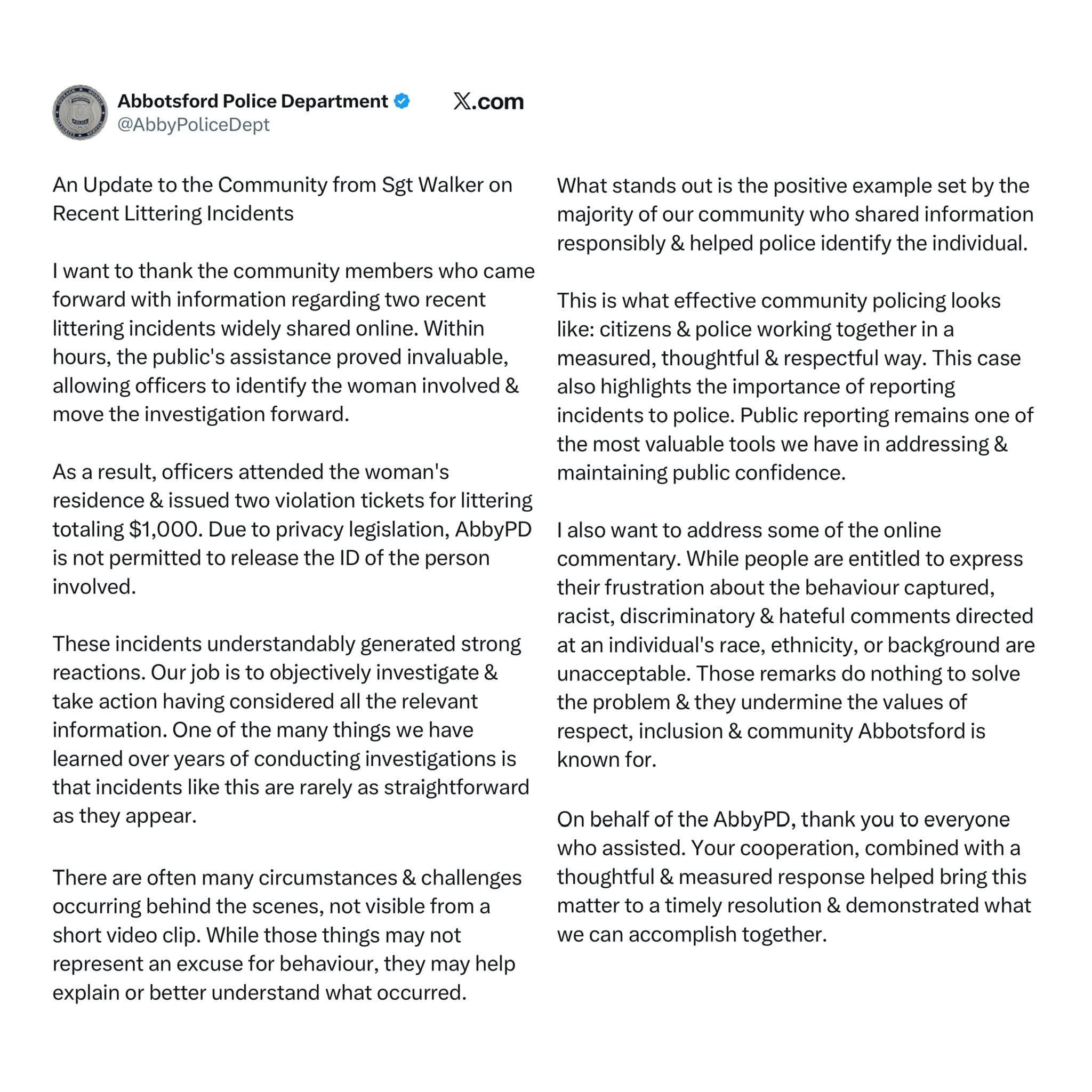
A smartphone camera lens changes the speed of justice entirely. When a video of an Indian-origin woman illegally dumping waste into public spaces and waterways in Abbotsford, British Columbia hit the internet, the digital reaction was swift, loud, and predictable. Social media accounts amplified the footage within hours, public anger boiled over, and the Abbotsford Police Department received a flood of tips.
The outcome? Officers tracked down the individual and issued two fines totalling $1,000 for the infractions committed back in late July.
People love a quick internet victory. You watch the clip, you spot the offender, you demand a penalty, and law enforcement delivers a financial hit. Case closed, right? Not really. Viral justice creates an illusion that public shaming solves structural civic problems. It doesn't. It just feeds an endless cycle of online outrage while the underlying issues of municipal waste management and cultural integration remain entirely untouched.
The Reality Behind the Abbotsford Footage
Let's look at what actually happened on the ground. The footage captured a woman discarding items into Mill Lake and near Blue Jay Elementary School. When online influencers confronted her on camera, she showed blatant disregard for the rules and the environment. Wildlife swam among floating debris, prompting widespread disgust across local community boards.
Sgt. Paul Walker of the Abbotsford Police Department pointed out a crucial nuance that internet mobs routinely miss. Situations captured in short vertical videos are rarely as straightforward as they appear. While external stressors or personal challenges never excuse illegal dumping, understanding the root cause helps communities prevent repeat offenses rather than just venting online.
Instead, the internet chose a different route. Comments sections quickly devolved into broad xenophobic attacks, targeting the individual's ethnic background rather than focusing strictly on the environmental infraction. Police had to publicly step in to remind the public that hate speech solves nothing. When digital pitchforks come out, nuance dies instantly.
Why Social Media Vigilantism Fails Long-Term
Relying on viral videos to police neighborhoods creates a dangerous precedent. It turns everyday citizens into amateur investigators who often bypass formal reporting channels.
Police forces prefer direct reports for a reason. Real investigations require documented evidence chains, proper jurisdiction, and adherence to privacy laws. In this specific case, privacy legislation prevented authorities from releasing the woman's name, regardless of how many times her face was shared across TikTok and X.
When you depend on viral outrage to clean up local parks, you run into distinct structural problems:
- Algorithms dictate which environmental crimes get punished based on shareability, not severity.
- Public shaming frequently triggers targeted harassment waves against entire diaspora communities.
- Online commentators demand maximum punishments that municipal bylaws simply do not support.
- Viral traction fades in days, leaving local councils with the exact same garbage accumulation problems.
How to Actually Fix Local Littering
If you genuinely care about keeping public spaces clean, online commentary is a complete waste of time. Real municipal change requires boring, systematic actions that don't trend on social media.
First, report infractions directly to local authorities using non-emergency lines or municipal apps. In Abbotsford, residents can call the police department or use designated text lines instead of just posting clips online for clout.
Second, push local governments for better waste infrastructure. Often, illegal dumping happens because municipal drop-off sites charge exorbitant fees, have restrictive operating hours, or lack multilingual signage explaining local disposal laws. Clear communication bridges the gap between new residents and regional expectations much faster than a $1,000 fine ever will.
Punishing offenders matters. Protecting local waterways matters more. Stop treating civic infractions like reality television episodes and start focusing on structural community accountability.