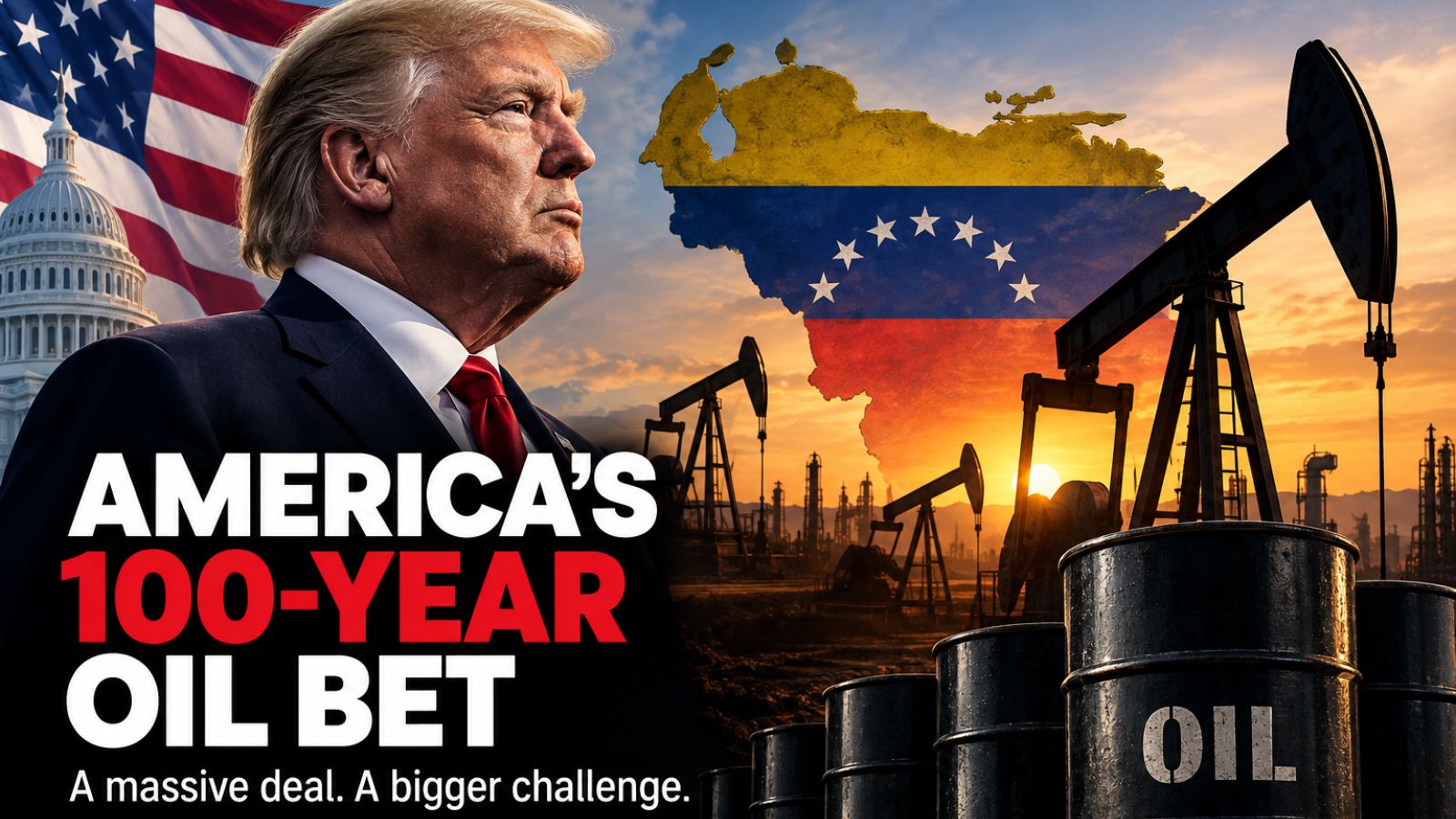
The chattering classes are having a collective meltdown over Washington's latest maneuver in South America. From elite foreign policy think tanks to mainstream economic desks, the lazy consensus is uniform: the newly minted arrangement granting access to millions of barrels of Venezuelan crude is an overreaching, unconstitutional, and legally fragile blunder. Critics love to wring their hands over long-term concessions, sovereign risk, and the ghost of 1990s-style privatizations that birthed foreign oligarchs.
They are missing the plot entirely.
This isn't a traditional extraction treaty gone rogue. It is a calculated exercise in raw structural leverage designed to bypass the bureaucratic rot that has kept South America's most resource-dense nation paralyzed for decades. To understand why the critics are wrong, you have to stop looking at the arrangement through the polite, obsolete lens of 20th-century international law and start looking at it as a masterclass in risk-adjusted asset control.
The Myth of the Sacred Local Constitution
The primary critique leveled against the arrangement centers on legality. Pundits argue that bypassing legacy state-owned frameworks violates domestic statutes and treads on the sacred cows of national sovereignty.
Let's clear up the confusion immediately: sovereignty without capital is an empty abstraction. For over twenty years, the nation's immense reserves sat virtually unexploited or were looted by a rotation of corrupt state-backed operators while citizens starved and infrastructure rotted into the soil. The legalistic hand-wringing assumes there was a functioning institutional baseline to protect. There wasn't.
When an economy is entirely hollowed out by hyperinflation and systematic decay, traditional competitive bidding processes are nothing more than a theater for inaction. The arrangement with private operators like North American Blue Energy Partners provides the one thing local statutes never could: a functional operational bridge backed by external security and financial monitoring. Critics cry foul over the bypassing of legacy mechanisms, but those exact mechanisms were the instruments of destruction. Dismantling them isn't an assault on democracy; it is the prerequisite for economic respiration.
The Economics of Below-Market Off-Take
Another major point of attack from financial analysts is the provision securing a guaranteed percentage of off-take at production cost for the strategic reserves. The conventional critique claims this ruins the profit incentive for private investors, warning that selling resources without a traditional margin will repel serious capital.
This objection demonstrates a fundamental misunderstanding of modern resource security. In a volatile geopolitical climate, the value of a guaranteed, low-cost barrel of heavy crude located within the hemisphere outweighs short-term commercial margin maximization. Refilling strategic reserves isn't a retail trading strategy; it is a macro-prudential insurance policy.
Imagine a scenario where global shipping lanes face sudden, systemic bottlenecks. Having direct access to a stable, nearby petroleum stream changes the entire risk profile of North American refining capacity. The investors entering this ecosystem aren't looking for standard venture returns; they are trading margin for absolute security of contract enforcement, backed by a superpower's structural gravity.
The Above-Ground Reality vs. Paper Worries
Critics love to list the above-ground challenges: missing electricity grids, rusted processing equipment, nonexistent pipeline connections to export terminals. They ask who is going to pay for the massive capital expenditure required to bring these seventeenth-century-styled rusted fields into the modern era.
I've seen companies blow millions trying to navigate broken emerging-market bureaucracies with nothing more than polite diplomacy and standard contracts. They fail because they treat collapsed states like orderly OECD markets.
The structural brilliance of this agreement is that it ties financial flows directly to external oversight and ring-fenced accounts controlled away from the reach of domestic creditors and default judgments. By routing revenues through U.S.-managed and audited accounts, the framework solves the single biggest deterrent to energy investment: the fear that revenues will be instantly seized or embezzled before a single well is drilled. The capital expenditure will follow the security, not the other way around.
Stop asking whether this transaction fits neatly into old textbooks. Ask whether the alternative—leaving billions of barrels locked in the earth under a failed regime—served anyone other than geopolitical adversaries. The empire of extraction isn't a bug; it's the anchor holding the region back from complete collapse.
US energy firms dominate Venezuela deals worth billions
This report breaks down how energy firms are positioning themselves to capitalize on the new operational framework in South America.