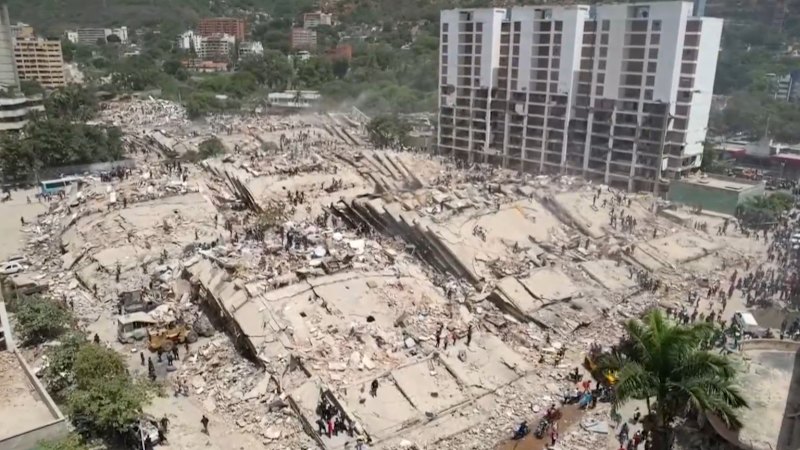
The ground in northern Venezuela did not just shake on Wednesday evening. It broke. Two massive earthquakes struck a mere 39 seconds apart, shattering cities, bringing down high-rise buildings, and leaving communities entirely unrecognizable. This rare, terrifying phenomenon is called a doublet earthquake. Instead of a standard mainshock followed by smaller aftershocks, the earth delivered a massive one-two punch. A magnitude 7.2 earthquake hit first, quickly followed by a magnitude 7.5 monster.
Right now, the confirmed death toll has soared to 920 people.
That number is going to rise. Emergency responders and desperate residents are tearing through concrete debris across Caracas and the heavily battered coastal state of La Guaira. Over 3,360 people are treated for injuries, hospitals are overwhelmed, and independent digital databases track tens of thousands of citizens currently listed as missing.
The Science Behind the Double Disaster
What happened along the Venezuelan coast is a nightmare scenario for seismologists. The United States Geological Survey (USGS) confirmed that the disaster occurred along a highly complex tectonic boundary where the Caribbean plate slides eastward against the South American plate. They move at roughly two centimeters a year, a displacement rate that rivals California's infamous San Andreas fault.
The specific culprit is the Bocono fault zone. It stretches for about 300 miles along the spine of the Venezuelan Andes. On June 24, this zone experienced shallow strike-slip faulting, meaning massive blocks of rock ground past each other horizontally just beneath the surface. Shallow quakes send violent energy directly into building foundations instead of absorbing it deep within the crust.
Plate Movement: Caribbean Plate (Eastward) ⇄ South American Plate (Westward)
Speed of Shift: ~2 centimeters per year
Fault Line: Bocono Fault (300 miles long)
Seismic Gap: 39 seconds between the 7.2 and 7.5 magnitude ruptures
Doublet earthquakes indicate highly intricate, unstable fault geometries. When the first fault slipped, the sudden transfer of stress immediately triggered the second, larger rupture right next to it. Northern Venezuela actually saw a minor warning of this pattern back in September 2025, when a smaller doublet of magnitudes 6.2 and 6.3 hit west of the capital, though it caused far fewer casualties. The current disaster is the strongest seismic event recorded in Venezuela in over 125 years.
Chaos on the Ground in La Guaira and Caracas
Step into the coastal city of La Guaira right now and you will see absolute devastation. An eight-floor beachfront hotel was completely pulverized into a mountain of dust. Whole apartment blocks have been reduced to hollow, skeletal concrete frames with household furniture dangling out of shattered upper-story windows.
The International Organization for Migration (IOM) projects that up to 6.76 million people across the nation are directly affected, with two million of those located in Caracas alone. Because cell towers are down and power lines are severed, millions cannot contact their families. This has triggered massive panic among the 7.7 million Venezuelan migrants living abroad who are met with dead silence when calling home.
In communities like Catia La Mar, the situation is turning volatile. Frustrated by what many perceive as a sluggish official response from the government led by acting President Delcy Rodríguez, civilians are using their bare hands and simple shovels to dig out neighbors. Basic goods are scarce. Looting has targeted toilet paper and food packages, and families are sleeping in pharmacy parking lots under makeshift tarps because they are terrified that aftershocks will bring down whatever structures are left standing.
Global Response and What Happens Next
The structural crisis in Venezuela is compounded by a decade of economic hardship, meaning local emergency services simply lack the heavy machinery required for a disaster of this scale. Local fire and rescue teams are doing what they can, but the arrival of international aid is the real lifeline.
The United Nations is currently deploying 25 specialized search-and-rescue teams comprising 1,000 global responders. Nations including Mexico, Colombia, El Salvador, Switzerland, and the United States have dispatched personnel. The U.S. government approved $150 million in humanitarian assistance and deployed Navy warships, helicopters, and transport aircraft to ferry supplies. To make this aid legally possible, the U.S. Treasury temporarily eased economic sanctions on the country until October 23.
If you are trying to help or looking for information regarding family members, your immediate next steps must bypass traditional communication lines. Do not rely on standard phone calls. Use web-based independent disaster databases set up by local volunteer networks, which are currently the most accurate tools for tracking missing persons. If you want to contribute financially, route your funds directly through established international groups like the International Red Cross or World Vision. They have active boots on the ground and the logistical capacity to bypass gridlocked local infrastructure.