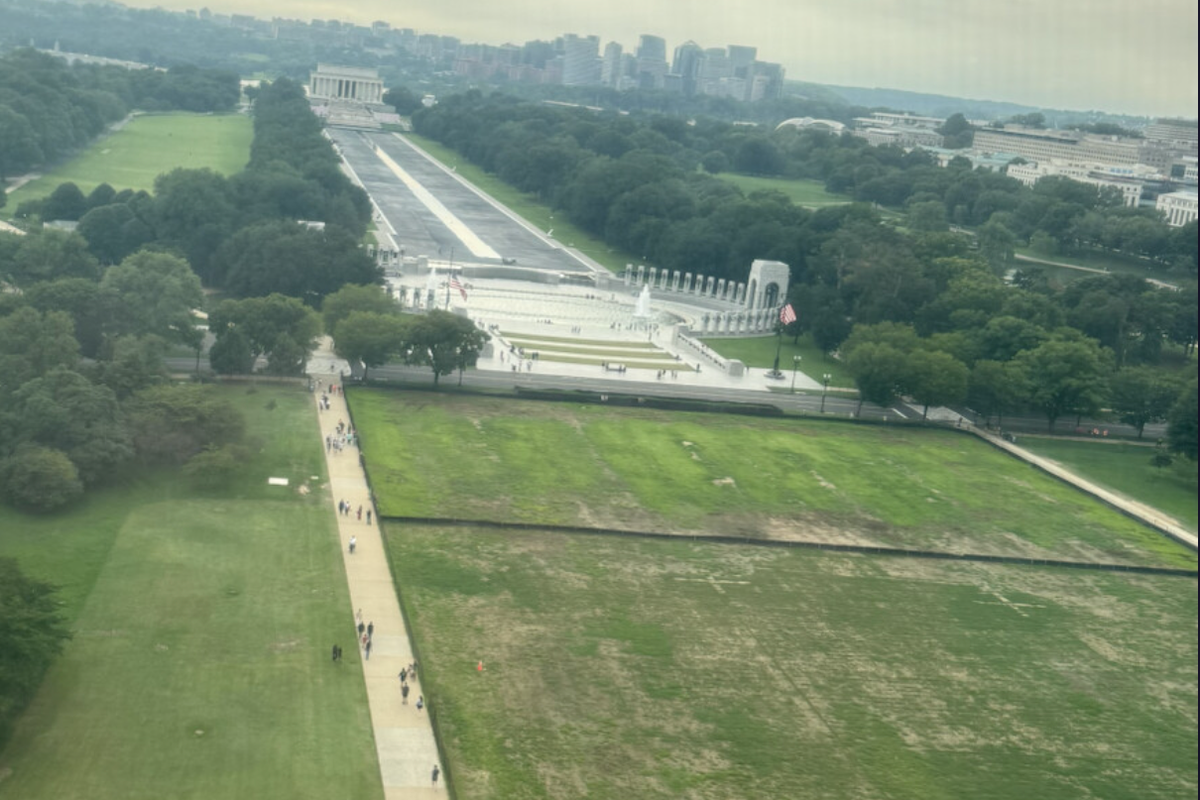
Public asset security operates under a distinct economic and operational framework where open-access architecture inherently conflicts with degradation prevention. When high-profile political figures comment on property damage within federal districts, the discourse typically centers on political friction rather than the underlying infrastructure vulnerabilities that permit recurrent degradation. Analyzing incidents of reported vandalism on the National Mall requires examining the structural costs of monument preservation, the policing resource allocation models governing federal park lands, and the operational friction between public accessibility and site hardening.
The Cost Function of Open-Access Monument Protection
Federal jurisdiction over the National Mall is split primarily between the National Park Service and the United States Park Police, creating a fragmented administrative environment. This structural division introduces latency into asset protection strategies. When monuments, memorials, and public installations face repeated defacement, the remedial expenditure extends far beyond immediate cleaning or repair budgets. If you enjoyed this piece, you might want to check out: this related article.
The economic equation governing public space maintenance involves three distinct variables:
- Direct restoration expenditure, which encompasses specialized material sourcing and labor to preserve historical stone or bronze without accelerating erosion.
- Preventive capital deployment, including lighting upgrades, electronic surveillance arrays, and physical access restriction barriers.
- Opportunity costs borne by the public, measured through restricted viewing access, increased security theater, and diminished aesthetic integration.
Hardening an open-access public square requires a calculated trade-off. Traditional security architecture relies on containment and perimeter control. Applying this methodology to a space designed explicitly for civic assembly and unhindered pedestrian movement degrades the core utility of the destination. Consequently, security planners operate under a constrained optimization problem: minimizing physical degradation while maintaining the open-access mandate established by federal charter. For another perspective on this story, see the recent update from TIME.
Operational Friction in Federal Park Law Enforcement
Resource allocation for the United States Park Police relies on dynamic threat modeling that prioritizes personnel deployment based on immediate crowd density, VIP movements, and static asset vulnerability. The National Mall spans hundreds of acres of contiguous green space interspersed with high-value symbolic targets, ranging from the Lincoln Memorial to the Washington Monument.
Covering this geographic footprint with a fixed personnel baseline creates coverage gaps. Vandalism perpetrators exploit these spatial and temporal blind spots. Graffiti and physical defacement typically occur during low-visibility windows or during periods of high civic congestion where rapid response vehicles face physical transit delays.
The logistical challenge compounds when public figures draw national attention to specific instances of property damage. High-level commentary shifts operational priorities from systematic risk mitigation to reactive posture adjustments. Rather than deploying analytical predictive policing models that target chronic vulnerability zones, agencies often reallocate assets to high-visibility locations to project authority, leaving peripheral installations exposed to opportunistic defacement.
The Political Economy of Monument Defacement
Public commentary regarding federal property condition often serves a signaling function, associating physical degradation with administrative competence or municipal governance failures. Deconstructing this rhetoric requires separating the symbolic utility of the National Mall from its physical reality as heavily trafficked urban infrastructure.
Public parks in dense metropolitan areas face continuous material wear. The distinction between standard wear-and-tear, structural weathering, and intentional vandalism dictates the appropriate policy response. Intentional defacement triggers legal and security countermeasures, whereas material degradation requires capital investment in maintenance cycles.
When political stakeholders frame property damage as a symptom of broader security failures, the proposed solutions frequently miss the operational mark. Increasing punitive measures or calling for heightened short-term surveillance rarely deters opportunistic vandalism committed against dispersed federal monuments. Deterrence in open public spaces requires environmental design modifications, such as hydrophobic coatings on susceptible stone surfaces, optimized sightlines, and integrated architectural lighting that eliminates dark zones.
Systematic Vulnerability Reduction Framework
Mitigating property degradation on federal grounds necessitates a structural shift from reactive enforcement to proactive environmental engineering. Implementing this approach involves three distinct operational phases:
- Surface material resilience enhancement, applying invisible, non-reactive sealants that repel paint, marker, and organic stains without compromising historical preservation standards.
- Spatial optimization redesign, restructuring surrounding landscaping, hardscaping, and lighting grids to maximize passive surveillance from pedestrian foot traffic and automated sensors.
- Sensor-fusion deployment, integrating low-profile acoustic and optical sensors capable of detecting unauthorized physical impact or aerosol application against protected structures in real time, routing alerts directly to mobile park units to minimize interdiction latency.
By removing the friction of manual reporting and replacing static patrols with data-driven deployment models, resource-constrained agencies can neutralize the variables that enable property damage before remediation costs escalate.
Institute real-time spatial monitoring arrays at high-density monuments, transition capital budgets from reactive chemical restoration to prophylactic material treatments, and decouple park security asset allocation from political commentary cycles.