Washington is rewriting its Ukraine playbook in real time, and honestly, the whiplash is dizzying. One week the White House moves to let Russian diesel flow back toward American markets. The next week Ukrainian commanders are fuming over satellite speed limits right as winter bears down on their power grid.
If you followed the war in its first few years, you knew the broad strokes. The U.S. backed Kyiv, sanctioned Moscow's energy sector, and kept satellite links humming so Ukrainian forces could outmaneuver a larger army. That neat division of labor is gone. Today, energy diplomacy, commercial space infrastructure, and high-stakes bargaining with Moscow are colliding in ways that leave allies off-balance and Kyiv scrambling.
A Playbook Built on Sanctions Hits a Wall
For years, squeezing Russian oil and gas was treated as non-negotiable in Western capitals. Washington pressed European partners to cut ties with Moscow's energy suppliers and held up sanctions as a pillar of pressure on the Kremlin.
That consensus cracked hard in October 2026. After U.S. diesel prices jumped from $3.48 per gallon in early January to a peak of $6.53 in September amid Middle Eastern shipping and energy shocks, President Donald Trump announced an arrangement with Russian President Vladimir Putin allowing Russian diesel exports to the U.S., alongside a push for an energy ceasefire. According to reporting from outlets including Axios and the Council on Foreign Relations, the move came after Kyiv resisted halting long-range strikes on Russian oil refineries.
Here is the catch that critics immediately pointed out. U.S. Energy Information Administration figures showed retail diesel hovering around $6.25 a gallon after the announcement compared to $6.20 the week before, while researchers at the Centre for Research on Energy and Clean Air estimated Russian exporters pulled in about $1.9 billion in diesel sales following the waiver. Whether you view that as pragmatic price relief or a gift to Moscow's war chest, it flipped years of U.S. messaging upside down. European officials who spent years being lectured by Washington over Russian energy suddenly found themselves watching the U.S. cut a bilateral fuel deal without them.
Drones, Refineries, and the Energy Ceasefire Standoff
Watching Kyiv and Washington argue over energy targets tells you just how much leverage has shifted. Ukraine has leaned heavily on long-range drones to hit Russian refineries and fuel depots, with Kyiv claiming over half of Russia's refining capacity was knocked offline by mid-November and Reuters reporting refinery processing down roughly 45% across 15 of Russia's 35 major plants.
From Washington's vantage point, knocking out refineries wasn't just a military win for Ukraine. It complicated negotiations and added heat to global fuel markets. From Kyiv's side, a unilateral pause on refinery strikes makes zero sense when Russian missiles and drones are still slamming Ukrainian substations, heating plants, and power grids ahead of winter.
When one side is trying to clear a path to talks and the other is trying to keep the lights on through sub-zero weather, "energy ceasefire" means two completely different things.
Ukrainian President Volodymyr Zelenskyy made his condition plain: Kyiv would hold back on energy strikes only if Moscow stopped hitting Ukrainian infrastructure or backed it up with stronger air defense support like Patriot interceptors. Because those strikes kept coming, Ukraine kept hitting back. That standoff shows a simple reality of modern warfare: tactical wins in the rear don't automatically translate into diplomatic alignment when capitals have different risk tolerances.
Starlink, Starshield, and Who Actually Controls the Switch
If the diesel deal exposed friction in grand strategy, the row over SpaceX's satellite networks exposed something even more unsettling for modern militaries. How much of a country's battlefield capability should sit inside a private company's orbital architecture?
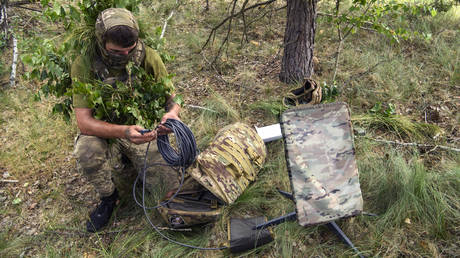
Ukrainian forces have relied on Starlink and Starshield for battlefield communications, reconnaissance, logistics, and drone operations. Starting in October and flaring up again in November 2026, Ukrainian officials warned that speed caps—reportedly around 100 mph (161 km/h)—were causing interceptor drones to lose link with operators along front lines and occupied areas, making it harder to chase down fast Russian jet-powered drones.
What makes this fight messy is the finger-pointing over authority. U.S. Secretary of State Marco Rubio previously noted that commercial Starlink speeds and terms are governed by private contracts. Elon Musk has rejected Kyiv's claims of new restrictions, arguing Ukraine is conflating commercial Starlink with military Starshield and insisting the Pentagon—not SpaceX—controls how those speeds operate. Meanwhile, Democratic lawmakers in the U.S. Senate moved to demand records from SpaceX to clarify who authorized what and whether commercial decisions are shaping air-defense outcomes.
What Happens When Private Tech Meets Statecraft
Most people treat satellite internet like a cable bill. You pay the invoice, the signal shows up, end of story.
On an active battlefield, it doesn't work like that. Geofencing, bandwidth throttling, firmware updates, and contract clauses can change how a weapon system behaves in minutes. Even when the exact technical cause of a slowdown is disputed—jamming, software limits, or policy shifts—the operational effect on troops trying to intercept incoming drones is immediate.
That's a lesson far bigger than Ukraine. Any defense planner watching this unfold sees the same vulnerability: relying on a single commercial constellation creates a chokepoint where corporate disputes, political feuds, and military chain-of-command lines blur.
What This Shift Means for Allies and Markets
A common misconception is that U.S. foreign policy pivots are just theater for domestic voters. Sometimes politics plays a role, sure—cost-of-living pressures and midterm dynamics were front and center in fall 2026. Still, treating the shift purely as political posturing misses the structural changes underneath.
- European security is getting more expensive and more independent. When Washington cuts side deals or pushes territorial and diplomatic formulas that rattle Brussels, European capitals feel the pressure to fund more aid themselves, tighten sanctions enforcement on their own end, and build homegrown defense and space options.
- Energy markets price in supply shocks faster than sanctions headlines. Middle Eastern disruptions can move fuel prices far more sharply than diplomatic communiqués, which is why energy policy keeps colliding with sanctions strategy.
- Space resilience is now a core sovereignty issue. Relying on one vendor's low-Earth-orbit network is convenient until a dispute slows down your defenses. Diversifying communications and hardening command links is no longer a nice-to-have.
Practical Ways to Track and Adapt to the Shift
If you're following this conflict for business, policy, or risk planning, don't rely on single-headline summaries. Keep an eye on hard indicators that cut through the noise:
- Watch physical infrastructure data, not just rhetoric. Track refinery throughput estimates, energy grid damage reports, and actual fuel price series rather than taking diplomatic statements at face value.
- Separate commercial contracts from military authorities. When reading about satellite or tech disruptions, look for official records, congressional inquiries, and technical details on where command control actually sits.
- Stress-test supply and tech dependencies. If you run operations tied to freight, energy, or connected hardware, map where single-point-of-failure suppliers could hit sudden regulatory, geopolitical, or bandwidth bottlenecks.
The old playbook assumed alignment between Washington, Brussels, and Kyiv on economic pressure and tech support. That assumption is out the window—and every side is now playing a much sharper, much riskier game.