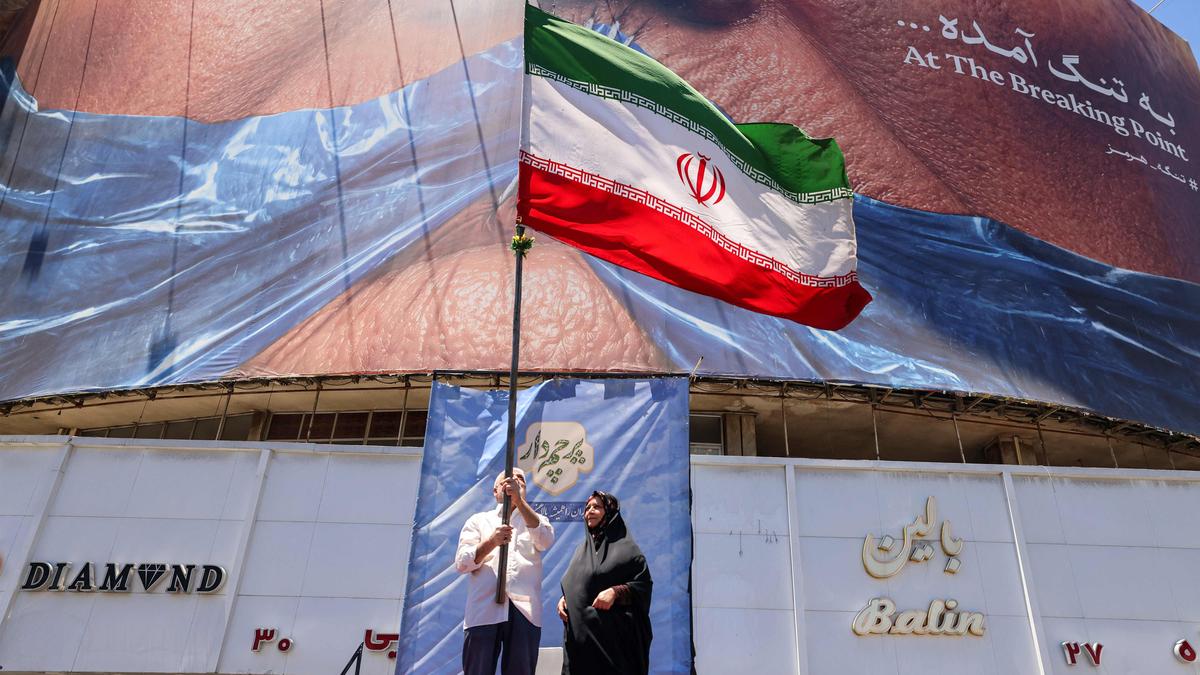
You can't build a stable peace on a foundation of exploding drones and ballistic missiles. Yet, that's exactly what the United States and Iran are trying to do right now.
While negotiators behind closed doors hammer out a tentative 60-day extension to a shaky ceasefire, the skies over the Middle East tell a completely different story. The latest flare-up proves that the 2026 Iran war is nowhere near over, no matter how optimistic the diplomatic cables sound.
We just witnessed a major military exchange that brought the Pakistan-mediated peace talks to the brink of collapse. The U.S. military launched strikes in southern Iran, targeting a ground control station in Bandar Abbas and shooting down five Iranian drones over the Strait of Hormuz. Iran didn't hesitate to swing back. They fired ballistic missiles targeting an American military base in Kuwait, forcing Kuwaiti forces to scramble for interceptions.
It's a classic case of talking while fighting. Both sides want to project absolute strength at the negotiating table, but this high-stakes game of chicken could easily spiral out of control.
The Illusion of the 60-Day Ceasefire
If you look only at the headlines out of Washington and Islamabad, you might think a breakthrough is imminent. Negotiators have reportedly reached a memorandum of understanding to prolong the truce and kickstart formal talks regarding Iran’s nuclear program.
But there’s a massive catch. President Donald Trump hasn't signed off on it yet.
Trump recently warned that the diplomatic process was "negotiating on fumes." The administration is keeping the pressure dialed up to the absolute maximum. Just hours after the military strikes, Treasury Secretary Scott Bessent announced aggressive new economic measures. The U.S. is moving to completely shut down Iranian airlines' access to international landing spots, refueling, and ticket sales. On top of that, Washington issued a blunt warning to Oman, threatening severe penalties if they help facilitate any kind of tolling system for shipping lanes.
This tells us everything we need to know about the current American strategy. The White House isn't looking for a compromise. They're trying to leverage a position of total dominance to force a sweeping capitulation.
What Both Sides Actually Want
The core issue is that the two nations are operating on completely irreconcilable assumptions. They are using the same words but speaking entirely different languages.
The American objectives, backed heavily by Israel, focus on dismantling Iran's strategic capabilities entirely. The White House is demanding zero uranium enrichment, the complete removal of past nuclear materials, a permanent reopening of the Strait of Hormuz under international security guarantees, and an end to Iran's regional missile network. Vice President JD Vance summarized the position clearly, stating the goal is an affirmative commitment that Iran will never possess the tools to quickly build a nuclear weapon.
Tehran sees things through a completely different lens. The Islamic Revolutionary Guard Corps (IRGC) and Parliamentary Speaker Mohammad Bagher Ghalibaf have openly called a bilateral ceasefire unreasonable under current U.S. terms. Iran's official 10-point plan demands a total lifting of all Western economic sanctions, financial compensation for war reconstruction, and a complete withdrawal of U.S. forces from regional military bases.
Essentially, the U.S. wants a surrender, while Iran is claiming victory for forcing Washington to the table in the first place.
The Strait of Hormuz Chokepoint
Everything comes down to the narrow stretch of water known as the Strait of Hormuz. It's the most vital oil transit chokepoint in the world, and it has become the main battleground of the 2026 conflict.
When the war erupted following the triggering of snapback sanctions by European powers, Iran immediately disrupted maritime traffic. While Trump claimed earlier this year that the U.S. would blast Iran "back to the Stone Ages" unless the waterway was clear, the reality on the ground is complicated. Western intelligence estimates that at least 30 out of 33 Iranian missile sites along the strait remain fully operative.
This explains the recent U.S. strikes on Bandar Abbas. Washington feels an urgent need to neutralize these coastal defense sites to maintain freedom of navigation, or at least preserve its own ability to enforce a naval blockade. Iran knows this is its strongest card. Threatening the global energy supply is the only real leverage Tehran has left after six weeks of devastating strikes on its domestic military infrastructure.
Why Diplomacy is Stalling
The mediation efforts led by Pakistani Foreign Minister Ishaq Dar, who is traveling to Washington to meet with Secretary of State Marco Rubio, face an uphill battle. The fundamental problem with this peace process is the lack of trust and the constant interference of outside variables.
Take a look at the regional dynamics complicating the talks:
- The Israeli Factor: Israel continues to intensify its military operations against Iranian-backed groups in southern Lebanon, meaning a ceasefire between Washington and Tehran doesn't guarantee regional stability.
- The Nuclear Standoff: While American officials claim Iran agreed to stop uranium enrichment as a precondition, the head of Iran's Atomic Energy Organization publicly rejected any permanent limits on their nuclear program.
- Internal Iranian Politics: Mojtaba Khamenei recently delivered a fiery address warning that the West simply wants to bring Iran to its knees to compensate for past geopolitical defeats, signaling that hardliners in Tehran are resisting any diplomatic concessions.
Every time negotiators make a shred of progress in Islamabad or Doha, a drone launch or a targeted missile strike threatens to rip up the agreement.
The Next Critical Steps
We are entering the most dangerous phase of this conflict. The tentative 60-day extension is sitting on the president's desk, but the military realities on the ground are moving faster than the diplomats can write.
Watch the following indicators closely over the next 48 hours to see which way the scales tip:
First, keep an eye on whether Trump officially approves the memorandum of understanding or chooses to let the ceasefire lapse in favor of more kinetic action. Second, watch the movement of commercial shipping traffic in the Gulf. If international insurance firms stop covering vessels traveling through the region due to the drone threat, energy prices will spike, forcing a rapid escalation. Finally, look at the upcoming meetings between Pakistani and American officials in Washington. If those talks fail to produce a verified framework for nuclear monitoring, the overnight strikes we just witnessed will look like a minor skirmish compared to what comes next.