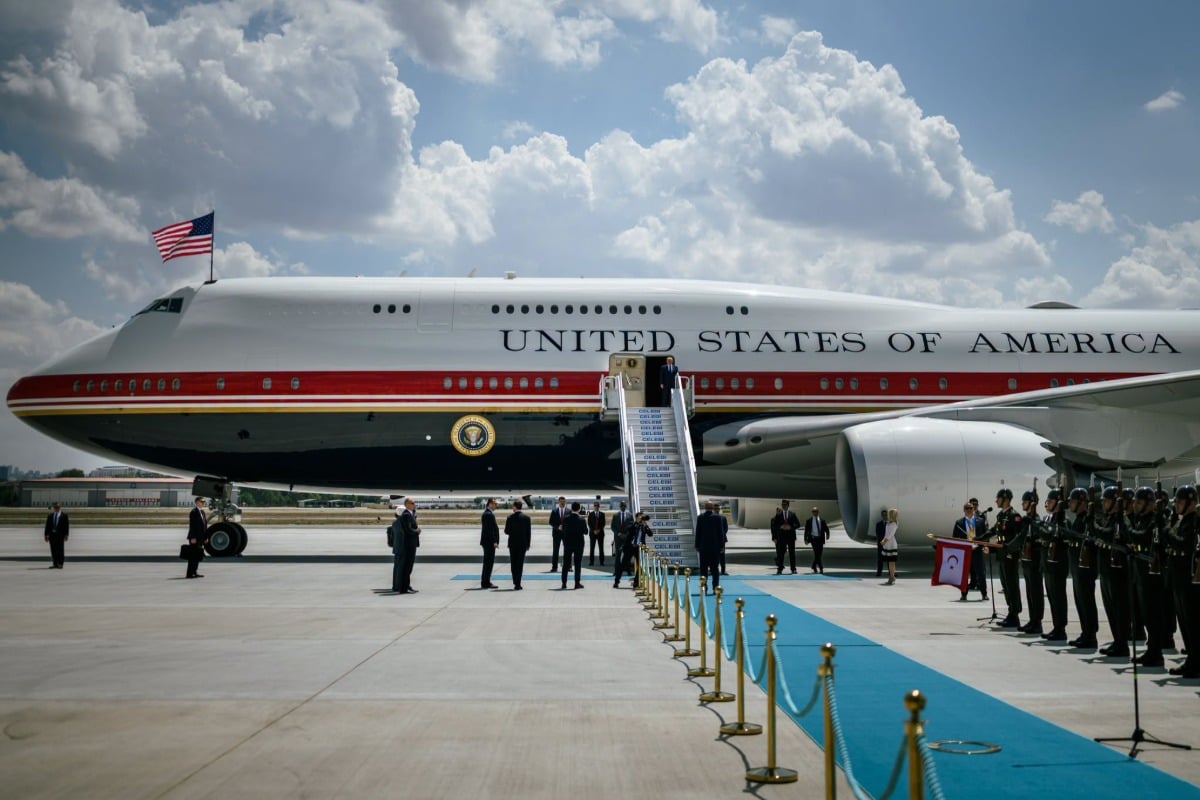
The illusion of peace in the Middle East didn't even last a month. Standing next to NATO Secretary-General Mark Rutte in Ankara, Turkey, President Donald Trump just confirmed what anyone watching the Strait of Hormuz already knew. The June 17 ceasefire agreement between the United States and Iran is dead.
"For me, I think it's over," Trump told reporters, calling further diplomatic talks a "waste of time."
This isn't just tough talk. It's the fallout of a chaotic 24-hour window that saw heavy US airstrikes inside Iran, retaliatory ballistic missiles raining down on US bases in the Gulf, and global oil markets throwing an absolute fit. If you thought the June memorandum of understanding (MoU) was a historic breakthrough, you missed the fatal structural flaws built right into it.
The 24 Hour Collapse From Tanker Fires to Ballistic Missiles
The immediate trigger for the collapse wasn't a failure at the negotiating table. It was a shooting war in the water.
Washington accused Tehran of launching targeted attacks against three commercial vessels transiting the Strait of Hormuz. These weren't random cargo ships. They included the Marshall Islands-flagged M/T Al Rekayyat (carrying Qatari liquefied natural gas), the Saudi-flagged M/T Wedyan, and the Liberian-flagged M/T Cyprus Prosperity. Striking Qatari and Saudi energy assets is a direct provocation, hitting the exact global energy arteries the ceasefire was supposed to protect.
The American response was swift and massive. US Central Command (CENTCOM) launched offensive strikes hitting over 80 targets inside Iran, specifically aiming at Bandar Abbas, Sirik, and Qeshm Island.
According to CENTCOM, the operation focused heavily on:
- Coastal radar installations and command networks.
- Active air defense systems.
- More than 60 Islamic Revolutionary Guard Corps (IRGC) fast-attack small boats.
Iran didn't back down. Within hours, the IRGC fired a wave of missiles targeting US military installations in Bahrain—home to the Navy's Fifth Fleet—and Kuwait. Air raid sirens sounded across both Gulf nations, officially expanding the battlefield beyond the immediate coastlines of the strait.
What Most People Get Wrong About the June 17 MoU
The public narrative surrounding the June truce was that both sides wanted a 60-day window to negotiate a permanent end to the war and handle Iran's nuclear program. That was the corporate PR version. In reality, the language of the memorandum itself was a ticking time bomb.
The core dispute comes down to who actually controls the shipping lanes. Iranian foreign ministry officials explicitly state that the MoU's terms placed Iran in complete physical control of the strait for at least 30 days from signing, giving them the right to dictate routes. Tehran claims the US violated the truce by trying to establish a southern shipping route near Oman without Iranian permission.
Worse, Iran intended to use this temporary control to transition the Strait of Hormuz into a permanent toll system, forcing international vessels to pay fees for transit. The US and its allies were never going to accept a permanent Iranian toll booth at a chokepoint that handles 20% of the world's petroleum. When the US bypassed Iranian channels, Iran started shooting. When Iran started shooting, Trump tore up the agreement.
Economic Blowback and the Return of Maximum Pressure
The financial markets reacted instantly to the news from the NATO summit. Brent crude oil prices spiked over 5%, jumping straight to $78.09 a barrel, while West Texas Intermediate climbed past $74. The brief window of stability for global shipping is completely gone.
As part of the immediate military and diplomatic retaliation, the Trump administration officially revoked the temporary sanctions waivers that had been granted under the June agreement. These waivers had allowed Iran to openly sell crude oil for US dollars for the first time in years—a massive financial lifeline for Tehran. By snapping these sanctions back into place, the White House is returning to a strict policy of attempting to drive Iranian oil exports to zero.
"The era of bullying and extortion is over," retorted Iranian Parliamentary Speaker Mohammad Bagher Ghalibaf. "We don't fold."
The Reality of What Comes Next
With the diplomatic track effectively shuttered, the region enters an incredibly volatile phase. Trump noted that while negotiators like Jared Kushner and Steve Witkoff could technically keep lines open, he sees no point in it.
If you are tracking this conflict, ignore the political rhetoric and watch these three specific variables over the coming days:
- Insurance Premiums for Maritime Shipping: Expect maritime insurance rates for the Persian Gulf to skyrocket back to wartime highs. This will force shipping companies to decide whether to risk the Hormuz route or divert entirely around Africa, adding massive costs to global supply chains.
- Air Defense Depletion: The overnight strikes heavily targeted Iranian radar and anti-air infrastructure. Watch for whether Iran attempts to rapidly rebuild these sites using Russian-supplied hardware, or if they rely entirely on asymmetrical drone and asymmetric boat swarms moving forward.
- The Scope of Retaliation: Up until now, Gulf states like Bahrain and Kuwait merely hosted US forces. Now that they've faced direct missile alerts, the diplomatic pressure on these local governments to either restrict US operations or fully commit to a coalition will reach a breaking point.
The underlying issue was never a lack of willingness to talk. It was a fundamental disagreement on who rules the waves in the world's most critical energy corridor. That question won't be settled by a memorandum. It's being settled by heavy artillery.