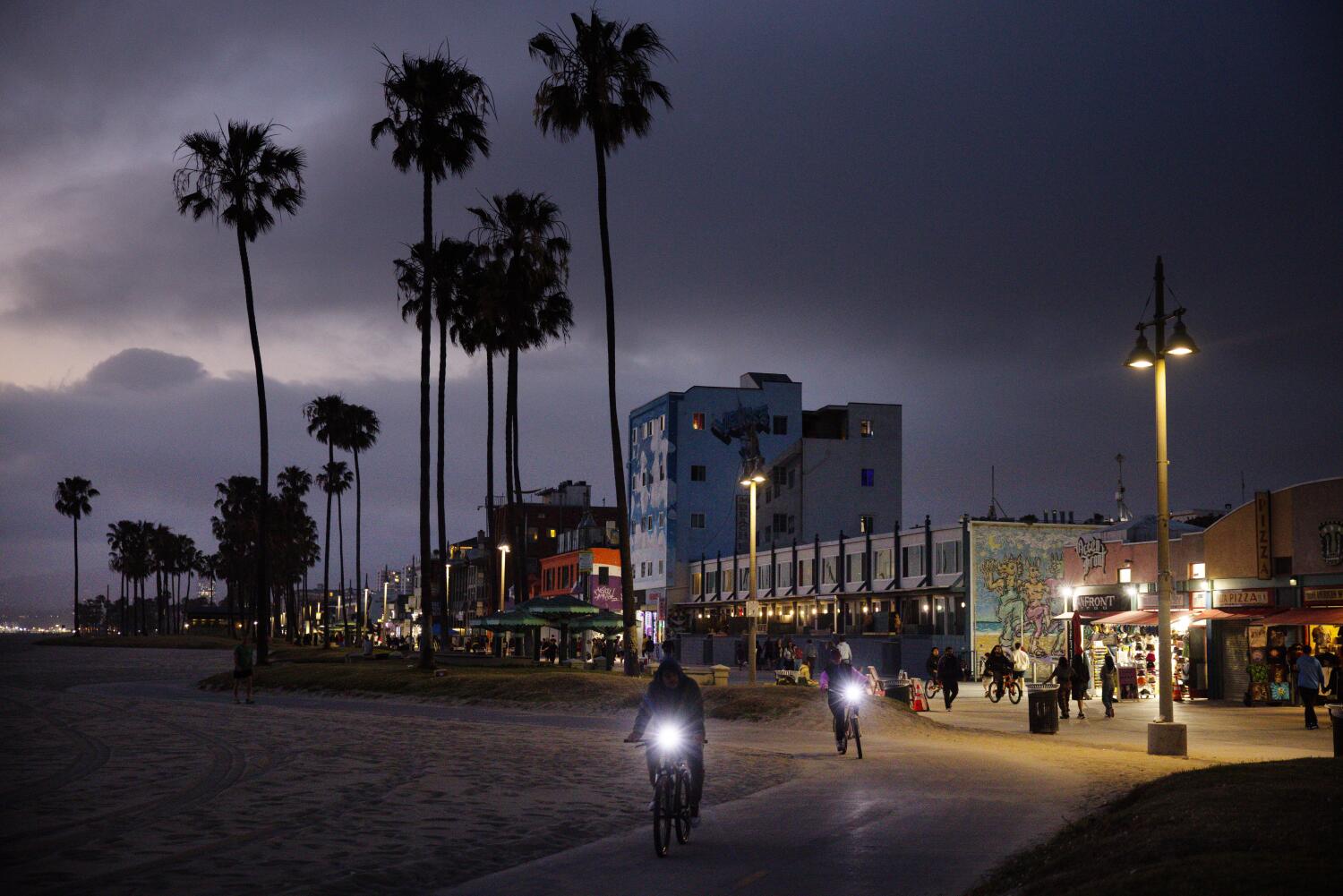
The replacement of high-pressure sodium (HPS) streetlights with light-emitting diodes (LED) in Los Angeles represents a critical failure in systemic design, prioritizing narrow energy efficiency metrics while ignoring the physiological and psychological impacts of Correlated Color Temperature (CCT). This transition has fundamentally altered the nocturnal environment of the city, moving from a monochromatic 2100K amber glow to a broad-spectrum, high-intensity 4000K+ white light. While the primary driver for this shift was a reduction in kilowatt-hour consumption, the execution neglected the spectral power distribution (SPD) variables that dictate human circadian rhythms and urban livability.
The Triad of LED Optimization Failure
The municipal strategy behind the LED rollout can be decomposed into three misaligned variables: luminous efficacy, color rendering, and atmospheric scattering.
1. Luminous Efficacy vs. Biological Cost
City planners optimized for lumens per watt. High-pressure sodium lamps, while efficient, emit a narrow band of yellow light. LEDs offer superior efficiency and directional control, but the specific "cool white" LEDs selected for L.A. rely on a blue-pump architecture. These chips use a blue LED coated with a phosphor layer to produce white light. The resulting spike in the 440-490 nanometer range—the blue light spectrum—directly suppresses melatonin production in humans and wildlife. The "harshness" reported by residents is not an aesthetic preference; it is a neurological response to a high-CCT environment that signals the brain to maintain a state of alertness during hours traditionally reserved for recovery.
2. The Color Rendering Index (CRI) Paradox
Standard LED marketing emphasizes a higher CRI, suggesting that "better" color visibility improves safety. However, in an urban residential context, the requirement for high CRI is negligible compared to the need for visual comfort. The shift to a high-CRI white light increases "glare sensation," a phenomenon where the eye’s rod cells are over-stimulated. This creates a high-contrast environment where shadows appear deeper and more impenetrable, actually decreasing the "feeling" of safety even if technical visibility is higher.
3. Rayleigh Scattering and the Skyglow Effect
The transition to white LEDs has exacerbated urban light pollution through atmospheric scattering. Shorter wavelengths (blue light) scatter more easily than longer wavelengths (amber/red).
When a city switches its entire grid to 4000K LEDs, the amount of light reflected back into the atmosphere and scattered across the horizon increases significantly. This creates a permanent "perpetual twilight" that disrupts migratory patterns and obscures the astronomical horizon, a cost that was never factored into the initial ROI calculations for the energy savings.
The Economics of Mechanical Depreciation and Obsolescence
Municipalities often view streetlighting as a "set and forget" infrastructure. This mindset failed to account for the rapid depreciation of early-generation LED components.
- Thermal Management Failures: Unlike HPS lamps, which radiate heat outward, LEDs conduct heat backward into the fixture. In the high-temperature environment of Southern California, many early LED installs suffered from "lumen depreciation" or total driver failure because the heat sinks were undersized or poorly maintained.
- The "Blue Drift" Phenomenon: As the phosphor coating on cheap LED chips degrades over time, the light becomes progressively bluer and more violet. This means the lights do not just stay "harsh white"—they actually become more biologically disruptive as they age.
- Maintenance Debt: The cost savings from lower electricity bills were frequently absorbed by the unexpected complexity of maintaining digital drivers and networked "smart" nodes, leaving no capital for the replacement of aging, color-shifted units.
Structural Conflict: Public Safety vs. Residential Privacy
The fundamental conflict in L.A.’s streetlight controversy stems from the "Uniformity Ratio." Engineering standards for road safety dictate a specific level of uniform brightness across the pavement to eliminate "dark spots" for drivers. However, these standards rarely account for "light trespass"—the spilling of high-intensity light into bedroom windows.
The directional nature of LEDs allows for better shielding, yet many of the installed fixtures in Los Angeles lack the necessary "house-side shields." This creates a "Searchlight Effect" where the light is focused precisely where it is unwanted. The city’s failure to implement localized shielding solutions turned a technological upgrade into an invasive architectural element.
The Cognitive Gap in Municipal Decision-Making
The decision-making process was dominated by a "Efficiency First" framework, which utilized a binary logic:
- HPS is old and expensive.
- LED is new and cheap to operate.
- Therefore, LED is the superior choice.
This logic ignores the "Rebound Effect" in urban planning. When light becomes cheaper and more efficient, cities tend to install more of it, leading to over-illumination. The perceived "harshness" is a direct result of over-lighting spaces that require lower ambient levels. A 3000K or 2700K LED provides a "warmer" light that mimics the HPS feel while retaining LED efficiency, but these units were bypassed in early contracts due to a slightly lower (roughly 5-10%) luminous efficacy compared to the 4000K units.
Quantifying the Physiological Impact
The impact of the 4000K shift can be measured through the Melanopic Lux metric, which quantifies how much a light source stimulates the human circadian system.
- 2100K (Old HPS): Low melanopic impact; minimal interference with sleep cycles.
- 3000K (Warm LED): Moderate impact; a balanced compromise for urban environments.
- 4000K+ (L.A. Standard LED): High melanopic impact; significant suppression of melatonin and increased cortisol production.
The city effectively conducted a massive, uncontrolled biological experiment on millions of residents by choosing a spectrum that maximizes circadian disruption for a marginal gain in electrical efficiency.
The Path Toward Optical Remediation
To rectify the current state of Los Angeles’ nocturnal environment, the strategy must shift from "Maximum Lumens" to "Precision Photometry." This requires a decoupling of energy goals from spectral choices.
Implementation of Spectral Filtering
Retrofitting existing 4000K heads with amber-tinted filters or "warm caps" is a cost-effective alternative to total fixture replacement. This reduces the blue-light peak and brings the CCT down to a more tolerable 2700K range without requiring new wiring or drivers.
Dynamic Dimming and Adaptive Controls
The "Smart City" nodes already installed on many L.A. poles must be utilized for more than just outage reporting. Implementing "Part-Night Lighting" (PNL) schemes—where brightness is reduced by 50% after midnight—can mitigate the biological impact during the hours of deepest sleep while maintaining basic safety visibility.
Shielding Audits
A street-by-street audit is required to identify "Hot Spots" where light trespass exceeds 0.5 lux at the residential facade. Installing physical louvers and shields on the house-side of the LED cob is the only way to resolve the privacy complaints of homeowners.
The transition to LED was an inevitable technological evolution, but the execution in Los Angeles was a masterclass in ignoring the human element of infrastructure. Future municipal upgrades must prioritize the "Biological ROI"—calculating the health and wellness costs of the light spectrum alongside the dollar-per-kilowatt-hour savings. Any city that continues to prioritize 4000K white light over the 2700K soft-white standard is essentially trading long-term public health for short-term budget optics.