When a stock spikes over 600% on day one, you know investors have completely lost their minds. Or they see something the rest of us are missing.
Unitree Technology just pulled off the wildest market debut of the year. The Chinese humanoid robot maker went public on Shanghai's STAR Market, pricing its shares at 150.80 yuan ($22.36 USD). Within minutes, the price rocketed up by 629%. Even after a slight midday cool down, the stock sat roughly 500% higher than its initial offering.
Retail investors chased this IPO with a desperation rarely seen outside of crypto bull runs. The retail portion of the share lottery was oversubscribed by thousands of times. You had better odds winning a major sweepstakes than scoring these shares at the IPO price. Founder Wang Xingxing watched his paper wealth explode instantly, turning the 36-year-old into one of China's wealthiest millennial entrepreneurs.
What Everyone Gets Wrong About the Unitree Hype
Most tech commentators look at these numbers and scream about an impending crash. They point to sky-high price-to-earnings ratios sitting well into triple digits and call it a classic speculative bubble.
They aren't entirely wrong about the math. Unitree's valuation hit astronomical territory relative to its actual earnings. The company posted around 1.7 billion yuan (roughly $250 million) in revenue for 2025. That is a tiny foundation for a multi-billion-dollar market cap.
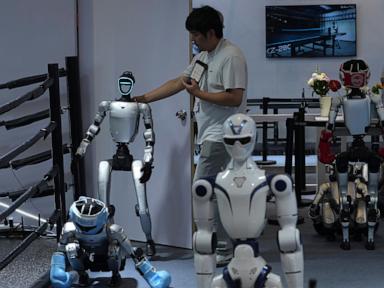
Yet, dismissing Unitree as pure hype ignores the raw reality of hardware scaling. Unitree and rival firm AGIBOT didn't get here by accident. Last year, out of roughly 15,000 humanoid robots shipped worldwide, Unitree shipped over 5,000 units. They are actually building and shipping physical hardware at a scale that American competitors are still struggling to match.
The Real Driver Behind the Shanghai Frenzy
Why did mainland investors flood this specific stock while the broader Shanghai Composite Index struggled?
It comes down to scarcity and state backing. Unitree is the first pure-play general-purpose humanoid robot maker to land on the mainland exchange. If you are an institutional or retail fund manager in China looking to place a massive bet on embodied artificial intelligence, you have very few choices. Unitree became an instant proxy for the entire sector's future.
Wang's team built their reputation on viral video stunts. If you spend time online, you have likely seen their mechanical quadrupeds and humanoids doing backflips, executing martial arts, or dancing at television gala events. Those stunts captured public attention, but the enterprise value comes from something less glamorous: manufacturing efficiency.
The US Ban and Global Headwinds
You cannot talk about Unitree without addressing the geopolitical elephant in the room.
The United States isn't sitting back watching this happen. The Federal Communications Commission recently moved to ban imports of foreign-made humanoid and quadruped robots on national security grounds.
Unitree admits that overseas revenue accounts for more than 40% of its total earnings, with the US market making up roughly 13% to 18%. While older models might still find loopholes, future restrictions could choke off their western expansion. Management acknowledges this risk directly in their filings.
Despite trade barriers, domestic demand inside China remains ferocious. Industrial parks, logistics warehouses, and research institutions are buying units to test automated workflows. The real test isn't whether these robots can dance on a stage. It is whether they can pack boxes without breaking down for twelve straight hours.
If you are tracking industrial tech trends, stop looking at quarterly software updates. Watch the supply chain for precision actuators, harmonic drives, and tactile sensors. That is where the actual money is moving.