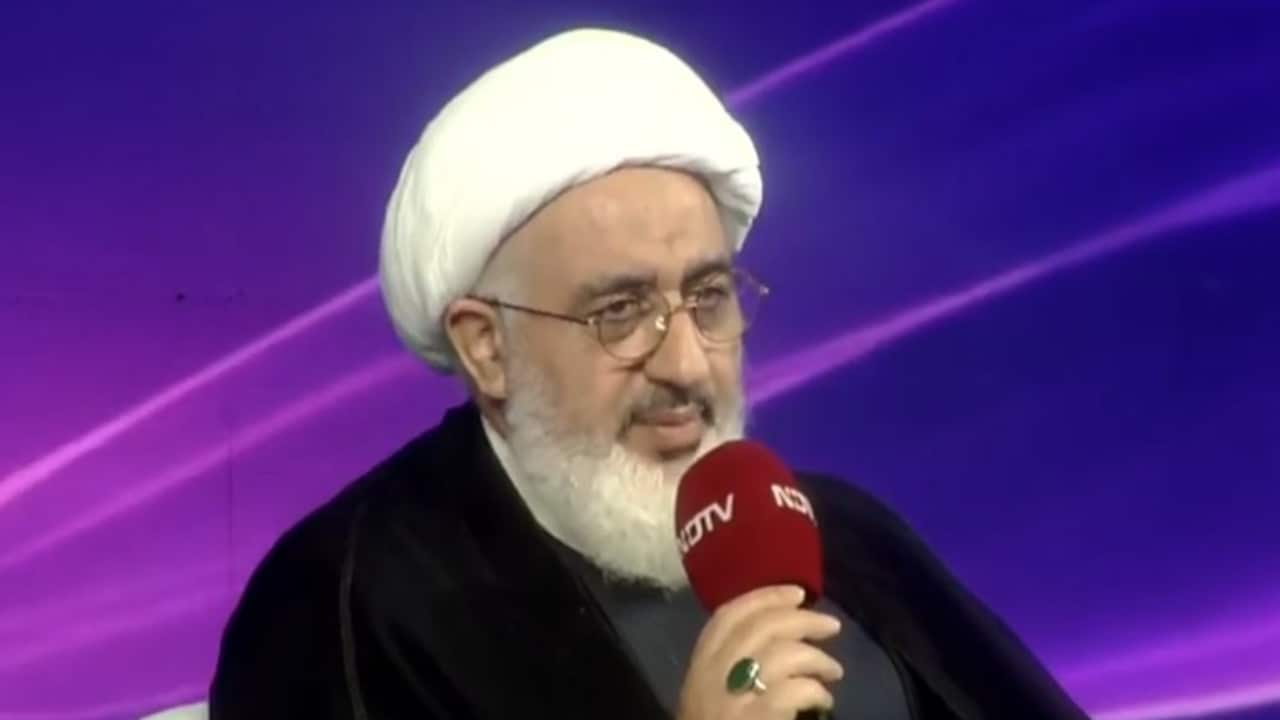
When an Iranian diplomat invokes the Minab school attack decades after the bombs fell, the statement is rarely just an exercise in personal grief. It is a calculated deployment of historical memory designed to anchor contemporary geopolitical grievances in undeniable human tragedy. During the Iran-Iraq War of the 1980s, civilian infrastructure across southern Iran—including schools in cities like Minab, Borujerd, and Miyaneh—absorbed devastating aerial bombardments, leaving generational trauma that Tehran continues to weave into its international messaging today.
To understand why a single diplomatic remark about crying parents carries so much weight in modern foreign policy, you have to look past the immediate emotional resonance. You have to examine how states weaponize collective trauma, why Western audiences often miss the historical subtext of Iranian diplomacy, and what happens when civilian casualties become permanent fixtures in statecraft.
The Mechanics of Diplomatic Grief
Diplomacy is often portrayed as a sterile exchange of treaties, sanctions, and strategic posturing. In reality, it is deeply theatrical. Every word spoken at a podium in Geneva, Vienna, or New York is vetted for its domestic and international shelf life.
When an envoy brings up an attack on a school in Minab—a strategic city in Hormozgan province near the Strait of Hormuz—the speaker is doing two things simultaneously. First, they are humanizing a state apparatus that Western media frequently reduces to nuclear centrifuges and proxy militias. Second, they are drawing a direct moral line between past Western complicity during the Iran-Iraq War and present-day friction over sanctions, regional security, and human rights.
For decades, Iranian officials have operated under a core strategic doctrine that views the 1980–1988 conflict with Saddam Hussein’s Iraq not merely as a bilateral war, but as an international siege. During that eight-year brutal slog, Baghdad received intelligence, financial backing, and dual-use weaponry from a wide coalition of global powers, including the United States, the Soviet Union, and several European nations. When Iraqi jets struck civilian targets—whether through deliberate terror bombing or indiscriminate targeting—Tehran held both Baghdad and its international suppliers responsible.
The grief of parents in Minab is real. The psychological scars carried by survivors of wartime school bombings do not fade simply because a ceasefire was signed in August 1988. Yet in the halls of international diplomacy, that raw, unvarnished pain is converted into moral capital. By reminding the world that Iranian parents are still crying, the diplomat forces a shift in the conversational frame. Suddenly, discussions about contemporary compliance or regional aggression are forced to share space with unresolved historical grievances.
Why Minab Matters Geographically and Strategically
Most casual observers outside the Middle East could not locate Minab on a map. Situated in southern Iran, roughly 100 kilometers east of Bandar Abbas, the city sits dangerously close to the Strait of Hormuz, the narrow maritime chokepoint through which roughly a fifth of the world's petroleum passes.
During the 1980s, this proximity made Hormozgan province a critical logistical artery. It was far enough from the western front lines along the Shatt al-Arab waterway to give residents a false sense of security, yet vital enough to Iran's war effort and maritime survival to draw the attention of long-range Iraqi strike aircraft.
The Illusion of the Rear Guard
In modern warfare, the concept of a safe "rear area" largely evaporated with the advent of long-range aerial bombardment and ballistic missiles. Communities like Minab served as staging grounds, agricultural hubs, and population centers supporting the broader national effort. When air raid sirens wailed in southern Iran during the mid-to-late 1980s, civil defense infrastructure was often rudimentary. Schools, built with standard reinforced concrete or brick rather than hardened blast walls, offered zero protection against high-explosive ordnance.
The targeting of educational institutions during the Iran-Iraq War—most infamously the January 1987 Iraqi airstrikes on the Zeinabiyeh and Tharallah schools in Borujerd, which killed dozens of schoolgirls—established a grim precedent. Those attacks shattered the social contract of wartime survivability. If children sitting at wooden desks hundreds of miles from the trenches were not safe, nobody was.
The Long Shadow Over the Strait
Today, Minab is no longer just a quiet agricultural center known for its date palms and bustling Thursday markets. It sits squarely inside the operational theater of the Islamic Revolutionary Guard Corps (IRGC) Navy and regular Iranian naval forces tasked with guarding the approaches to the Persian Gulf.
When an Iranian diplomat references Minab, they are subtly reminding the international community of the geography of vulnerability. The same airspace and coastal waters that once left Iranian schoolchildren exposed to foreign-supplied bombers are now bristling with coastal defense batteries, fast-attack craft, and drone bases. The subtext is unmistakable: the vulnerability of the 1980s will never be permitted to repeat itself.
The Asymmetry of Historical Memory
One of the sharpest blind spots in international journalism and foreign policy analysis is the asymmetry of memory. What constitutes a defining national trauma for one country is often treated as an obscure footnote by another.
In Washington, London, or Paris, the 1980s are remembered through the lens of the late Cold War, the rise of neoliberal economics, or the eventual collapse of the Soviet Union. The Iran-Iraq War is frequently summarized in a few paragraphs regarding the "Tanker War" or the Iran-Contra affair. The specific dates of Iraqi air raids on Iranian cities rarely register in the Western public consciousness.
In Tehran, that exact same decade is the foundational bedrock of the modern state. Known officially as the Sacred Defense, the war shaped the worldview of the entire generation that now governs Iran, commands its military, and staffs its diplomatic corps.
| Dimension | Western Diplomatic Framing | Iranian Diplomatic Framing |
|---|---|---|
| Primary Time Horizon | Immediate or near-term (nuclear timelines, current regional conflicts, active sanctions). | Multi-generational (stretching back to the 1953 coup, the 1979 Revolution, and the 1980–1988 war). |
| View of Civilian Casualties | Evaluated through contemporary international humanitarian law and current incident investigations. | Viewed as part of an unbroken continuum of foreign-backed aggression and double standards. |
| Role of Historical Grievances | Often dismissed as distractions or propaganda designed to stall negotiations. | Treated as essential context that proves the necessity of self-reliance and deterrence. |
| Emotional Register | Technocratic, legalistic, and focused on procedural compliance. | Moralistic, personal, and anchored in themes of martyrdom, endurance, and betrayal. |
This disconnect creates a recurring communication breakdown. When Western analysts hear an Iranian diplomat talk about grieving parents from an attack decades ago, the instinct is to dismiss it as "whataboutism"—a rhetorical deflection meant to dodge accountability for contemporary policies.
That dismissal is a mistake. You do not have to endorse Tehran's political agenda to recognize that the trauma it references is authentic and deeply embedded in the national psyche. Failing to understand how these memories operate leaves observers blind to why Iranian negotiators behave the way they do under pressure.
The Weaponization of Empathy in Statecraft
There is an uncomfortable truth at the heart of all wartime remembrance: states rarely mourn innocents purely for the sake of the dead. Mourning is organized, curated, and deployed to serve the living state.
When the Iranian government memorializes the victims of school bombings, chemical weapons attacks like Sardasht, or the 1988 downing of Iran Air Flight 655 by the USS Vincennes, it is performing an act of state-sanctioned remembrance. Museums are built. Murals are painted on the sides of apartment blocks. Diplomats are briefed on specific anecdotes to deploy when facing hostile questioning from international press corps.
Does this state curation diminish the reality of the parents' tears? Not at all. A mother who lost her child in an airstrike forty years ago experiences a permanent, unfillable void regardless of how her government uses that loss at the United Nations.
However, as critical consumers of news, we have to separate the human reality from the political utility.
- Legitimization of Deterrence: By keeping the memory of defenseless schoolchildren alive, the state justifies massive expenditures on asymmetric warfare, ballistic missiles, and air defense networks to a domestic population struggling under severe economic inflation.
- Moral Equivalence: In international forums where Iran faces condemnation for its domestic crackdown on protesters or its support for armed groups abroad, invoking past civilian massacres serves to level the moral playing field. It allows diplomats to argue that their critics possess no moral authority to lecture them on human rights.
- Diplomatic Leverage: Introducing undeniable civilian suffering into a negotiation complicates the narrative for adversaries. It is much harder to maintain a monolithic portrayal of an adversary as a purely aggressive actor when they successfully center their own civilian victims in the media cycle.
The Unspoken Counter-Argument
A rigorous examination of this diplomatic strategy requires looking at the glaring contradictions it exposes. While Iranian diplomats eloquently articulate the enduring agony of parents in Minab, critics—both inside Iran and across the diaspora—point out a painful hypocrisy.
For years, Iranian families who lost children during domestic protests—such as the 2019 fuel protests or the 2022 Woman, Life, Freedom demonstrations—have reported facing state intimidation, restrictions on public mourning, and pressure to remain silent. Similarly, families of the 176 victims of Ukraine International Airlines Flight 752, shot down by IRGC air defenses near Tehran in January 2020, spent years fighting for transparency and accountability from the very state apparatus that champions the memory of wartime victims.
This contradiction does not erase the tragedy of what happened in Minab during the 1980s. Two things can be true at the exact same time. Foreign-backed aggression inflicted horrific, unforgivable wounds on innocent Iranian civilians during the Iran-Iraq War, and the state that emerged from that war frequently selectively applies its empathy depending on whether the perpetrators were foreign enemies or domestic security forces.
Journalists who fail to hold both of these truths in tension end up writing either naive propaganda or shallow, dismissive hit pieces. The reality is messy, tragic, and deeply human.
How Civilian Targeting Changed Modern Warfare
The bombing of schools in southern Iran during the 1980s was not an isolated anomaly; it was an early warning sign of how modern conflict was evolving. Throughout the twentieth century, the ratio of civilian to military casualties in major wars shifted dramatically upward.
During the Iran-Iraq War, what became known as the War of the Cities turned urban centers into primary battlefields. Both sides launched ballistic missiles and conducted aerial bombing raids against populated areas in an attempt to break civilian morale and force political concessions.
The lesson drawn by military planners across the Middle East was stark: international treaties like the Geneva Conventions offer paper shields against kinetic strikes when major powers choose to look the other way. During the 1980s, the United Nations Security Council took years to even name Iraq as the aggressor in the conflict, let alone hold Baghdad accountable for systematic strikes on schools, hospitals, and residential neighborhoods.
That institutional silence left a permanent mark on the region's security architecture. When diplomatic mechanisms fail to protect children in classrooms, nations conclude that survival depends entirely on hard power and the ability to inflict unacceptable costs on any potential attacker.
Reading Between the Lines of Diplomatic Statements
The next time a headline flashes across your screen quoting an official about crying parents, grieving families, or decades-old atrocities, pause before reacting to the surface emotion. Look at the timing. Look at the venue. Look at what is happening on the ground at that exact moment.
Diplomatic invocations of historical trauma almost always spike during periods of heightened tension—when sanctions are tightening, when military posturing in the Persian Gulf escalates, or when international bodies are preparing to vote on censures. The past is summoned to do heavy lifting in the present.
In Minab, the dust from the 1980s settled long ago. New schools stand where rubble once lay, and a new generation of students walks through the gates under the hot southern sun. Yet for the families who buried their children, time stopped on the day the sirens sounded, and in the ruthless arithmetic of international politics, their grief remains an active currency that shows no sign of losing its value.