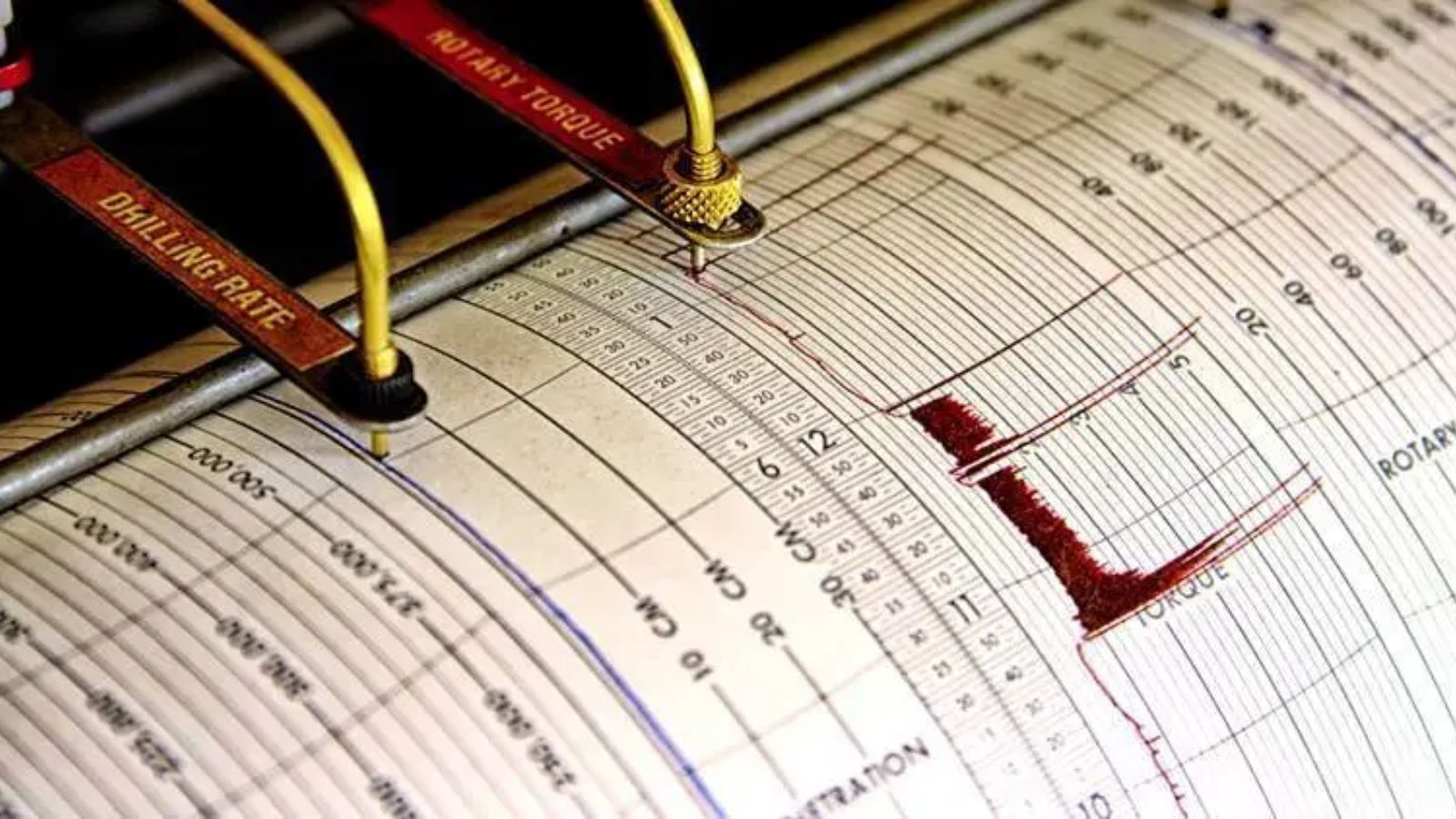
A 5.4-magnitude earthquake struck off the coast of Egypt, triggering immediate emergency response protocols and sending tremors through heavily populated urban corridors including Cairo and Alexandria. While initial reports from local authorities confirm standard deployment patterns and swift evacuation checks, the event exposes deep structural vulnerabilities across the region. Earthquakes in the Eastern Mediterranean are not historical anomalies. They are recurring hazards driven by complex tectonic mechanics that pit the African Plate against the Eurasian Plate.
Residents felt the ground roll for several terrifying seconds. Seismologists quickly pinned the epicenter in the Mediterranean basin, a zone historically capable of much higher energy release. When the earth moves beneath a mega-city built on centuries of accumulated civil strata and modern high-density concrete, the immediate emergency response tells only half the story. The real crisis lies beneath the surface of urban planning, aging municipal infrastructure, and building codes that often exist more on paper than in structural reality.
The Tectonic Reality Of The Eastern Mediterranean
Geography has placed Egypt in a precarious geological crossroads. The country sits primarily on the African Plate, which is moving northward and sliding beneath the Eurasian Plate along the Hellenic Arc. This subduction zone, running west of Crete toward Cyprus, generates frequent seismic activity. It is an engine of continuous pressure.
Seismologists track these movements with precision networks, yet predicting the exact timing of a major rupture remains impossible. The recent 5.4 event is a stark reminder of the energy stored along these offshore fault lines. Secondary structures like the Dead Sea Transform fault zone further complicate regional stress patterns, sending shockwaves across land and water.
Historical precedent proves that the Eastern Mediterranean is no stranger to catastrophic events. The devastating 1992 Cairo earthquake, measuring 5.8 in magnitude, caused widespread destruction and claimed hundreds of lives primarily because of vulnerable building stock rather than sheer ground acceleration. A magnitude 5.4 offshore tremor is moderate in global terms, but its impact depends almost entirely on depth, distance, and the local geology of the receiving basin. Soft alluvial soils in the Nile Delta amplify seismic waves just like jelly sitting on a vibrating table. When these waves hit the dense urban sprawl of Cairo, the amplification effect turns a moderate offshore jolt into a violent citywide shake.
The Concrete Crisis In Urban Centers
Emergency response teams deployed rapidly after the tremors subsided, checking bridges, checking gas lines, and clearing potential obstruction zones. Yet, emergency protocols are a band-aid over a systemic wound. The primary danger during any earthquake in Egypt is not the natural phenomenon itself. It is the built environment.
Rapid urbanization over the past five decades outpaced regulatory enforcement. Contractors built thousands of residential structures without adequate adherence to seismic engineering standards. Informal settlements, known locally as ashwaoyat, house millions of citizens in multi-story brick and concrete buildings erected without professional engineering oversight. These structures lack the ductile framing, proper reinforcement bar density, and energy-dissipating joints required to absorb lateral shock.
When a quake hits, unreinforced masonry and poorly mixed concrete crack, buckle, and pancake. Retrofitting millions of existing buildings is an economic and logistical mountain that few governments have the capital to climb. Officials talk of inspection campaigns, but the sheer scale of unauthorized construction makes comprehensive enforcement nearly impossible.
Municipal authorities often react only after the ground shakes. They inspect damaged facades, cordon off dangerous alleys, and promise stricter oversight for future developments. But tomorrow, the permits are processed, the concrete is poured, and the cycle of vulnerability continues unabated.
Emergency Response And The Preparedness Gap
When the alarms sounded, civil protection directorates moved into gear. Hospitals went on standby, traffic police managed arterial bottlenecks, and utility companies checked grids for immediate faults. This reactive machine works efficiently for routine disasters.
However, preparedness is broader than dispatching fire trucks after a tremor. True resilience requires public education, early warning infrastructure, and decentralization of emergency resources. Most citizens in Cairo or Alexandria have never participated in a formal seismic drill. They do not know the basic protocols of dropping, covering, and holding, nor do they understand how to shut off domestic gas lines to prevent secondary fires.
Early warning systems offer another layer of protection that remains underutilized in North Africa. While seismic sensors detect primary waves seconds before destructive secondary waves arrive, automated shut-off mechanisms for critical infrastructure like transit networks, gas pipelines, and power grids are rare. Integrating these automated triggers can prevent derailments, massive industrial fires, and widespread electrocutions.
Investment in seismological monitoring has improved significantly. The National Research Institute of Astronomy and Geophysics operates an advanced network of digital stations tracking micro-earthquakes around the clock. The bottleneck is not data collection. The bottleneck is translating that data into actionable urban policies that protect the vulnerable population living in high-risk zones.
The Economic Weight Of Seismic Risk
Infrastructure financing in developing economies often prioritizes visible, revenue-generating projects over invisible, long-term safety investments. Building a new highway or expanding a metro line secures political capital. Retrofitting an aging apartment block or upgrading the seismic resilience of an existing water treatment plant does not yield immediate ribbons to cut.
Yet, a major earthquake in a financial hub carries an astronomical price tag. Commercial districts packed with high-rises face catastrophic losses if structural integrity fails. Insurance penetration for earthquake damage remains low among residential property owners, leaving families financially devastated if their homes are compromised.
Financial markets and international lenders are beginning to factor climate and seismic resilience into sovereign risk assessments. Investors want assurance that regional assets can withstand natural shocks. If a city proves chronically vulnerable to moderate earthquakes, foreign direct investment can hesitate, redirecting capital toward more stable geographical zones.
Moving Beyond Reaction
The aftermath of a 5.4-magnitude offshore tremor fades quickly from the headlines once initial damage assessments confirm no widespread casualties. Streets return to congestion, construction cranes resume their work, and the collective memory of the shaking fades until the next jolt rattles windowpanes.
Relying on luck is not a mitigation strategy. The tectonic plates beneath the Mediterranean will continue their slow, grinding convergence. Every minor and moderate earthquake is a free warning from the earth, testing the strength of our foundations and exposing the gaps in our preparedness.
Addressing the structural reality of the region requires a fundamental shift from post-disaster firefighting to proactive structural hardening. It demands honest accounting of substandard construction, strict enforcement of building codes in every new development, and a cultural shift toward disaster literacy among the general public. Until those changes take root, every tremor off the coast will remain a roll of the dice for millions of people living in the shadow of brittle concrete.