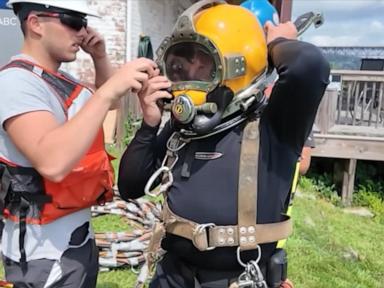
When an engagement ring slips past a knuckle and vanishes into murky water, the physical loss is only the beginning of a frantic, high-stakes recovery operation. Viral videos of scuba divers retrieving precious bands for distressed brides make for heartwarming internet fodder, yet they mask a specialized subculture of underwater recovery specialists. Behind every miraculous viral rescue lies a combination of hydrodynamic physics, localized current analysis, and an informal network of aquatic volunteers who treat lost gold and platinum as targets of high urgency.
The mechanics of losing a ring in an aquatic environment are deceptively simple and mathematically punishing. Cold water causes vasoconstriction, shrinking finger circumferences by a fraction of a millimeter while rendering skin slick from sweat, sunscreen, or natural oils. When an individual makes a sudden gesture, centrifugal force flings the jewelry outward. Precious metals have high specific gravity—gold boasts a density roughly nineteen times that of water—meaning it sinks rapidly. However, its trajectory does not follow a straight vertical drop. Micro-currents, wave action, and bottom topography act on the tumbling object, creating a scatter zone that expands exponentially depending on depth and substrate composition.
The Physics of Submerged Search Operations
Locating a sub-millimeter metallic object across hundreds of square feet of silt is an exercise in extreme frustration. Silt is the enemy of every diver. A single misplaced fin kick can turn a clear benthic zone into an opaque cloud of particulate matter that lingers for hours.
Professional underwater recovery specialists do not simply jump in and look around. They deploy grid search patterns, metal detectors tuned to discriminate between pull-tabs and precious metals, and underwater magnets when dealing with ferrous alloys, though gold requires pulse-induction technology. Visibility in typical freshwater lakes or coastal shallows often drops to near zero within inches of the sediment. Divers must rely entirely on tactile sweeping, running their fingertips systematically through the top layer of muck where heavy rings inevitably settle.
Consider a hypothetical recovery in a tidal river with a current speed of one knot. A ring dropped from a dock does not land where the owner thinks it landed. It experiences drag during its descent, and upon hitting the riverbed, it can be rolled along the substrate by the current until it encounters a snag, a rock obstruction, or a depression in the silt layer. Divers calculating the drift vector must account for bottom drag coefficients, water temperature, and local bathymetry before ever strapping on a tank.
The Rise of the Digital SOS
Before the proliferation of hyper-local social media groups and short-form video platforms, a ring lost underwater was almost universally written off as gone forever. Today, digital architecture has transformed accidental loss into a public broadcast event. Desperate partners flood platforms like TikTok, local Facebook groups, and community subreddits with coordinate data, photos, and emotional pleas.
This hyper-connectivity has birthed a new breed of informal first responders. Dedicated hobbyist divers monitor these boards specifically for recovery calls. For these individuals, the appeal is not financial compensation—though rewards are occasionally offered—but the high-adrenalin puzzle of the hunt and the immediate, emotional gratification of reversing a catastrophic day for a stranger. It is community service powered by modern algorithmic distribution.
Yet, this reliance on digital crowdsourcing introduces friction. Viral pressure can distort expectations. When media outlets frame these recoveries as effortless acts of heroism, the public underestimates the specialized gear, training, and sheer luck required to locate a tiny metallic band in a vast body of water. Most underwater recovery attempts fail quietly out of the spotlight. Silt shifts, tides bury objects beneath feet of organic debris, and rings slide into crevices where no human hand can reach.
The Economics of Sentimental Recovery
Jewelry insurance companies rarely cover accidental loss unless a specific rider is attached, and even then, the emotional value of an heirloom or a custom-designed band defies actuarial tables. This valuation vacuum explains why people will spend thousands of dollars deploying commercial diving equipment to retrieve a ring worth a fraction of that cost. The metal itself is secondary. The object functions as a physical anchor for a shared history.
When a diver surfaces from the murky dark holding a tiny circle of gold between thumb and forefinger, the ensuing reaction transcends relief. It represents the restoration of narrative order after an abrupt disruption. The viral video captures the tearful embrace on the dock, but the real story remains the cold math of fluid dynamics, the stubborn persistence of strangers, and the thin margin between permanent loss and miraculous recovery.


.jpg?width=1200&auto=webp&trim=0%2C100%2C0%2C100)