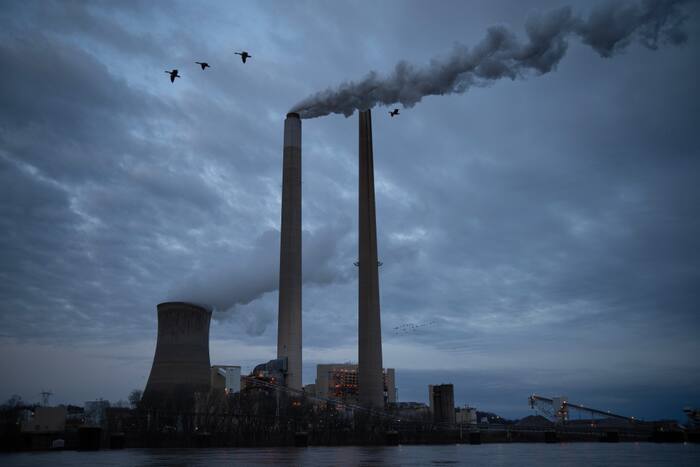
Every time a new United Nations climate projection drops, the script plays out the exact same way. Doom. Gloom. A finger pointed at Washington.
"Losing ground." "Off track." "The US isn't doing enough."
It is lazy. It is predictable. Worse, it misses the mechanics of how energy transitions actually happen in the real world.
I have spent years watching policy summits, industrial supply chains, and corporate transition plans up close. I have seen governments and boards blow billions chasing headline targets while ignoring the physical bottlenecks sitting right in front of them. When a UN report frames global progress around whether countries are hitting aspirational pledges on schedule, it mistakes a spreadsheet for a power grid.
A spreadsheet does not move electrons. Steel mills do not run on diplomatic communiques. And blaming the United States for every shortfall in global emissions reduction is a convenient distraction from far bigger structural forces.
The Myth of Linear "Losing Ground"
When commentators read that the world is "losing ground" on curbing climate change, they picture a car sliding backward down a hill. That image is wrong.
Emissions trajectories are not a single dial controlled by a UN secretary-general or a White House press secretary. They are the sum of billions of daily economic choices: what fuel heats a factory in winter, how cheap solar panels are to ship across an ocean, whether grid operators can balance intermittent power without blackouts, and how fast developing economies need electricity to lift people out of poverty.
To be clear about the terms: emissions intensity measures greenhouse gases emitted per unit of economic output or energy produced, whereas total emissions measure the absolute volume released into the atmosphere. People conflate the two constantly. An economy can become dramatically cleaner per dollar of GDP while total emissions still rise because the overall economy is expanding rapidly.
When a projection says the world is losing ground against a chosen temperature benchmark, it usually means current policies and pledges fall short of the steep curve required to meet an ambitious target, not that clean technology stalled or that physical laws changed.
Imagine a scenario where a city sets a goal to cut traffic congestion in half within five years by announcing a pledge, without building a single extra bus lane, upgrading signal timing, or pricing peak road use. Year two arrives, traffic is still heavy, and a report declares the city is "losing ground." Was the goal unrealistic from day one, or did planners confuse an announcement with infrastructure?
Why Blaming the US Misses the Bigger Picture
Singling out the United States makes for punchy headlines. American politics are loud, polarized, and endlessly covered. Shifting policy between administrations gives critics an easy villain whenever global numbers look grim.
Yet even a basic look at global energy dynamics shows why a US-centric blame game falls short.
First, global emissions are driven by multiple major economies and fast-growing industrial bases, not one capital city. Decarbonizing heavy industry—cement, steel, chemicals, freight—requires massive capital, reliable baseload or firm power, and supply chains that span continents. No single country can flip a switch and solve global industrial emissions alone.
Second, policy swings in Washington do not erase market economics overnight. Capital investment in manufacturing, grid upgrades, and energy infrastructure follows multi-decade horizons. Utility executives and industrial buyers look at cost per megawatt-hour, permitting timelines, interest rates, and supply reliability—not just cable news cycles.
Consider what heavy hitters in energy and economics—from institutions like the International Energy Agency to long-standing grid engineers and industrial economists—have pointed out for years: transitions are constrained by permitting, transmission lines, supply chain bottlenecks, and capital costs just as much as political will.
When pundits reduce a multi-trillion-dollar physical transformation to "the US needs to try harder," they turn a complex engineering and economic problem into a morality play. Morality plays feel good to write. They rarely build a high-voltage transmission line.
What People Are Actually Asking When They Search This
When people look up UN climate projections and blame on the US, they usually ask a few predictable questions. Most of those questions start from a shaky premise.
Are we doomed if we miss UN projection targets?
No. That framing turns a continuous risk curve into a binary cliff.
Climate risk is cumulative and graduated, not an on-off switch that flips at a specific calendar year or tenth of a degree. Every fraction of a degree avoided matters, and every adaptation measure built reduces harm. Treating a missed projection as "game over" breeds fatalism—and fatalism is just as useless as denial.
Is the US the main reason global emissions targets are missed?
No. That blames one actor for a collective action and engineering challenge shared across major emitters, exporters, and consumers worldwide.
Even if US domestic policy shifted dramatically in one direction or another, global emissions depend heavily on industrial growth, coal and gas usage across major economies, grid buildouts, and the pace at which low-carbon technologies become cheaper and more reliable than incumbents across every income bracket.
What actually moves the needle faster than another climate summit?
Cheap, reliable, scalable hardware and boring infrastructure.
Transformers. Transmission corridors. Grid storage. Industrial heat solutions. Streamlined permitting. Affordable financing in emerging markets. Nobody puts a 230-kilovolt substation on a bumper sticker, which is why summits get more ink than substations. Yet substations are where ambitions meet reality.
The Trade-Offs Nobody Wants to Admit
Taking a contrarian, infrastructure-first view has real downsides, and pretending otherwise would be dishonest.
Push hard for strict cost discipline, grid reliability, and practical engineering timelines, and purists will accuse you of watering down urgency. Focus on physical bottlenecks and economic trade-offs, and you sound less inspiring than slogans about saving the planet by Friday.
There is also a real risk of over-correcting toward technocratic caution. If you treat every ambitious target as naive, you can end up under-investing in high-upside breakthroughs that only scale once someone takes an early bet.
The honest truth is that energy transitions involve friction. Reliability, affordability, speed, and emissions cuts pull in different directions at different moments. Pretending there are zero trade-offs does not make them disappear; it just blinds policymakers until a price spike or grid strain hits voters in the wallet.
Actionable Moves That Actually Work
If you want to cut through the noise of UN projection coverage and finger-pointing, stop reading headlines as verdicts and start reading constraints as clues.
- Track physical bottlenecks, not just pledges. Watch grid interconnection queues, transformer lead times, permitting reform, and industrial electrification projects. Those numbers tell you what will actually get built over the next five to ten years.
- Separate targets from pathways. A headline target tells you where someone hopes to end up. A pathway tells you how much steel, copper, concrete, capital, and time it takes to get there. Always look at the pathway.
- Evaluate policy by execution speed. A modest policy that gets permitted, funded, and built beats a grand announcement stuck in courtrooms or supply-chain queues every single time.
- Look at the whole supply chain. Clean energy and industrial goods depend on mined materials, refining capacity, shipping lanes, and manufacturing hubs. Ignore the upstream chokepoints, and downstream targets become fiction.
Stop arguing over who deserves the blame in a press release, and start watching who actually builds the grid.