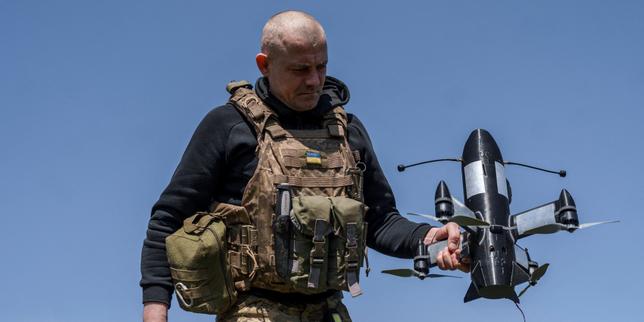
The skies over Ukraine have turned into a brutal testing ground for modern warfare. We aren't just talking about missiles and heavy artillery anymore. It's a buzzing, lethal swarm of cheap, mass-produced drones. Reports from March indicate Ukraine smashed over 33,000 Russian drones. That figure is staggering. Even more striking is the method behind it. They are increasingly relying on dedicated drone interceptors to clear the airspace.
If you thought drone warfare was about big, expensive Reaper-style machines, you’re missing the actual conflict. This is a war of attrition fought with hobbyist-grade components strapped to explosives. Russia sends waves of these things to exhaust Ukrainian air defenses. It’s cheap for them. It’s devastatingly expensive for Ukraine to counter with surface-to-air missiles.
Using interceptor drones changes the math entirely. Instead of firing a multi-million dollar missile at a drone that costs a few hundred bucks, soldiers are now flying their own cheap, maneuverable drones to physically ram the targets. It’s basically a high-stakes demolition derby in the clouds.
Why interceptor drones are effective right now
You might wonder why this hasn't been the standard approach for years. Honestly, the tech just wasn't there. Developing a small, agile interceptor that can track and strike a moving target at speed is incredibly hard. It requires low latency, reliable image transmission, and pilots with nerves of steel.
Ukraine has turned this into an industrial-scale operation. They’ve realized that trying to stop a swarm with traditional radar-guided systems is a losing game. The radar systems get overwhelmed by the sheer number of targets. Plus, those systems have to be protected themselves.
By pushing the fight to the front lines with interceptor drones, Ukraine is shifting the risk. They are taking out threats before they ever get near critical infrastructure or dense troop formations. It’s a distributed defense model. You have thousands of eyes in the sky and thousands of "bullets" ready to launch from almost any location.
The economics of this new aerial fight
Let's look at the cold, hard numbers. A Russian surveillance drone or a basic loitering munition might cost them a few thousand dollars. Using a Patriot or IRIS-T missile against that is a strategic disaster. You’re trading a Ferrari to take out a bicycle.
Interceptor drones cost a fraction of that. If you lose one, you’ve spent a few hundred dollars. If you hit, you’ve neutralized a threat that was worth significantly more. This isn't just about tactical superiority. It's about sustainability. Ukraine has to be efficient because they don't have an infinite supply of Western-made high-end air defense interceptors.
I’ve looked at the reports coming from various front-line units. The speed at which they adapt is honestly impressive. They are prototyping new frame designs, testing different propeller configurations for speed and stability, and refining their signal jamming workarounds in real-time. It’s an iterative engineering process happening in the mud.
Handling the technical hurdles
It’s not all sunshine and efficiency. Flying an interceptor drone is difficult. Signal interference is constant. Russia is pumping out massive amounts of electronic warfare noise to blind these drones. If you lose the video link, you're flying blind, and you’re going to miss.
There’s also the challenge of target identification. How do you distinguish a friendly quadcopter from an enemy one when everything is moving at high speed? Human operators are still essential here. The AI-assisted targeting systems are getting better, but they aren't perfect yet. You need someone on the ground making the final call.
Units have started implementing specialized training programs. They aren't just training pilots; they are training specialized hunter teams. These teams operate in shifts, constantly scanning, identifying, and scrambling to intercept incoming clusters. It’s grueling work.
The shift in frontline dynamics
This is changing how infantry units move. When you know there’s an interceptor team nearby, you feel safer. But the enemy knows this, too. They are constantly trying to locate the operator teams to take them out with artillery.
The battlefield has become a game of hide-and-seek where the person who stays hidden the longest wins. The moment you start transmitting, you’re essentially painting a target on your back. This forces teams to move constantly, set up, hit, and pack up within minutes.
We are also seeing a rapid evolution in how drones are launched. Instead of massive command vehicles, we’re seeing backpack-sized launch systems. Everything is becoming modular and portable. If you’re a combatant in this environment, you’re constantly checking the sky, knowing that a collision could happen at any second.
Looking at the broader implications
The effectiveness of these interceptors in March was a turning point. It proved that large-scale swarms can be managed without draining the national stockpile of heavy missiles. Other militaries around the world are watching this closely.
You can bet that every major defense contractor is looking at these results. They are scrambling to develop their own "anti-drone drones." But there's a problem. Big defense firms tend to build things that are overly complex and way too expensive. The beauty of what’s happening in Ukraine is that it's born from necessity and speed. It’s lean. It’s fast. It’s incredibly cheap.
If the lesson from Ukraine is that you need a ten-thousand-dollar drone to kill a thousand-dollar drone, then we haven't learned anything. The goal has to be keeping the cost of the interceptor below the cost of the threat.
Immediate priorities for operational success
If you’re studying this for tactical application or defense planning, you have to focus on three specific areas:
- Signal resilience is everything. If your drone can’t handle electronic jamming, it’s just a piece of plastic waiting to fall out of the sky. Investing in frequency hopping and optical-based guidance is the path forward.
- Modular production wins. Don't try to build a perfect drone. Build a good enough drone that can be assembled in a garage from off-the-shelf parts. If you lose ten, you should be able to replace them by the next morning.
- Human-machine teaming. Don't rely on full autonomy yet. It’s prone to error and doesn't handle the chaotic, unpredictable environment of a front line. Use technology to help the human pilot, not to replace them.
This fight is far from over. Russia will continue to innovate their own drones to evade these interceptors, and Ukraine will continue to build faster, smarter ways to catch them. The arms race has moved from the factory floor to the digital cloud. Keep an eye on how these interceptor teams evolve their tactics over the coming months. They are setting the blueprint for the next generation of aerial defense.