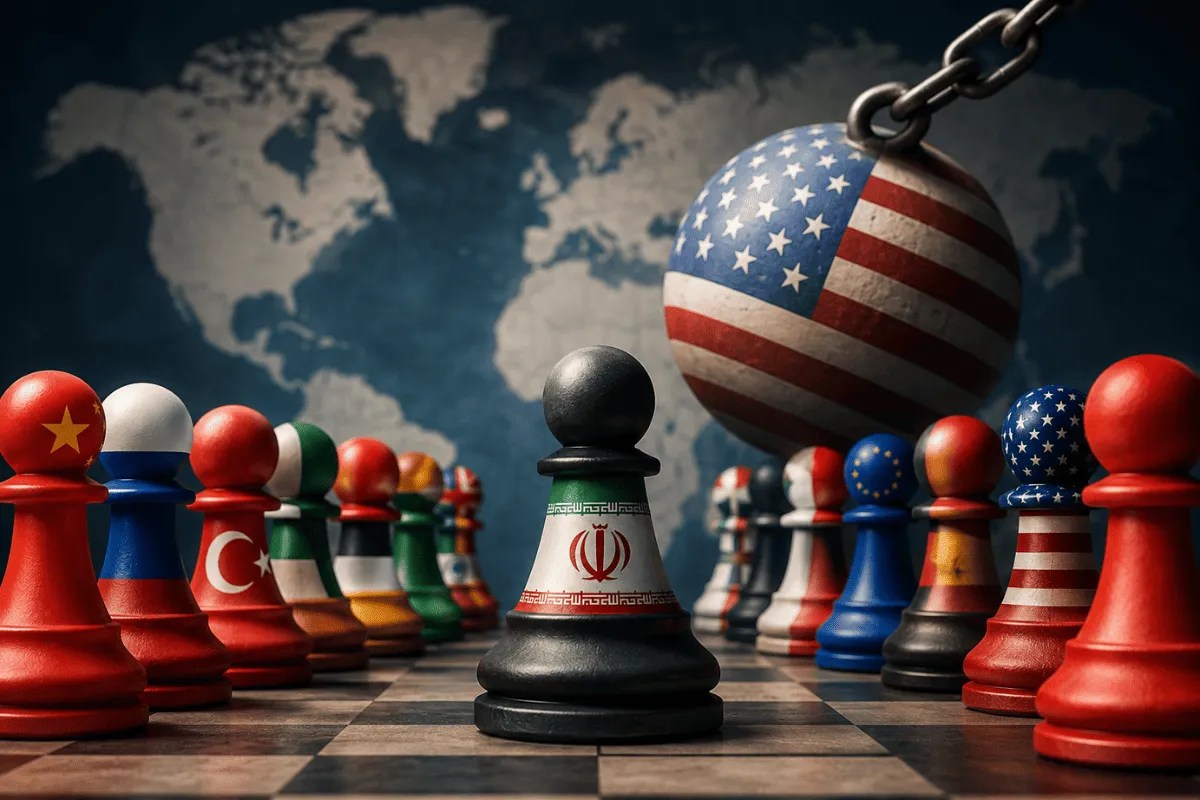
The headlines are predictable. They scream about "normalization," "restored connectivity," and the "reopening" of UAE airspace as if someone just flipped a light switch back to the 1990s. The mainstream narrative suggests that lifting restrictions is a victory for global logistics and a return to the status quo.
It isn't. It’s a desperate recalibration of a broken system. Discover more on a related subject: this related article.
If you believe that the lifting of war-era flight restrictions signifies a return to "business as usual," you aren't paying attention to the physics of modern geopolitics. The reopening of skies over the Gulf isn't about peace; it’s about the brutal reality of fuel margins and the terrifying fragility of the hub-and-spoke model.
The Fuel Efficiency Lie
Airlines love to talk about sustainability. They release glossy reports about Carbon Offset Credits and "Sustainable Aviation Fuel" (SAF) while their flight planners sweat over a two-degree change in a flight path. Additional journalism by Financial Times explores related perspectives on the subject.
The "restricted" era forced carriers into absurd detours. For years, narrow-body and wide-body jets alike were forced to burn thousands of extra kilograms of fuel to skirt around invisible lines drawn by diplomats and warlords. When the UAE or neighboring states "open" these corridors, the industry sighs in relief not because the world is safer, but because the balance sheet was bleeding out.
Consider the Great Circle route. In a vacuum, a flight from London to Dubai follows a specific arc. In the real world, that arc is jagged. Every detour to avoid "hot" airspace adds weight. More fuel equals more weight, which requires more fuel just to carry the extra fuel. It is a vicious cycle of inefficiency that the industry has masked as "operational caution."
Connectivity is a Fragile Illusion
The competitor press is obsessed with the idea that reopening airspace "fosters" (a word I despise for its softness) better trade. Let’s be blunt: Airspace is now a weapon of economic warfare, not a public utility.
The UAE’s position as a global transit hub—the literal "center of the world" for Emirates and Etihad—is entirely dependent on the permission of its neighbors. When restrictions are lifted, we aren't seeing a permanent shift toward openness. We are seeing a temporary ceasefire in a long-term battle for regional dominance.
I have watched airlines scramble when a single NOTAM (Notice to Air Missions) is issued. I've seen operations directors age a decade in an afternoon because a corridor they relied on for 40% of their traffic was shut down due to "security concerns." Opening these routes today does nothing to mitigate the risk that they will be slammed shut tomorrow.
True resilience isn't found in reopening old routes; it’s found in diversifying away from them. But the UAE’s entire economic model is built on being the world’s waiting room. If the skies aren't clear, the malls are empty.
The Mirage of Security
The media treats the "lifting of restrictions" as a certificate of safety. This is a dangerous misunderstanding of how modern air defense works.
Modern anti-aircraft systems and drone tech have rendered traditional "safe" altitudes a fantasy. Just because a civil aviation authority says a corridor is open doesn't mean the underlying conflict has evaporated. It means the risk has been deemed "acceptable" for insurance premiums.
The industry uses a complex calculation for risk:
$$Risk = Probability \times Severity$$
When airspace reopens, the Severity of a surface-to-air incident remains catastrophic. The authorities are simply gambling that the Probability has dropped enough to stop losing money on fuel. They are trading safety margins for EBITDA.
The Hub-and-Spoke Death Rattle
The reopening of UAE airspace is the last gasp of the massive, centralized hub. The logic of the 2000s was simple: fly everyone to Dubai, Doha, or Abu Dhabi, then push them back out to their final destination.
But the world is moving toward point-to-point travel. Ultra-long-haul aircraft like the Airbus A350-1000 and the Boeing 787-9 allow carriers to bypass these geopolitical chokepoints entirely. Why deal with the headache of Gulf airspace politics when you can fly direct from Perth to London or New York to Singapore?
The UAE knows this. Reopening the skies is a move to keep the hub relevant in a world that is learning how to fly around it. It's a PR campaign disguised as a policy shift. They aren't "reconnecting the world"; they are trying to stop the world from finding a bypass.
What "People Also Ask" Gets Wrong
If you search for "Is it safe to fly over the Middle East?", you get sanitized answers about ICAO standards and government advisories.
The honest answer? Safety is a sliding scale. Every time you fly through a recently "reopened" corridor, you are a data point in a geopolitical experiment. The airlines aren't your protectors; they are profit-seeking entities navigating a minefield.
They ask: "Will flight prices go down?"
The brutal truth: No. Airlines will pocket the fuel savings to repair their balance sheets from the last three years of debt accumulation. You will pay the same, the plane will just take a slightly straighter line.
The Hidden Cost of "Normal"
The push for normalization ignores the fact that the "War-Era" hasn't actually ended—it has just evolved. Electronic warfare, GPS jamming, and "spoofing" are rampant in the region.
Pilots are increasingly reporting "dark holes" where navigation systems go haywire. Opening the airspace doesn't fix the signal environment. In many ways, putting more civilian traffic back into these corridors increases the noise floor for military operators, making a "human error" event more likely, not less.
I’ve spoken to long-haul captains who prefer the detours. At least with a detour, you know where the lines are. In a "reopened" environment, the lines are blurred, and the rules of engagement are written in pencil.
Stop Celebrating the Bare Minimum
We are applauding a return to 2014 levels of functionality as if it’s a technological breakthrough. It isn't. It is the recovery of lost ground.
If you are a business traveler or a logistics manager, do not bake this "openness" into your long-term strategy. The Middle Eastern sky is a pendulum. It swings toward cooperation when the oil price is volatile and toward restriction when national egos are bruised.
The "reopening" is a tactical pause.
The smart money isn't betting on more flights through the UAE. The smart money is betting on the technology that makes the UAE’s airspace irrelevant. We are entering the era of the "Bypass Economy." Every kilometer saved by a reopened route is a reminder of how much power these states hold over global movement—and why the rest of the world is working so hard to ensure they never hold that much power again.
Don't look at the map and see new lines. Look at the map and see the cracks in the foundation.
Direct flights are the future. Chokepoints are the past. The UAE is just trying to stay in the game.
Burn the flight plan.