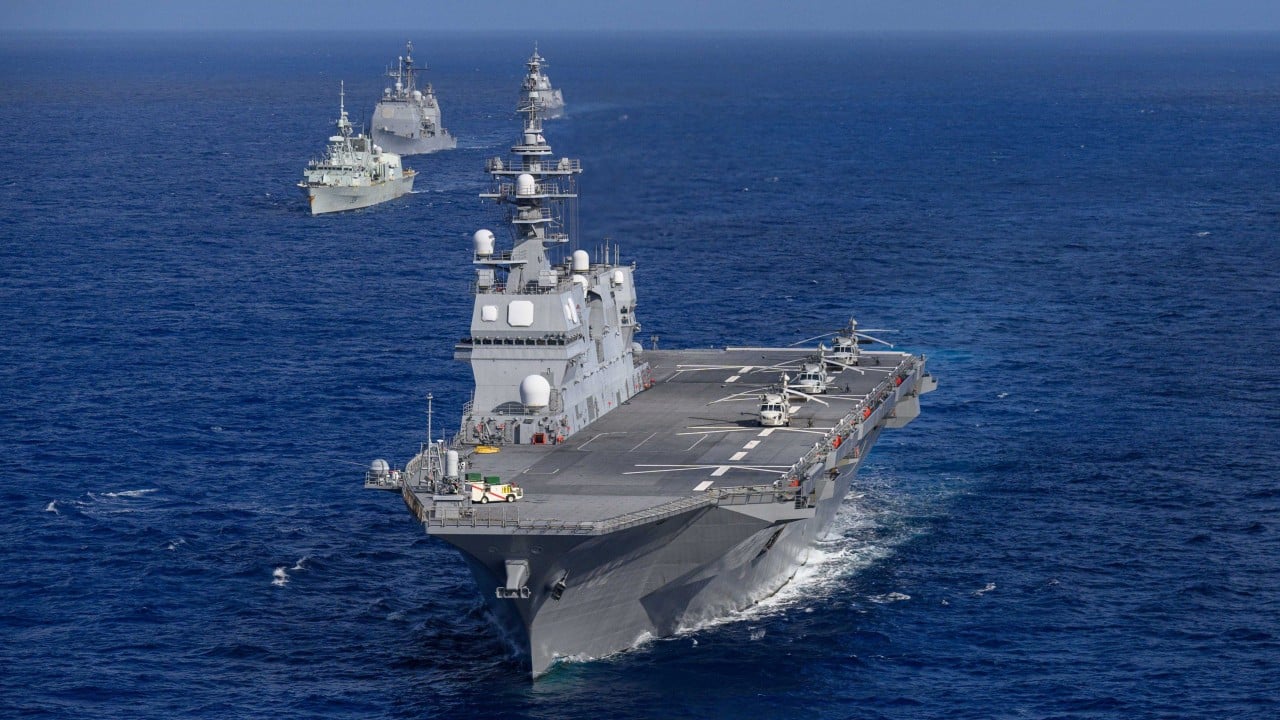
When satellite imagery and maritime tracking data place China’s aircraft carrier Liaoning and the American nuclear-powered USS Theodore Roosevelt in the Philippine Sea at the exact same time, casual observers immediately brace for a shooting war. They shouldn't. While the simultaneous presence of two rival carrier strike groups in the same stretch of open water is an undeniable escalation in geopolitical signaling, it is primarily a high-stakes exercise in operational intelligence, acoustic mapping, and strategic deterrence rather than a prelude to kinetic combat.
Naval historians and defense analysts who have spent decades tracking Pacific deployments know that overlapping carrier operations are rarely accidental. They are calculated collisions of schedules. The Philippine Sea—a massive expanse of water bounded by the Philippine archipelago to the west, Taiwan and the Ryukyu Islands to the north, and the Mariana Islands to the east—is not just empty ocean. It is the strategic gateway to the Western Pacific. Whoever controls the maritime and aerial corridors here dictates the terms of any potential conflict over Taiwan or the broader First Island Chain.
The Geography of Deterrence
To understand why the Liaoning and the USS Theodore Roosevelt end up sharing the same maritime neighborhood, you have to look at a map of the Western Pacific without political borders. Focus entirely on bathymetry and choke points.
For Beijing, the First Island Chain—stretching from the Japanese archipelago through Taiwan, the Philippines, and down to Borneo—acts as a geographic cage. To project power into the open Pacific, the People's Liberation Army Navy (PLAN) must thread its surface combatants through narrow straits like the Miyako Strait between Okinawa and Miyako Island, or the Bashi Channel between Taiwan and the Philippines. Once a Chinese carrier group clears those bottlenecks, it enters the Philippine Sea.
For Washington, that exact same body of water is the vital staging ground for reinforcing allies and maintaining sea control. Guam, home to Andersen Air Force Base and Naval Base Guam, sits right on the eastern edge of the Philippine Sea. When the USS Theodore Roosevelt operates in these waters, it is effectively patrolling the front yard of America's primary Pacific logistics hub while simultaneously demonstrating that the U.S. Navy can operate uninhibited right up to the doorstep of the First Island Chain.
A dual-carrier presence here is the naval equivalent of two heavyweight boxers touching gloves in the center of the ring before the bell. Both sides are establishing presence. Both sides are proving they cannot be deterred from operating in international waters.
Asymmetric Capabilities Behind the Headlines
Comparing the Liaoning and the USS Theodore Roosevelt purely on the basis of hull count or displacement is a trap that traps amateur commentators every time. On paper, both are massive flattops accompanied by heavily armed escorts. In reality, they represent two entirely different eras and philosophies of naval aviation.
The USS Theodore Roosevelt (CVN-71) is a Nimitz-class nuclear-powered supercarrier. Displacing roughly 100,000 tons, it carries an air wing of around 60 to 70 aircraft, including F/A-18E/F Super Hornets, F-35C Lightning II stealth fighters, EA-18G Growlers for electronic warfare, and E-2D Advanced Hawkeye airborne early warning planes. Because it utilizes steam catapults and arresting gear—a configuration known as CATOBAR—its aircraft can launch with maximum fuel and heavy ordnance payloads. Furthermore, its nuclear reactors give it virtually unlimited range, constrained only by the need to replenish food and aviation fuel for its air wing.
The Liaoning (Type 001), by contrast, began its life as the unfinished Soviet cruiser Riga (later Varyag) before Beijing purchased the stripped hull from Ukraine in 1998 and spent years refitting it. Displacing roughly 60,000 tons and powered by conventional oil-fired boilers, it uses a Short Take-Off But Arrested Recovery (STOBAR) system featuring a curved ski-jump ramp at the bow.
That ski jump imposes severe physical limitations. Without catapults, the Liaoning’s Shenyang J-15 fighters must burn massive amounts of fuel just to generate enough thrust to get airborne. Consequently, they cannot take off with both full fuel tanks and maximum weapon loads. In a prolonged, high-intensity air battle, a ski-jump carrier suffers from a drastically lower sortie generation rate compared to a Nimitz-class supercarrier.
Does that mean the Liaoning is irrelevant? Not even close.
Military analysts who dismiss the Liaoning because of its Soviet pedigree miss the point of how Beijing uses the ship. The PLAN never built the Liaoning to go toe-to-toe with a Nimitz-class carrier in a mid-ocean duel. It was built as a floating laboratory and a training platform. Every hour the Liaoning spends in the Philippine Sea generates priceless institutional knowledge for Chinese naval aviators, deck crews, and strike group commanders. They are learning how to conduct night operations, how to coordinate anti-submarine warfare screens, and how to integrate carrier operations with land-based missile networks.
The Invisible War Beneath and Above the Waves
When two rival carrier strike groups enter the same operational theater, the most intense activity happens far away from the cameras of reconnaissance planes. The real battle is fought in the electromagnetic spectrum and beneath the thermocline.
Modern carrier strike groups are floating ecosystems of sensors. When the USS Theodore Roosevelt and the Liaoning operate within a few hundred miles of each other, both sides immediately shift into high-gear intelligence collection.
- Electronic Intelligence (ELINT) Gathering: Every radar emitter, communication link, and data-sharing network on a warship has a unique electronic fingerprint. U.S. Navy EA-18G Growlers and RC-135 reconnaissance aircraft will aggressively monitor the electromagnetic emissions coming off the Liaoning and its accompanying Type 055 Renhai-class cruisers and Type 052D destroyers. Conversely, Chinese intelligence-gathering ships (AGI) and carrier-borne sensors will soak up every frequency radiating from the American fleet. Knowing how an adversary's radar behaves in open-ocean conditions is critical for programming electronic jamming pods and anti-radiation missiles.
- Acoustic Profiling: Carrier strike groups never travel alone. They are shielded by nuclear-powered attack submarines operating silently miles ahead and below the surface. When Chinese surface ships and anti-submarine helicopters deploy sonar to screen the Liaoning, American submarines and P-8A Poseidon maritime patrol aircraft are listening intently. They are recording the acoustic signatures of China's newest destroyers and submarines, updating acoustic libraries that allow U.S. sonar operators to identify specific hulls from dozens of miles away.
- Logistics and Replenishment Tracking: A carrier is only as lethal as its supply chain. By observing how often the Liaoning conducts underway replenishment with Type 901 fast combat support ships, Pentagon planners can accurately calculate the real-world fuel burn rates, munitions consumption, and endurance limits of a Chinese carrier group operating far from mainland ports.
Consider a hypothetical scenario to illustrate how this plays out in real time. Imagine a Chinese Type 055 destroyer within the Liaoning strike group activates its dual-band active electronically scanned array (AESA) radar to track a distant contact. Hundreds of miles away, an American E-2D Hawkeye detects that radar sweep. Within seconds, that signal is recorded, analyzed, and cataloged. Even though not a single shot is fired, the U.S. Navy just gained a massive tactical advantage by mapping the exact range and frequency hopping patterns of China's premier surface combatant.
The Escort Factor and Land-Based Umbrella
Looking strictly at the carriers themselves obscures the broader tactical picture in the Philippine Sea. Neither ship operates in a vacuum.
When the Liaoning transits into the Philippine Sea, it is typically flanked by some of the most heavily armed surface combatants in the world. China's Type 055 cruisers carry 112 vertical launch system (VLS) cells capable of firing long-range surface-to-air missiles, land-attack cruise missiles, and anti-ship ballistic missiles like the YJ-21. In many respects, the Liaoning acts as the command-and-control hub and airborne defensive umbrella for a surface action group whose primary offensive punch actually resides in its escort cruisers and submarines.
Furthermore, while the Philippine Sea puts the Liaoning outside the immediate coverage of mainland coastal radars, it remains well within the engagement envelope of the People's Liberation Army Rocket Force (PLARF). Land-based anti-ship ballistic missiles—specifically the DF-21D and the longer-range DF-26—are designed explicitly to hold American carriers at risk across the Western Pacific.
This is the core tension of modern Pacific naval strategy. The USS Theodore Roosevelt brings unmatched organic air power and decades of institutional carrier warfare mastery. Yet, operating in the Philippine Sea places the American strike group inside a contested zone where China's land-based missile networks, long-range bombers, and carrier task forces overlap.
Why Accidents Happen in Crowded Waters
The greatest danger of having the Liaoning and the USS Theodore Roosevelt operating concurrently in the Philippine Sea is not a deliberate decision by Washington or Beijing to start World War III. It is friction at the tactical level.
When ships and aircraft operate in close proximity, human error and aggressive maneuvering become massive liabilities. Over the past decade, the Western Pacific has seen numerous close calls—destroyers cutting across bows at unsafe distances, fighter jets executing barrel rolls feet away from reconnaissance aircraft, and blinding lasers aimed at cockpit canopies.
To mitigate these risks, both nations signed the Code for Unplanned Encounters at Sea (CUES) in 2014. CUES establishes standardized safety protocols, radio frequencies, and maneuvering rules when rival warships meet unexpectedly. For the most part, professional bridge crews on both American and Chinese vessels adhere to these rules during routine transits.
However, CUES is a non-binding agreement. It breaks down when political tensions spike or when a local commander decides to push the envelope to demonstrate resolve. An unscripted collision between a Chinese frigate and an American destroyer, or a mid-air collision between a J-15 and a Super Hornet over the Philippine Sea, would trigger an immediate diplomatic crisis. Neither capital would want to look weak by backing down first, creating a dangerous escalation ladder where domestic political pressure overrides military restraint.
The New Normal in the Western Pacific
For decades after the Cold War, the U.S. Navy treated the Philippine Sea as an uncontested American lake. Carrier strike groups transited from Hawaii to Japan or the South China Sea without ever encountering a peer surface fleet capable of challenging their dominance.
Those days are permanently over.
China's shipbuilding industrial base has expanded at a pace unseen since the Second World War. With the Liaoning and its sister ship Shandong already operational, and the far more advanced, electromagnetic-catapult-equipped Fujian undergoing sea trials and integration, the PLAN is rapidly transitioning from a coastal defense force into a true blue-water navy.
Seeing a Chinese carrier strike group operating in the Philippine Sea alongside an American supercarrier is no longer an anomaly worth sensationalist panic. It is the baseline reality of the twenty-first century. The U.S. Navy is adapting by dispersing its forces, integrating unmanned surface vessels, and practicing Distributed Maritime Operations so that its lethality isn't concentrated solely on massive flattops. Meanwhile, Beijing is pushing its carriers further east into the Pacific to normalize its presence and test the limits of American containment.
The real story isn't that the Liaoning and the USS Theodore Roosevelt happened to cross paths in the Philippine Sea. The real story is that the quiet, relentless chess match for control of the Pacific's most critical maritime highway is now being played out in plain sight, every single day, with zero margin for error.