Raúl Castro turned 95 on Wednesday amid an atmosphere that resembles a pressure cooker more than a celebration. While Havana’s state apparatus filled social media with orchestrated tributes praising the veteran revolutionary, the true reality facing the island is one of profound instability, severe fuel exhaustion, and an aggressive new legal assault from Washington. The aging general remains the ultimate arbiter of Cuban power, but his landmark birthday arrives at a moment when both his physical absence and a sudden U.S. federal murder indictment are forcing Cuba toward a volatile transition.
The narrative of the quiet, retired elder statesman living out his final years in the background is a carefully managed illusion. Castro still retains his seat in the National Assembly and his rank as General of the Revolutionary Armed Forces. More importantly, he operates as the invisible institutional glue holding together a bankrupt state machinery.
With his whereabouts currently unknown and the island crippled by historic blackouts, the celebration of his longevity highlights a deeper, more structural crisis. Cuba is running out of time, money, and the generational authority that the Castro name once guaranteed.
The Iron Fist Behind the Reformer Mask
For decades, international analysts misread Raúl Castro. He was frequently contrasted against his brother Fidel, painted as the pragmatic administrator or the quiet bureaucrat who preferred spreadsheets to six-hour speeches. When he assumed the presidency in 2008, his moves to permit small-scale private enterprise and his subsequent diplomatic engagement with the Obama administration in 2015 reinforced this image of a hidden liberal.
That interpretation ignores how the Cuban security state was actually built. Raúl Castro was the architect of the Revolutionary Armed Forces (FAR) and the internal security apparatus. He spent nearly half a century ensuring that the military did not just control the weapons, but also the most lucrative sectors of the Cuban economy, including tourism and shipping ports, through military-run conglomerates like GAESA.
The short-lived diplomatic thaw of 2016, famously punctuated by an awkward press conference where Castro grabbed a limp-wristed Barack Obama’s arm, was not an ideological shift. It was a tactical economic maneuver to survive the collapse of Venezuelan subsidies.
By building an economic empire controlled strictly by loyal generals, Castro ensured that even when he handed the formal presidency to Miguel Díaz-Canel in 2018, the real leverage stayed inside his inner circle.
The Miami Indictment and the Aviation Ghost
The fragile status quo shattered in May 2026 when the U.S. Department of Justice unsealed a federal indictment charging Raúl Castro with murder. The charges stem from the 1996 downing of two civilian aircraft operated by the Miami-based exile group Brothers to the Rescue. The planes, which routinely searched the Florida Straits for fleeing rafters, were obliterated by Cuban military MiGs over international waters.
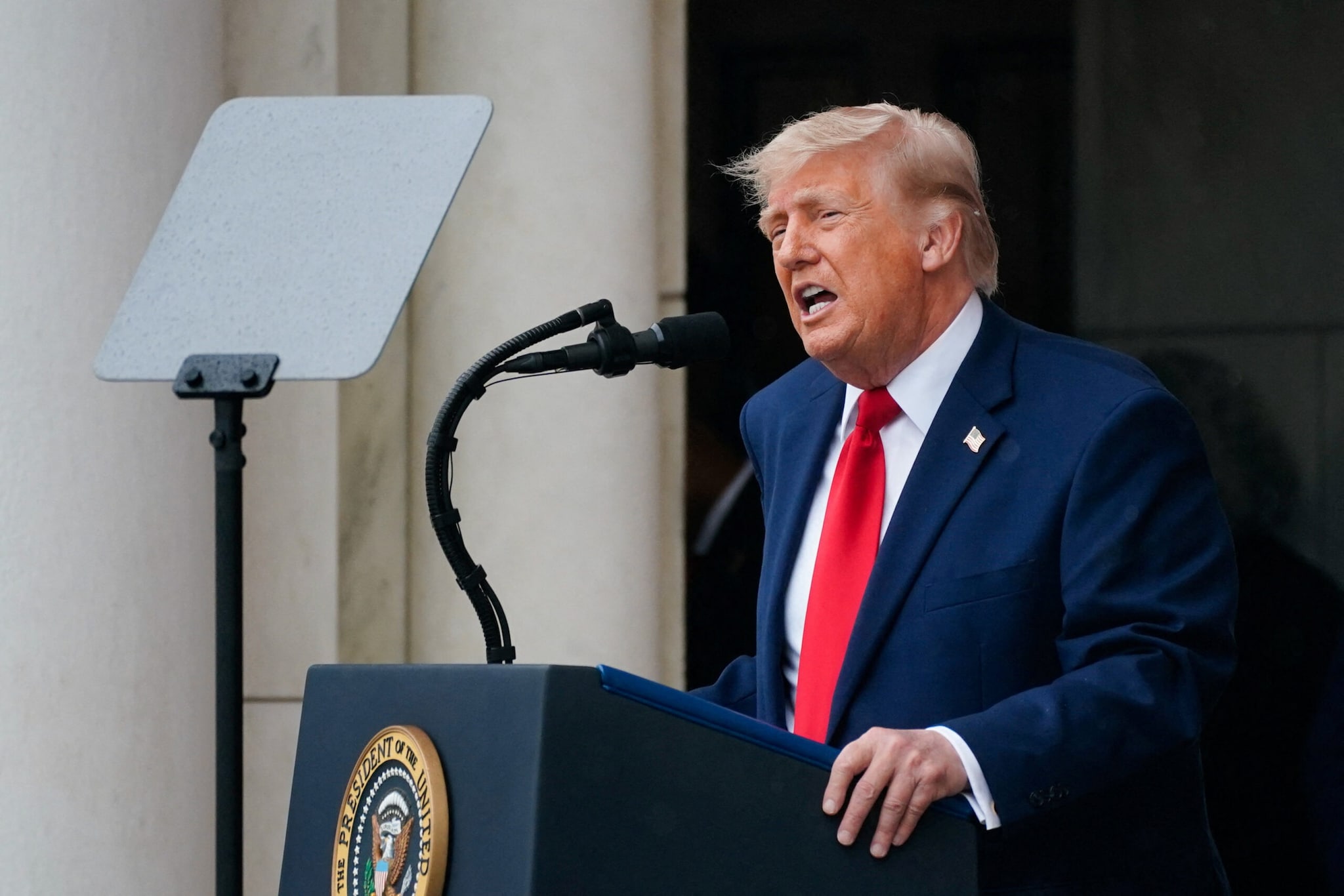
Washington’s decision to execute a grand jury indictment against a 95-year-old former head of state is a deliberate, high-stakes escalation. Acting U.S. Attorney General Todd Blanche announced the charges in Miami, signaling an aggressive push by the Trump administration to completely isolate the regime.
The legal move mirrors the strategy previously used against Venezuelan leadership, effectively turning Castro into a international fugitive and cutting off any back-channel diplomatic exits for Havana.
1996: Cuban MiGs shoot down two Brothers to the Rescue civilian planes.
2015: Diplomatic relations restored; embassies reopen under Obama and Raúl Castro.
2018: Miguel Díaz-Canel takes the presidency; Castro retains military control.
2021: Castro steps down as Communist Party First Secretary, entering semi-retirement.
May 2026: U.S. indicts Castro for murder; CIA Director conducts secret Havana talks.
June 2026: Castro turns 95 as severe fuel shortages cause island-wide blackouts.
The timing of the indictment coordinates with an internal Cuban collapse. The island's energy grid is functionally dead, with Havana experiencing blackouts lasting up to 22 hours a day. Energy Minister Vicente de la O Levy recently admitted that the state has completely run out of diesel and fuel oil.
Protests are flaring up across Havana neighborhoods. By targeting Castro now, the U.S. is applying maximum pressure at the exact moment the regime lacks the financial resources to buy its way out of public anger.
The Grandson and the Secret Channels
Behind the public chest-thumping and anti-imperialist rallies staged in Havana to protest the U.S. indictment, highly unusual movements are happening in the background. Days before the legal charges were made public, CIA Director John Ratcliffe secretly flew into Havana for high-level meetings.
The primary interlocutor on the Cuban side was not President Díaz-Canel, but rather Raúl Guillermo Rodríguez Castro. He is Raúl Castro’s grandson, his chief bodyguard, and the rising gatekeeper of the family’s residual power.
The grandson’s prominence is the clearest indicator of how power actually flows in Cuba today. Earlier this year, Rodríguez Castro met quietly with U.S. Secretary of State Marco Rubio on the sidelines of a Caribbean summit.
These quiet interactions reveal a military elite looking for a survival strategy. While the orthodox elements of the Cuban Communist Party use state television to demand loyalty to the old guard, the younger generation of military figures is acutely aware that an island with no electricity, no fuel, and an angry population cannot survive on revolutionary slogans.
The Vacuum of Legitimacy
The official retirement of Raúl Castro in 2021 was supposed to finalize a smooth transition to a civilian bureaucracy. It has accomplished the opposite. Miguel Díaz-Canel is widely seen by the Cuban public as a middle-manager lacking the historic legitimacy of the original guerrilla fighters. When Díaz-Canel refers to the aging general as a father figure, he is subtly acknowledging his own lack of independent authority.
The core vulnerability of the current Cuban government is that its economic model has failed entirely. The cancellation of 90% of Cuba's Soviet-era debt by Russia in 2014 provided a temporary statistical reprieve, but Moscow is currently too financially strained by its own conflicts to bail out Havana again. Beijing has similarly tightened credit lines after years of unpaid import bills.
Without foreign capital, the state cannot repair its decaying thermo-electric plants or secure fuel tankers. The historical bargain of the revolution—sacrificing political liberties for basic state-provided sustenance and stability—has dissolved.
Life After the Last Castro
The biological clock of the revolution's remaining leadership is running out. The official media push under the hashtag #RaúlesRaúl attempts to project a sense of immutable permanence, but the reality on the ground is characterized by anxiety and structural decay.
The ultimate test for Cuba will not be the specific day Raúl Castro dies or fully steps away, but how the military institutions he built respond to an organized, prolonged economic collapse without his final sign-off.
The younger military officers managing the GAESA economic networks face an existential choice. They can attempt to maintain a hardline, closed state while managing systemic energy failures and escalating U.S. legal pressure, or they can push aside the civilian party elite to negotiate an oligarchic, market-driven opening modeled after Vietnam or Russia.
The secret diplomatic meetings in the Caribbean and Havana suggest that the ground is already being prepared for the latter option. The era of the Castro brothers is effectively over, and the scramble to inherit the remnants of the island has already begun.