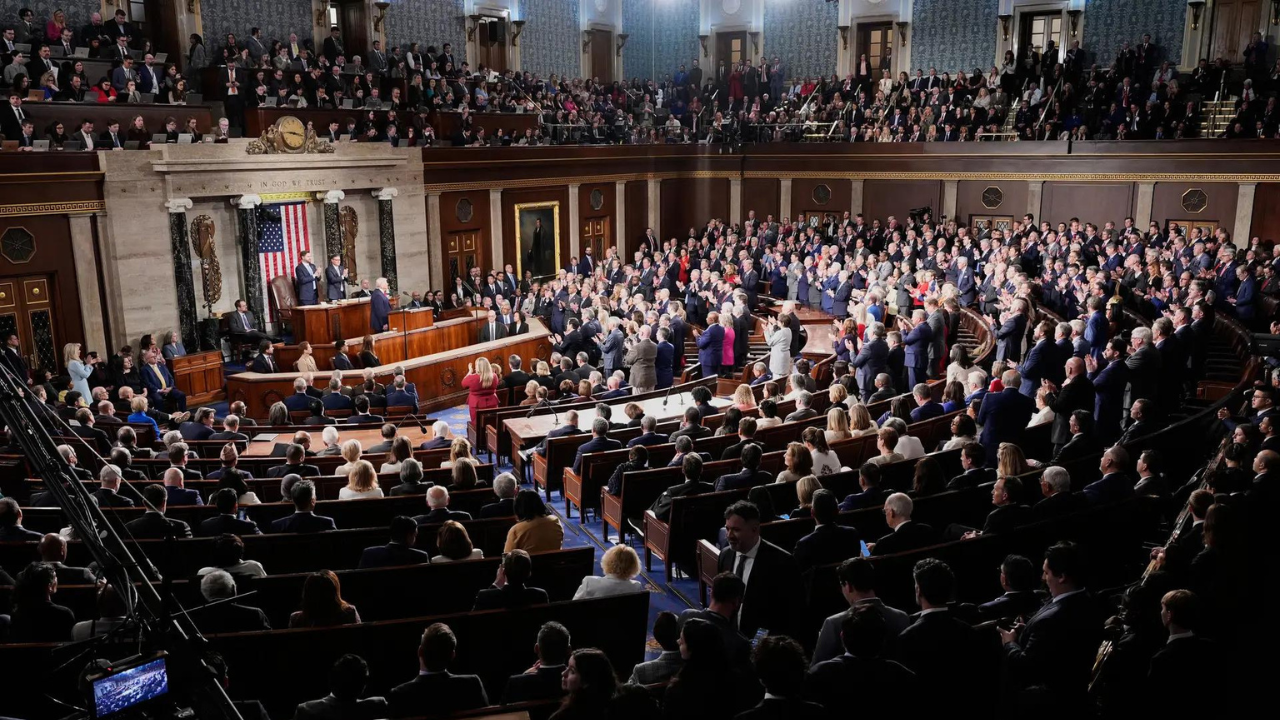
The marble corridors of the United States Capitol possess a specific, lingering scent. It is a mixture of floor wax, old parchment, and the subtle, unmistakable mustiness of a museum. For those who walk these halls daily, however, it feels less like a monument to a living democracy and more like a gilded nursing home with a trillion-dollar budget.
Think of a man named Thomas. He is a hypothetical composite of the dozens of legislative staffers who whisper in the cloakrooms. Thomas spends his days managing the schedule of an eighty-one-year-old senator. His job description says "Policy Advisor," but his reality is vastly different. He prints out emails in twelve-point bold font because the senator refuses to look at an iPad. He memorizes the names of foreign leaders to whisper them into a waiting ear moments before a committee hearing begins. He watches, with a tightening knot in his stomach, as the man who once championed monumental infrastructure bills struggles to find the end of his own sentence.
Thomas is not angry. He is exhausted. And he is terrified.
This is the reality of the American gerontocracy. It is a system where the average age of the Senate hovers around sixty-five, where the presidency has recently been a battleground for octogenarians, and where lifetime judicial appointments mean the law of the land is dictated by minds formed in a vastly different century. We are being steered into a hyper-technological, rapidly melting future by a leadership class that remembers when television was a novelty.
The numbers tell a story that goes beyond mere biology. In the mid-twentieth century, the median age of the Senate was fifty-three. Today, it sits at historic highs. It is not uncommon to see lawmakers serving well into their late eighties, some requiring physical assistance just to reach the microphone to cast a vote.
But this is not a cruel critique of the elderly. Aging is a natural, beautiful progression. The problem arises when the natural instinct to pass the torch is replaced by an addiction to power.
Consider what happens next when a governing body ages past its expiration date. Innovation stalls. The world outside the Capitol changes at terminal velocity. Artificial intelligence threatens entire economic sectors. Cryptocurrencies destabilize traditional financial markets. Climate systems shift unpredictably. To regulate these forces, a lawmaker must first understand them. Yet, the public has been treated to the painful spectacle of congressional hearings where tech CEOs must explain to senior lawmakers how Facebook makes money or how a smartphone connects to home Wi-Fi.
It feels like watching a grandparent try to program a VCR while the house burns down around them.
The disconnect is deeper than technology. It is visceral. A twenty-five-year-old entering the workforce today faces an economic reality that their leaders cannot fathom. They are crushed by student debt, priced out of a skyrocketing housing market, and facing the grim prospect that Social Security may be depleted by the time they reach retirement. When an eighty-year-old lawmaker suggests that young people simply need to work harder or stop buying expensive coffee to afford a home, it is not malicious. It is a symptom of historical vertigo. They are judging a 2026 economy using 1974 metrics.
Why do they stay?
Power is a potent drug, but the institutional structure of American politics acts as an enabler. incumbency is an almost unbreakable shield. The seniority system inside Congress dictates that the longest-serving members get the most influential committee assignments. If a state elects a brilliant forty-year-old, that freshman lawmaker is relegated to the back benches, stripped of real influence. To get things done for their constituents, voters feel forced to re-elect the same octogenarian decade after decade. It is a hostage situation disguised as a democracy.
The human cost is quiet. It is measured in the staffers who run the government from the shadows. Unofficial caretakers. They draft the laws, negotiate the compromises, and manage the crises while the elected official serves as a recognizable face for fundraising emails. This creates a dangerous accountability vacuum. Who is actually running the country? The person voters put in office, or the twenty-six-year-old staffer pulling the strings behind the curtain?
Look at the Supreme Court. Justices serve until they die or choose to step down, often clinging to their seats until their final breaths to ensure a politically aligned successor replaces them. The law becomes a game of biological roulette. The fundamental rights of hundreds of millions of citizens depend on whether an ailing jurist can survive another winter.
This is no way to run a superpower.
The solution is often framed as a simple matter of term limits or mandatory retirement ages. But the resistance is fierce. Critics argue that age limits are discriminatory, or that they rob the government of vital institutional memory. There is value in wisdom. There is value in history. A young nation needs elders who remember the lessons of past crises.
But wisdom is not the same as longevity. Wisdom knows when to step aside.
True leadership requires the humility to recognize that the future belongs to those who will live in it. When the architects of a society will not survive to see the long-term consequences of their decisions, the policy becomes short-sighted. It prioritizes the immediate comfort of the present over the survival of the future.
The sun is setting on a particular generation of American leaders. They have built institutions, navigated wars, and shaped the global order. Their legacy is secure. Yet, by refusing to leave the stage, they risk turning their final act into a tragedy of stubbornness.
A quiet evening in Washington reveals the true stakes. The lights stay on late in the office buildings surrounding the Capitol. Young aides sit under the buzz of fluorescent lights, drafting speeches they will never deliver, solving problems they will inherit, and waiting for the older generation to finally let go of the wheel.

.webp)