The court reporter’s machine clicks in the humid silence of a rural Texas courtroom. It is a steady, mechanical sound, completely indifferent to the life hanging in the balance. In the center of the room sits Timothy Foster. He is Black, eighteen years old, and accused of a brutal crime—the murder of Queen White, an elderly white woman. The evidence against him is substantial, but under the architecture of American justice, the facts of the crime are only half the story. The other half is decided by the people sitting in the jury box.
Outside, the year is 1987. Inside, a prosecutor is systematically crossing names off a list. You might also find this similar article interesting: The Mail-In Voting Melodrama and the Judicial Reality Nobody Wants to Admit.
By the time the jury is impaneled, a stark reality settles over the courtroom. There are twelve jurors. Every single one of them is white. In a county with a significant Black population, the mathematics of chance alone cannot explain this alignment. It requires intent.
For the next twenty years, Timothy Foster would sit on death row, the trajectory of his life dictated by that specific configuration of twelve white faces. His lawyers would argue, appeal, and fight through a labyrinth of legal machinery, asserting a fundamental truth that felt obvious but remained legally unproven: the prosecution had intentionally purged Black citizens from the jury to secure a death sentence. As discussed in recent coverage by Reuters, the results are worth noting.
To understand how a life can be suspended for two decades over the makeup of a jury, we have to look at the invisible mechanics of the courtroom. When a trial begins, both sides engage in voir dire, a process where potential jurors are questioned to ensure they can be impartial. If a juror shows blatant bias, they are removed "for cause." But attorneys also possess a set of invisible wildcards called peremptory strikes. These allow a prosecutor or defense attorney to eliminate a juror without giving any reason at all.
Historically, these strikes were used as a blunt instrument of racial exclusion. In 1986, a landmark Supreme Court ruling called Batson v. Kentucky attempted to change that. The Court ruled that you cannot strike a juror based solely on race. If the defense objects, the prosecutor must provide a "race-neutral" reason for the strike.
It sounds like a robust shield against discrimination. In practice, it became a game of vocabulary.
Consider a hypothetical scenario where a prosecutor wants to remove a Black juror. Under the Batson rules, they cannot say, "I am striking this person because they are Black." Instead, they look at the juror’s questionnaire. They notice the juror hesitated before answering a question, or that they have a cousin who was arrested ten years ago, or that they work a low-income job. The prosecutor offers one of these reasons to the judge. The judge nods. The strike is allowed. The shield crumbles because any capable attorney can find a "race-neutral" justification if they look hard enough.
This is exactly what happened in the case of Timothy Foster. The prosecution struck all four prospective Black jurors who were eligible to serve. When challenged, the state provided a laundry list of reasons. One Black juror was allegedly too close in age to the defendant. Another appeared "evasive" during questioning. A third had a son with a prior conviction. On the surface, the record looked clean. The convictions were upheld, the death sentence remained, and the decades began to stack up.
The weight of twenty years on death row is difficult to measure in standard units of time. It is measured in the slow peeling of paint on a cell wall. It is measured in the steady accumulation of legal briefs that arrive via slow mail, each one carrying the promise of life or the finality of execution. Foster lived in this suspension, waiting for a breakthrough that seemed entirely impossible under the law.
The breakthrough did not come from a brilliant new legal argument. It came from a manila envelope.
Nearly two decades after the trial, Foster’s legal team utilized the Georgia Open Records Act to request the prosecution’s original trial files. What they found inside was a revelation, a literal blueprint of exclusion that shattered the polite fiction of the "race-neutral" explanations offered in 1987.
The documents were vivid. On the jury rosters, the names of every Black prospective juror were highlighted in bright green ink. A legend at the top of the page indicated that green highlighting meant the person was Black. On the questionnaires, the race of the individuals was circled in red pen. Notes scribbled in the margins by the prosecution team ranked the Black jurors against one another, explicitly stating things like, "If we have to pick a Black juror, pick this one."
The state’s defense—maintained for twenty years through multiple levels of appeals—was exposed as a total fabrication. The very reasons given to the judge in 1987 were contradicted by the prosecution’s own internal documents. The juror struck for being "too close in age" to Foster had been compared to white jurors of similar age who were kept on the panel without a single objection. The "evasive" juror had answered questions identically to white counterparts.
The reality was laid bare in green highlighter and red ink. The state had intentionally engineered an all-white jury.
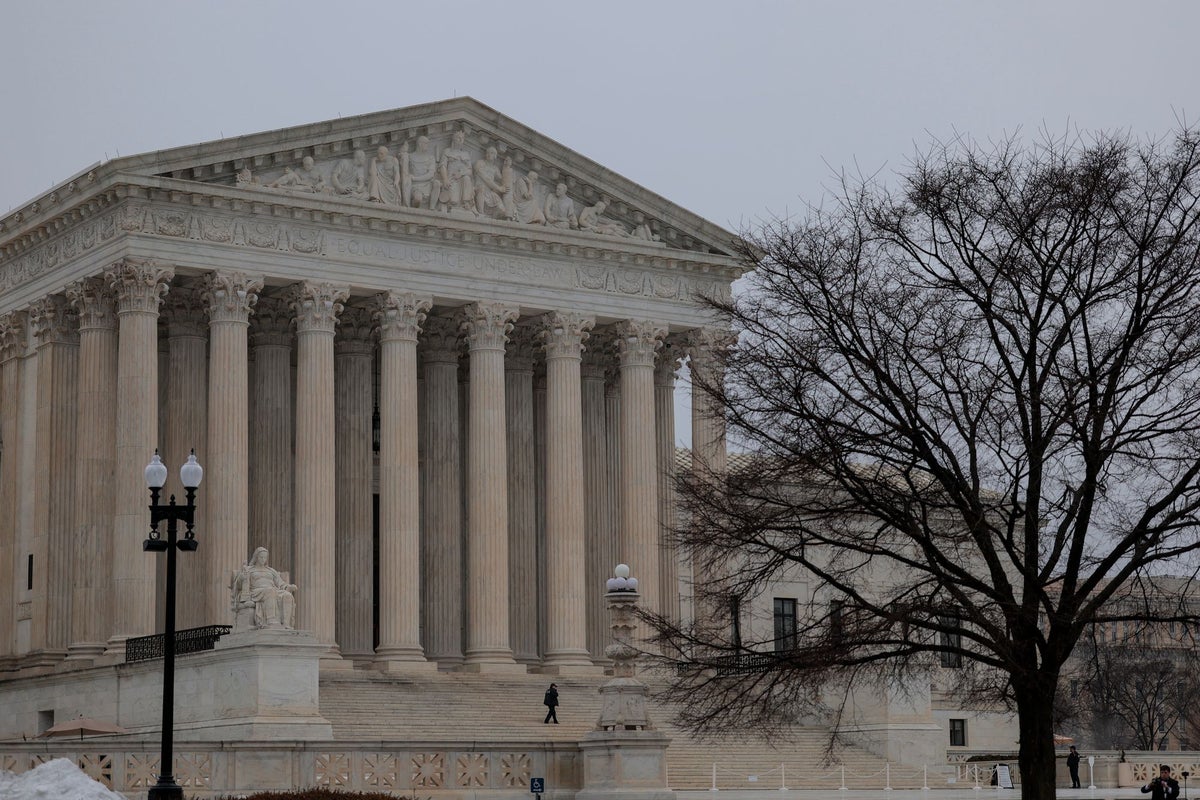
When the case finally reached the United States Supreme Court in 2016, the justices were faced not with a abstract question of constitutional theory, but with a concrete trail of paperwork. Chief Justice John Roberts, writing for a 7-1 majority, did not mince words. The Court looked past the legal jargon and the decades of procedural hurdles to state the obvious: the prosecution had been motivated by race.
The Supreme Court’s decision ended Timothy Foster’s twenty-year battle over his jury, reversing the lower court rulings and throwing out the conviction that had kept him on death row. It was a monumental victory for Foster, a literal lease on life that arrived after twenty years of psychological siege.
Yet, the resolution of this single case leaves a deeper, more unsettling question lingering over the entire legal landscape. If it took an extraordinary open-records request and a paper trail of literal highlighters to prove discrimination in this case, what happens in the thousands of courtrooms where prosecutors are simply more careful with their notes?
The true tragedy of the Foster case is its exceptionalism. Most defendants facing an all-white jury will never find a green-highlighted list in a state archive. They will simply watch the faces in the box, knowing that the outcome of their life was decided long before the evidence was ever introduced, written in the invisible ink of a system that still struggles to see its own reflection.