Donald Trump says the Strait of Hormuz is completely open, permanently toll free, and that global shipping companies should just start their engines and let the oil flow. It sounds like a massive victory. Following a highly disruptive naval blockade and intense military friction with Tehran earlier this year, the freshly inked US-Iran memorandum of understanding is being marketed as a total diplomatic breakthrough.
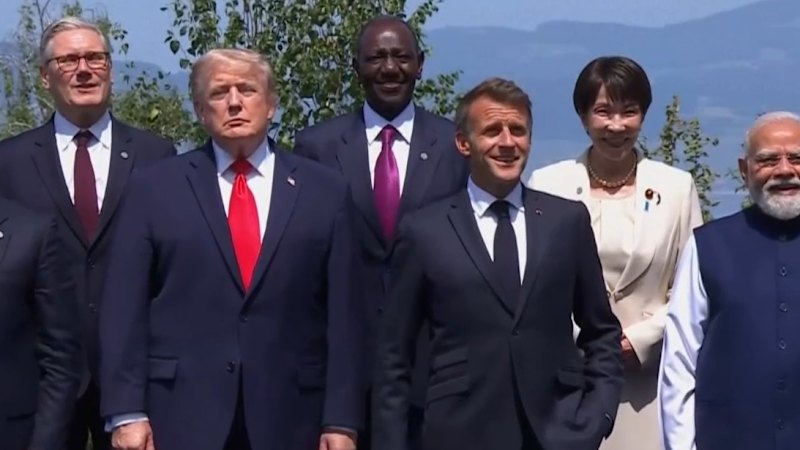
But talk to actual shipowners, cargo charterers, or energy traders, and you will get a very different story. Behind the triumphant social media posts and the optimistic press briefings at the G7 summit in France, the maritime industry is staring at a chaotic reality. The White House and Tehran are already publicly contradicting each other over what the phrase toll free even means, and the water is still full of literal explosives.
The Semantic Battleground Over Transit Fees
The core of the issue comes down to a classic geopolitical bait-and-switch. Trump insists that under this new deal, which was electronically co-signed by Vice President JD Vance and Iranian parliament speaker Mohammad Bagher Ghalibaf, ships will move through the world's most critical energy chokepoint without paying a dime.
Tehran sees it differently. Almost immediately after the US announcements, Iran's Foreign Ministry fired back with a reality check. They aren't charging a transit toll, they claim. Instead, they are preparing to levy heavy maritime service fees for navigation help, environmental protection, and mandatory ship insurance.
If you run a shipping line, this is a distinction without a difference. A dollar taken out of your pocket hurts just as much whether the government labels it a toll or a service fee.
The Cost of Friction: The Strait of Hormuz handles more than one-quarter of all seaborne oil trade and a fifth of global liquefied natural gas (LNG) traffic. When it got blocked for over 100 days during the peak of the recent crisis, Brent crude spiked well past $120 a barrel.
The text of the memorandum of understanding is incredibly brief—JD Vance admitted it is only about a page and a half long. While the US claims the initial 60-day fee waiver will lead to a permanently free passage, the actual mechanics are being kicked down the road to technical negotiations in Geneva and Doha. For now, the legal ambiguity leaves global commerce completely exposed.
Real Risk vs Political Optics
Shipowners are not rushing back into the Gulf just because a political document got signed. The largest maritime trade organizations, including BIMCO, are telling members to hold tight. The reason is simple: you can't sail a multi-million-dollar supertanker through a minefield based on a political promise.
Trump stated that the waterway would be fully functional by Friday, June 19, yet his own administration officials admitted on a press call that clearing mines and normalizing traffic will realistically take weeks. France and Britain have offered to deploy naval forces to help clear the waters, an offer Trump brushed off by saying the US didn't need much help, though he wouldn't mind a couple of European ships Tagging along.
Beyond the physical danger of unexploded mines, the shipping industry operates on insurance. Right now, underwriters are looking at two major red flags:
- The 60-Day Clock: This deal isn't a permanent treaty. It is a 60-day window to negotiate a massive, complicated peace deal that includes dismantling Iran's highly enriched uranium stockpile. If those talks fail, Trump has openly threatened to resume military strikes.
- The Insurance Premium Spike: Insurance companies will keep war-risk premiums astronomically high until they see certified proof of successful mine clearance and stable local governance.
What Shippers Need to Do Right Now
If you manage logistics, supply chains, or energy commodities, ignoring the political noise and focusing on operational realities is the only way to protect your bottom line. Do not rewrite your summer route maps based on a tweet.
First, maintain your alternative routing schedules around the Cape of Good Hope or through regional pipelines until major carriers like Maersk officially resume standard service through the strait. Maersk has already explicitly stated they aren't changing their Middle East operations yet, choosing to wait for verified safety data rather than political declarations.
Second, re-evaluate your contract clauses. Ensure that any upcoming charter agreements contain explicit language defining who bears the financial burden if Iran enforces its service fees or if mine-clearing operations delay transit times past the promised Friday deadline.
The global economy desperately needs the Strait of Hormuz to function normally. Lower oil prices and a recovering stock market look great on a president's ledger, but until the technical teams in Switzerland sort out the difference between a toll and a service fee, the world's most vital waterway remains an active gamble.
.jpg)