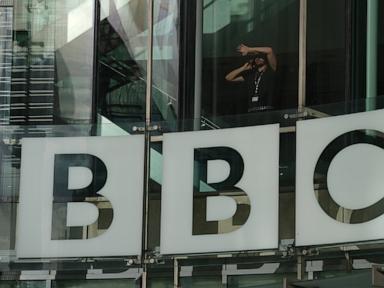
Donald Trump isn't backing down from his massive legal fight against the British broadcaster, but he's drawing a hard line when it comes to dragging his relatives into the courtroom.
Trump's legal team recently urged a federal judge to throw out an attempt by the BBC News to secure testimonies and records from three high-profile family members. At the center of this battle is a massive $10 billion defamation lawsuit. Trump filed the complaint after the network aired a documentary focusing on his speech ahead of the January 6, 2021 Capitol riot.
The Core Dispute Over Family Subpoenas
The battle lines were drawn when lawyers for the network tried serving subpoenas to Ivanka Trump, Jared Kushner, and Donald Trump Jr. Process servers ran into immediate roadblocks. Secret Service agents at the residence of Ivanka Trump and Kushner stated they lacked authorization to accept the papers. A similar attempt at Trump Tower to reach Donald Trump Jr. also fell flat.
Instead of accepting defeat, the network asked a federal court for permission to bypass personal delivery and use certified mail instead. Trump’s attorneys fired back immediately. They argued in court filings that the push for family records is nothing more than a politically motivated discovery campaign designed to extract leverage rather than gather legitimate evidence.
"The relief that the BBC's Motion seeks cannot be segregated from the politically charged discovery campaign that it is based on," Trump’s lawyers wrote in their filing.
Behind the Ten Billion Dollar Claim
You have to look at the origin of the lawsuit to understand why both sides are playing hardball. Trump's December filing targets a documentary segment that spliced distinct parts of his speech near the White House. His lawsuit contends that the deliberate editing made it look like he directly commanded his supporters to attack the Capitol. Furthermore, the legal complaint claims the timing of the broadcast—just a week before the 2024 presidential election—was a calculated move to sway voters.
While the network has issued an apology for the misleading edit, it maintains that the defamation claims hold no actual legal merit. The case itself recently shifted to U.S. District Judge Jeffrey Kuntz in Miami, who inherited the docket with a trial date looming in February.
Navigating High-Stakes Discovery
High-profile defamation lawsuits rarely stay contained to the original broadcast. Once a plaintiff opens the door by claiming massive financial and reputational harm, opposing counsel gains wide latitude to probe damages, intent, and background details. The defense wants to question those closest to the former president about events and internal communications surrounding that day.
Trump's team is simultaneously pushing back against separate legal orders that demand access to wider financial documentation tied to his family trust. Managing massive multi-billion-dollar litigation requires constant defensive maneuvers to prevent broad discovery requests from turning into fishing expeditions.
Judge Kuntz has yet to rule on whether the network can serve the family subpoenas via certified mail. Until a decision comes down, expect both legal teams to keep filing aggressive motions as the target trial date approaches.