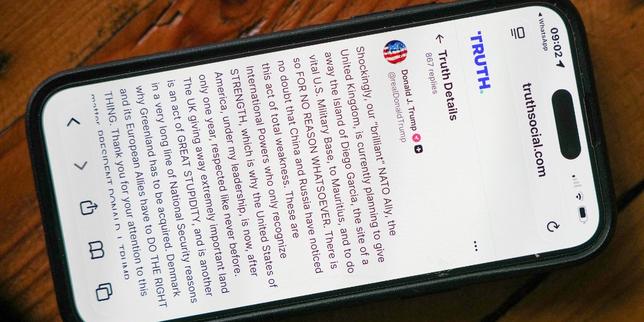
You can buy almost anything on Wall Street. Now, that includes a head start on the president's thoughts.
A newly launched subscription tier on Truth Social charges corporate entities up to $100,000 a month for rapid access to high-profile posts. These aren't just random musings. They include official policy shifts, tariff announcements, and market-moving national security statements.
Two prominent media groups decided they've had enough.
The Intercept and the Freedom of the Press Foundation filed a federal lawsuit in Manhattan to shut the service down. They argue that monetizing official government announcements through a private corporate feed is flagrantly unconstitutional.
Let's break down why this case matters. It sits right at the intersection of executive power, corporate finance, and basic constitutional rights.
The Mechanics of Truth API
Trump Media & Technology Group launched the service, known as Truth API, on August 1. For a cool $100,000 monthly fee—or $60,000 a month with a three-year commitment—subscribers get a high-speed data feed. This feed bypasses standard public viewing delays for ten designated accounts.
Those accounts belong to the platform's heavy hitters. They include Donald Trump, Vice President JD Vance, and Press Secretary Karoline Leavitt.
Financial institutions and high-frequency trading firms love speed. If you know about a sudden shift in trade tariffs or foreign policy seconds before your competitors, you make millions. That's the exact market advantage Trump Media is selling.
Trump remains the company's largest shareholder. His stake sits safely in a trust where he is the sole beneficiary. When his private company sells a $100,000 subscription to make money off his public statements, the line between government duty and private enterprise blurs entirely.
Constitutional Arguments and Free Speech
The lawsuit, backed by legal watchdogs like Citizens for Responsibility and Ethics in Washington, points to major violations of the First and Fifth Amendments.
The core argument is simple. Public information belongs to the public. Under the First Amendment, citizens and journalists have a right to access a president's public statements on equal terms. You shouldn't have to pay a private company thousands of dollars just to stay on an even playing field with Wall Street insiders.
Seth Stern, chief of advocacy at the Freedom of the Press Foundation, didn't mince words. He called the scheme blatantly corrupt. He pointed out the irony of Trump using Truth Social to attack journalists or threaten lawsuits, while simultaneously forcing those same reporters to wait behind paying customers to read about it.
David Bralow, chief legal officer at The Intercept, echoed that frustration. Public announcements from the Oval Office shouldn't sit behind a paywall designed to bail out a struggling social media platform.
The Financial Reality Behind the Push
Why launch this risky service now? The answer is simple math.
Trump Media has struggled financially since going public. The company routinely posts heavy quarterly losses, and its stock price has dropped significantly from its initial post-launch highs. Interim CEO Kevin McGurn has defended the API service as standard industry practice, noting that similar real-time data feeds exist across the tech and media sectors.
Critics aren't buying the defense. Democratic lawmakers like Senators Elizabeth Warren and Adam Schiff previously urged the Securities and Exchange Commission to investigate. They questioned whether the priority feed encourages insider trading and market manipulation at the expense of everyday retail investors.
The lawsuit asks the federal court to strip down the program entirely. It demands an immediate halt to the paid tier and seeks to block the administration from treating Truth Social as an exclusive channel for official announcements while profit motives remain attached.
This legal battle will test how far a leader can go in monetizing the digital megaphone of the presidency. The verdict could reshape how political communication intersects with private corporate equity for years to come.