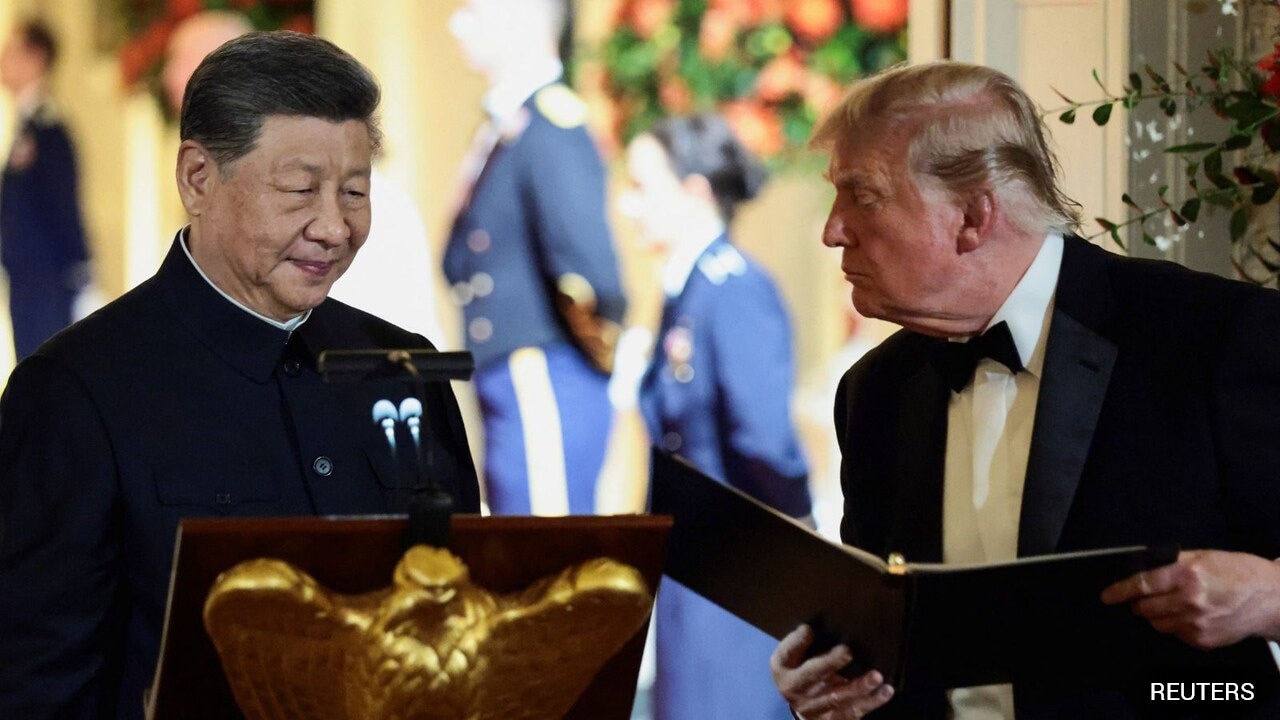
Every headline right now treats geopolitics like a high school locker room brawl. Donald Trump takes to his preferred megaphone, points a finger at Beijing, and declares that Chinese economic lifelines to Tehran are entirely unacceptable. The mainstream foreign policy establishment nods along in solemn agreement. Washington pundits trip over themselves drafting think pieces about secondary sanctions, tariff escalation, and the impending rupture of Sino-American trade.
It is a deeply comforting narrative for people who prefer their international relations neatly categorized into good guys and bad guys. It is also completely detached from how actual global power works in the twenty-first century.
I have spent years watching policymakers panic over the wrong levers while the real machinery of economic dominance shifts right underneath their feet. The lazy consensus assumes that Beijing props up Iran out of some grand, ideological anti-Western crusade, and that a stern warning from the Oval Office will force a recalibration. That perspective misunderstands both Chinese strategic patience and the structural utility of a sanctioned Iran. Beijing does not view Tehran as a cherished ally in a revolutionary vanguard. They view Iran as a heavily discounted gas station with zero alternative customers.
When you look at the balance sheets instead of the press releases, a very different picture emerges.
The Anatomy of a Discounted Supply Chain
Let us define what is actually happening beneath the surface of Sino-Iranian crude flows. Western analysts love to talk about billions of dollars in illicit trade as if it represents direct cash transfers flowing into the pockets of hardliners. It does not. It is an exercise in sovereign arbitrage.
Sanctions do not stop trade; they merely privatize the discount. When Washington cuts a nation out of the SWIFT banking network and threatens secondary penalties on any legitimate marine insurer, the target country faces a binary choice: capitulate or find desperate buyers. Desperate sellers do not dictate terms. They accept payment in restricted currencies, utilize opaque shadow fleets of aging tankers with transponders turned off, and sell crude at steep discounts to Brent benchmarks.
China’s independent refiners, colloquially known as the teapot refineries clustered in Shandong province, absorb the bulk of this discounted oil. These are not state-owned behemoths like Sinopec or PetroChina that worry about losing lucrative American asset portfolios. These are nimble, smaller-scale operators whose entire business model relies on turning cheap, sanctioned feedstock into refined products while dodging western oversight.
To frame this as Beijing directly defying Washington misses the commercial genius of the arrangement. Beijing gets heavily discounted energy inputs that lower its manufacturing baseline costs, insulating its export economy from global commodity shocks. Tehran gets just enough hard currency to keep its currency from vaporizing entirely, while its bureaucratic elite builds intricate smuggling networks that make corruption a permanent feature of domestic governance.
Trump threatens tariffs. Xi nods, alters a shipping manifest, reroutes a tanker through Malaysian waters via ship-to-ship transfers, and the oil keeps flowing. The mechanism of pressure breaks down because the enforcement mechanism relies on nineteenth-century logic in a twenty-first-century shadow market.
The Myth of Leverage Through Isolation
The foundational error in the current foreign policy playbook is the belief that total economic isolation creates democratic reform or strategic compliance. History offers a brutal track record on this theory. Cuba, North Korea, Venezuela, and Iran itself stand as monuments to the utter bankruptcy of maximum pressure campaigns when applied to autocratic regimes.
When a government's survival depends on maintaining a monopoly on state violence, external economic strangulation does not weaken the regime. It empowers the security apparatus. It turns the state into the sole distributor of scarce resources, making every citizen dependent on the ruling elite just to secure basic food and medicine.
Washington assumes that if the economic screws are tightened enough, Xi Jinping will step in as the benevolent enforcer of Western security norms, cutting off Tehran to preserve access to Western consumer markets. This is a fantasy born of corporate boardrooms, not statecraft. Beijing does not care about the ideological purity of the Iranian clerical establishment any more than Washington cares about the human rights record of half its strategic partners in the Global South.
Beijing cares about strategic distraction and resource security. As long as American military resources, diplomatic bandwidth, and intelligence assets are deeply entangled in the Middle East managing perennial flare-ups, Washington has fewer resources to project power into the South China Sea or the Taiwan Strait. From Beijing's perspective, a simmering, sanctioned Iran is not a liability. It is a persistent, low-cost American containment drain.
What Real Intervention Looks Like
If policymakers actually wanted to disrupt the Sino-Iranian economic axis, they would have to abandon the blunt instrument of broad tariffs and embrace targeted, surgically ruthless financial warfare that modern western bureaucracies are rarely agile enough to execute.
It requires going after the maritime insurance syndicates in non-aligned jurisdictions that keep the shadow fleet afloat. It requires aggressively auditing sovereign wealth funds and intermediaries in the Gulf states that serve as clearinghouses for yuan-denominated oil settlements. Most importantly, it requires accepting that disrupting these supply chains will cause immediate, painful spikes in global energy prices—a political cost no administration in Washington is willing to absorb ahead of an election cycle.
Instead, we get grandstanding. We get leaders shouting across the Pacific about unacceptable behavior, knowing full well that the supply chains are too complex, the incentives too misaligned, and the underlying economics too lucrative for rhetoric to alter a single valve on a tanker pump.
Stop pretending that a stern warning from a podium alters the calculations of nations operating entirely outside the western financial perimeter. The architecture of global trade has already bifurcated. Until Washington understands that you cannot regulate a shadow market using the rules of the formal one, every threat issued will be nothing more than noise against a hull of steel moving quietly through the dark waters of the Malacca Strait.