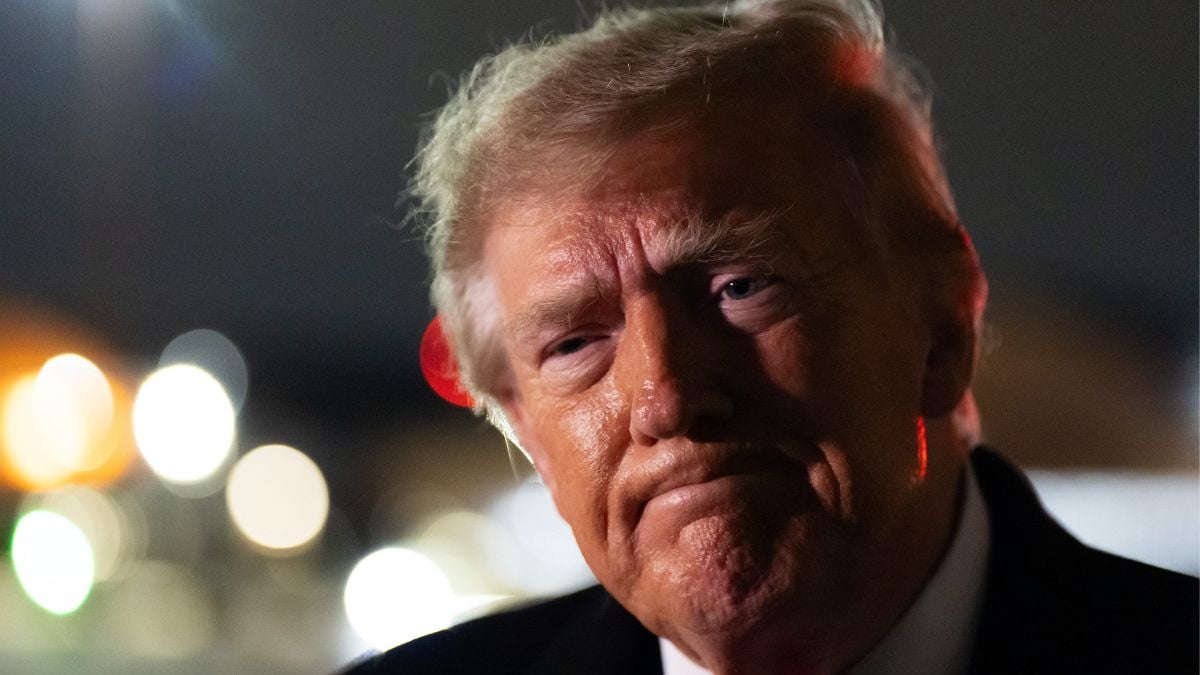
Donald Trump is once again questioning the credibility of midterm election results, asking crowds and social media followers whether anyone genuinely believes the process is honest. This rhetoric is not a spontaneous reaction to newly uncovered evidence of widespread fraud; it is a well-documented political strategy designed to pre-frame unfavorable outcomes, mobilize a skeptical base, and maintain leverage over party loyalty. While isolated administrative errors and localized delays occur in every American election cycle, bipartisan election officials, federal cybersecurity agencies, and independent auditors consistently confirm that the decentralized structure of U.S. voting prevents coordinated, outcome-altering manipulation.
That distinction matters.
When a political figure asks a rhetorical question like "Does anybody believe this election was honest?" the power of the phrase lies in its ambiguity. It requires zero proof. It shifts the burden of evidence onto county clerks, poll workers, and state secretaries of state, forcing them to prove a negative across thousands of disparate jurisdictions. For anyone who has spent decades covering campaigns and statehouses, the rhythm of this playbook is instantly recognizable. You raise doubts early about mail-in ballots, point to normal reporting delays as signs of tampering, and treat routine human mistakes as proof of a conspiracy.
The Architecture of Doubt
Modern American elections are messy by design. Unlike countries with a single national election commission that dictates uniform rules and ballot designs from the top down, the United States runs roughly ten thousand separate local elections simultaneously. Counties buy different machines, hire different temporary workers, and follow state laws that vary wildly on when ballots can be opened, scanned, and reported.
To an untrained observer watching cable news on election night, this patchwork looks chaotic. One county reports 90 percent of its vote by 10:00 PM, while a neighboring county takes four days to finish counting. A scanner jams in a suburban precinct. A clerk mislabels a batch of memory cards before correcting the spreadsheet an hour later.
In the hands of a skilled political communicator, these normal operational friction points become ammunition.
Trump’s questioning of the midterm results relies heavily on conflating administrative friction with malicious intent. When a ballot tabulator fails to read a thick paper stock—an issue that happens periodically when humidity or printer settings vary—the backup protocol is simple: drop the ballot into a secure auxiliary bin to be scanned later at a central facility. Nobody loses their vote. The chain of custody remains intact. Yet in campaign speeches and online posts, a routine paper jam is framed as an intentional effort to block specific voters from casting their ballots.
The strategy works because most people never see the inside of a county tabulation warehouse. They do not watch bipartisan teams of observers sign off on ballot transport bags, nor do they witness the logic and accuracy testing conducted weeks before early voting begins. Without that firsthand knowledge, a plausible-sounding suspicion fills the vacuum faster than a technical explanation ever could.
How the Counting Delay Fuels Suspicion
The single biggest driver of election skepticism in recent cycles has nothing to do with voting machines. It comes down to state legislatures and calendar math.
In several key battleground states, state laws prohibit election workers from processing—and in some cases even opening—mail-in ballots until the morning of Election Day. Consider what that means in practice. Hundreds of thousands of envelopes arrive at county offices weeks ahead of time. They sit in locked vaults while staff verify signatures on the outside, waiting for Tuesday morning to legally slice open the paper, flatten the ballots, and feed them through high-speed optical scanners.
Meanwhile, in-person votes cast on Election Day are tabulated immediately as precincts close, with memory sticks driven straight to county headquarters.
This creates a predictable statistical illusion. Depending on which party favored mail-in voting versus in-person voting in a given year, the early Tuesday night numbers will skew heavily in one direction, only to shift gradually over the next 48 to 72 hours as the backlog of mail ballots is finally fed into the scanners.
Politicians know this dynamic intimately. When Trump points to late-arriving totals and asks how anyone could believe the results are honest, he is exploiting a timeline created by state lawmakers. The votes did not magically appear at three in the morning; the tallies were simply uploaded to the state website after hours of continuous, observed scanning.
The Role of the "Red Mirage" and "Blue Shift"
Political analysts have tracked this phenomenon for years, though the partisan lean of mail voting has fluctuated depending on messaging from party leaders. When one candidate tells supporters to avoid voting by mail and show up strictly on Tuesday, that candidate guarantees an early lead in the raw Election Day totals. When the opposing party encourages mail voting, their votes sit in the uncounted pile until Wednesday or Thursday.
To understand how easily this can be misconstrued, consider a hypothetical example. Imagine a county with 100,000 total votes split evenly between two candidates. If 60,000 people vote in person on Tuesday—and Candidate A wins those by a 60-to-40 margin—Candidate A goes to bed with a 12,000-vote lead. If the remaining 40,000 mail ballots are counted on Wednesday and Candidate B wins those by a 65-to-35 margin, Candidate B finishes the week ahead by 4,000 votes. Nothing nefarious occurred. Every single ballot was cast before polls closed on Tuesday. Yet visually, on a television graphic, it looks like a dramatic, suspicious reversal.
Inside the Safeguards Nobody Talks About
If you ask veteran election administrators what keeps them up at night, they rarely mention hackers changing vote totals. They worry about turnout spikes causing long lines, severe weather knocking out power at a polling place, or harassment driving away experienced poll workers.
The reason they worry less about mass rigging is the sheer redundancy built into the system. Most jurisdictions across the country now rely on voter-verified paper ballots. Even when a voter uses a touchscreen ballot-marking device, the machine prints out a physical piece of paper that the voter inspects before feeding it into an optical scanner.
That piece of paper changes everything. It means the software inside the scanner is never the final authority.
- Pre-election testing requires officials to run test decks of marked ballots through every single machine before the election, verifying that the software tallies match the known manual count.
- Air-gapped systems ensure that tabulation computers are never connected to the public internet, neutralizing remote hacking threats during the count.
- Risk-limiting audits allow officials after the election to pull random batches of physical paper ballots and hand-count them to statistically confirm that the machines reported the true outcome.
- Bipartisan chain of custody mandates that Democrats and Republicans travel together whenever ballots or memory cards are moved from a precinct to a central counting center.
To successfully rig a statewide race under these conditions, a conspirator would need to compromise physical paper storage, corrupt local officials from both political parties simultaneously, defeat random post-election hand audits, and keep hundreds of temporary workers silent forever. In an industry where officials struggle just to keep a routine budget memo from leaking to the local paper, pulling off a multi-county conspiracy without leaving a digital or paper trail borders on the impossible.
Why the Rhetoric Persists Despite the Evidence
If the physical safeguards are this thorough, why does questioning the credibility of midterm results remain a centerpiece of Trump’s public messaging? Because in modern politics, attacking the referee serves multiple strategic purposes at once, regardless of whether the claims hold up in court.
First, it acts as political insurance. In any midterm cycle, the party holding the White House historically faces steep headwinds, or conversely, an opposition party with high expectations risks disappointing its base if a projected wave falls short. Framing the system as fundamentally dishonest insulates a leader from blame. If allies win, they overcame a rigged system through sheer enthusiasm. If allies lose, the defeat is attributed to cheating rather than unpopular candidates, flawed messaging, or weak turnout operations.
Second, it enforces discipline within the party. By making belief in election skepticism a litmus test for loyalty, Trump ensures that down-ballot candidates echo his talking points. Few politicians want to risk alienating the most vocal segment of primary voters by defending the integrity of state election boards. As a result, routine administrative updates from county clerks are routinely met with suspicion by the very lawmakers who wrote the election codes in the first place.
Third, it drives fundraising and engagement. Outrage is the most reliable currency in political media. A dry press release explaining the mechanics of signature verification protocols raises zero dollars. An urgent message claiming the election is being stolen right before your eyes generates millions in small-dollar donations and keeps supporters locked into the ecosystem long after the polls close.
The Real Cost to Local Election Infrastructure
The consequences of persistent, evidence-free skepticism extend far beyond cable news debates. Across the country, county election offices are experiencing an unprecedented exodus of institutional knowledge.
Running an election is a specialized, high-stress job that requires mastering state statutory deadlines, managing vendor contracts, training thousands of volunteers, and maintaining voter registration databases. For decades, these roles were held by low-profile civil servants who stayed in their jobs for twenty or thirty years.
Since 2020, hundreds of experienced local election directors have resigned, citing burnout, threats against their families, and endless public records requests designed to paralyze their offices rather than uncover genuine errors. When a twenty-year veteran leaves a county clerk’s office, they are often replaced by someone with no prior experience running a federal election.
Ironically, this brain drain increases the likelihood of the exact kind of minor administrative mistakes that fuel conspiracy theories. A rookie clerk is far more likely to misconfigure a ballot layout, miscalculate a preliminary turnout percentage, or struggle with vendor software on election night. Those human errors—entirely preventable with seasoned staff—are then seized upon as fresh proof that the system cannot be trusted.
Where Genuine Vulnerabilities Actually Exist
Acknowledging that U.S. elections are secure against outcome-altering fraud does not mean the system is flawless. Serious analysts and cybersecurity experts point to real vulnerabilities that receive a fraction of the attention given to baseless machine-tampering claims.
- Insider threats remain the most significant risk in any secure facility. A rogue employee with physical access to equipment can steal a security key or leak proprietary software, even if they cannot alter vote totals without getting caught during an audit.
- Disinformation targeting voters—such as fake text messages telling people their polling place has moved or that they can vote by text—can genuinely suppress turnout if not countered rapidly by local authorities.
- Aging infrastructure and chronic underfunding force many rural counties to rely on outdated hardware and stretched IT budgets, creating bottlenecks on election night.
Addressing these issues requires targeted federal grants, stricter physical access controls, and updated state laws that allow earlier processing of mail ballots. None of those practical fixes are helped by sweeping claims that the entire democratic process is fundamentally dishonest.
The Gray Area Between Doubt and Accountability
Healthy skepticism is essential to a functioning democracy. Citizens have every right to demand transparent audits, clear chain-of-custody logs, and prompt explanations when a county misses a reporting deadline or makes a clerical mistake. Close races should trigger automatic recounts, and suspected cases of individual voter fraud—such as someone casting a ballot on behalf of a deceased relative or voting in two states—should be investigated and prosecuted by local district attorneys.
Those individual cases do happen. Every election cycle produces a handful of prosecutions across the country, almost always involving a single bad actor casting one or two illegal ballots. They are caught precisely because voter rolls are cross-checked, signatures are verified, and duplicate entries flag the system.
What separates legitimate oversight from political theater is the refusal to accept verifiable answers. When a precinct reports a discrepancy, an audit is conducted, the math is reconciled in front of observers from both parties, and the final certified numbers are backed by physical paper ballots. Continuing to ask whether anyone believes the election was honest after the paper trail has been verified is no longer an inquiry into truth; it is a deliberate effort to erode public trust in the only mechanism citizens have to peacefully transfer power.
Democracy depends on losers consenting to the outcome because they trust the fairness of the process, not because they like the result. Once a political movement convinces millions of voters that any defeat is automatically illegitimate, the ballot box stops functioning as a pressure valve for national disagreements and becomes just another front in a permanent, unwinnable war.
