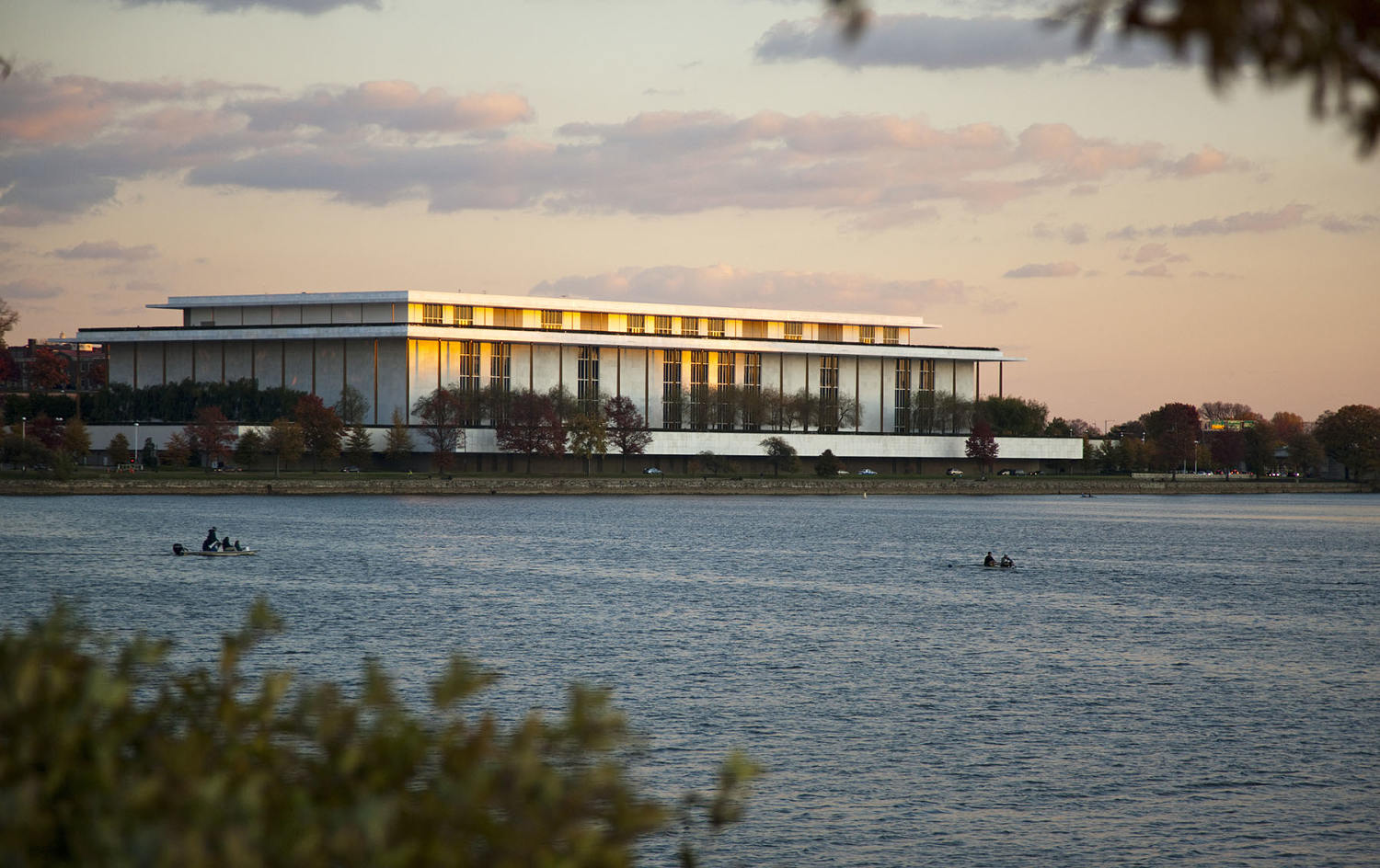
You can't just slap your name on a national monument because you feel like it.
That is the blunt lesson the Trump administration learned on Friday, May 29, 2026. U.S. District Judge Christopher Cooper issued a stinging 94-page opinion that completely upended the White House’s plans for the John F. Kennedy Center for the Performing Arts. The court blocked a planned two-year closure of the venue and gave the government a hard two-week deadline to scrub Donald Trump’s name from the building’s facade and website. You might also find this similar article insightful: The Map and the Manifest.
For months, the administration argued that adding "The Donald J. Trump and The John F. Kennedy Memorial Center for the Performing Arts" to the front portico wasn't actually a renaming. They called it a secondary branding effort to honor fundraising. Judge Cooper didn't buy it. He called the legal defense "too cute by half."
This ruling is a major blow to the administration’s aggressive effort to reshape Washington's cultural geography. If you've been trying to make sense of how a performing arts space turned into a constitutional sandbox, here is what actually happened and what it means for the venue's future. As highlighted in recent coverage by Reuters, the implications are notable.
The Backroom Deal That Triggered a Lawsuit
This mess didn't start with architecture. It started with a surprise vote.
Last December, Donald Trump—who had appointed himself chairman of the Kennedy Center Board of Trustees—moved to add his name to the venue. Ohio Democratic Representative Joyce Beatty, an ex-officio board member, revealed that the renaming wasn't even on the official agenda for the December 18 meeting. It was dropped on the board at the very last minute.
By March 16, the Trump-aligned board voted to completely shut down the facility for two years starting July 6 to undergo massive renovations.
Beatty sued. She argued the board bypassed standard protocols and overstepped its legal bounds. Judge Cooper agreed, explicitly stating that the board's vote to close the facility was "ill-informed and seemingly preordained."
The court found the board completely ignored its statutory obligations to keep the memorial operational. They relied on a one-sided presentation of information, ignoring how a two-year dark period would devastate programming, staff, and the local arts economy.
The Law Is Clear Only Congress Gives Names
The legal core of this case comes down to a simple principle of administrative law. Agencies and boards cannot rewrite federal statutes.
When Congress authorized the construction of the national cultural center in 1964, they specifically designated it as a living memorial to the assassinated president. Lyndon B. Johnson signed that legislation.
Judge Cooper’s ruling leaned heavily on the original 1964 statute and subsequent amendments. For instance, when Congress authorized the center’s "REACH" expansion back in 2012, lawmakers explicitly stated that private donors could only be recognized inside the building. They did this specifically to protect the integrity of the exterior memorial.
"Congress gave the Kennedy Center its name," Cooper wrote, "and only Congress can change it."
The Justice Department’s defense—that the new sign was just a secondary label—fell apart under scrutiny. Adding a name to the front portico and putting it above Kennedy’s name on the website is a renaming, period.
The Total Collapse of the Venue Calendar
While the lawyers argued over text, the building itself was suffering.
Since Trump took over the board chair in early 2025, the Kennedy Center has been in free fall. The administration’s aggressive approach caused immediate friction with the arts community. Major productions packed up and left.
The touring production of Hamilton canceled its run. The Washington National Opera ended its historic 55-year residence at the venue. With high-profile shows disappearing, ticket sales and subscriptions plummeted.
The administration claimed the two-year shutdown was necessary to fix deep structural issues, like decades of water intrusion. But opponents pointed out that Trump’s real plans were far more invasive, including proposals to "fully expose" the building's steel skeleton. They also pointed out the historic damage already done, such as painting the venue's iconic 200 gold exterior columns white to match the new signage.
Trump Walks Away From the Project
Instead of fighting the injunction in court, Trump used his social media platform on Friday evening to announce he is walking away from the institution entirely.
In a characteristic post, he blasted Judge Cooper as reckless and claimed the building is a dilapidated structure that only he could fix. He then stated he has no interest in continuing a "hopeless journey into 'NEVER NEVER LAND'" unless he has total freedom to execute his vision.
Trump announced he is instructing his administration to work with Congress and the Department of Commerce to arrange a full transfer of the institution's operations, maintenance, and management back to lawmakers.
This leaves the venue in a bizarre, chaotic limbo.
The center’s Chief Operating Officer, Matthew Floca, recently warned the court that Trump’s personal brand was the linchpin of their fundraising strategy. According to court filings, Trump had already brought in tens of millions of dollars and committed to raising another $150 million from private donors. Floca warned that without Trump’s name on the building, those donors could vanish, leaving the center "financially nonviable."
What Happens Right Now
The immediate future of the Kennedy Center is incredibly messy.
First, workers have until June 12 to physically strip Donald Trump's name from the building's facade, remove it from the website, and dump all branded marketing materials.
Second, the July 6 total shutdown is officially canceled. The preliminary injunction stops the two-year closure in its tracks. However, the ruling doesn't block normal, targeted maintenance. The board can still patch up the water damage and do routine repairs; they just can't lock the public out for 24 months to do it.
But the biggest headache is the calendar.
Management spent months laying off staff and clearing the schedule in anticipation of the July shutdown. Now they are forced to stay open, but they have almost no performances booked for the upcoming season. They have an empty house, a depleted staff, and a massive funding gap if those Trump-aligned mega-donors back out.
The legal teams have until June 5 to submit a joint status report detailing their next steps. If you're holding tickets or waiting to see how the season shakes out, keep your eyes on that June deadline. The physical signs will change within two weeks, but fixing the damage to the venue's reputation and bank account will take a lot longer.