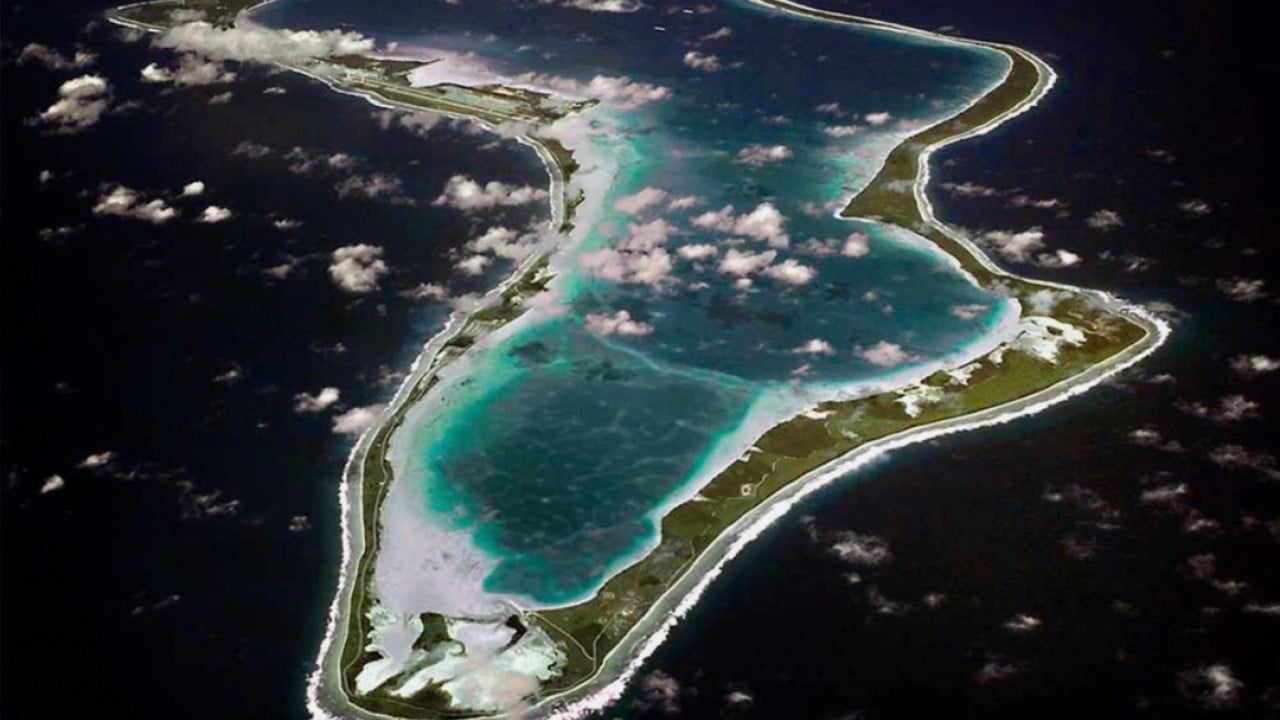
The foreign policy establishment is having another collective panic attack. The catalyst this time? Reports that the Trump administration is drafting options to bypass London and directly purchase the Chagos Islands from Mauritius. The legacy media is running its standard playbook, framing the proposal as a erratic whim that threatens to upend international law and alienate a key NATO ally.
They are entirely missing the point.
The conventional narrative surrounding the Chagos Archipelago—and its crown jewel, the Diego Garcia military base—is built on a foundation of polite lies and structural rot. For years, the British government has tried to maintain a fiction of imperial stewardship, culminating in Keir Starmer’s convoluted 2025 agreement to surrender sovereignty to Mauritius while leasing back the base.
Let’s be clear: Starmer’s deal wasn't diplomacy. It was an expensive, cowardly exit strategy masquerading as decolonization. Trump’s counter-proposal to simply buy the territory isn't a disruption of stable geopolitics; it is a cold, rational correction to a theater of the absurd that has dragged on for decades.
The Myth of the Leaseback Security Blanket
The "lazy consensus" among defense analysts is that the UK-Mauritius agreement was a masterclass in compromise. The UK gets to shed its colonial baggage, Mauritius gets its flag on the map, and the Pentagon keeps its airfield via a 99-year lease. Everyone wins.
Except that is an illusion.
I have seen governments waste billions of dollars and jeopardize critical national security assets on the naive assumption that a lease signed today guarantees access tomorrow. In the real world, a lease with a third-party sovereign state is only as good as that state’s domestic stability and geopolitical allegiances.
Mauritius is not a vacuum. It is a nation with deeply entrenched diplomatic and economic ties to Beijing and Tehran. To believe that a highly sensitive military installation—one used for long-range bomber missions, maritime intelligence, and precision strikes—can remain secure while surrounded by a sovereign territory answerable to Chinese economic influence is pure fantasy. The risk of electronic surveillance, signals intelligence interception, and political blackmail is a mathematical certainty, not a paranoid theory.
Furthermore, the recent escalation in the Middle East exposed the structural fragility of the current arrangement. When the US needed to utilize Diego Garcia for operations during the war with Iran, British diplomats hesitated, citing legal concerns before finally relenting. A military asset that requires a committee meeting with a foreign parliament before it can launch a defensive missile is not an asset. It is a liability.
Cutting Out the British Middleman
The British Indian Ocean Territory is a historical artifact. The United Kingdom does not possess the naval power, the financial resources, or the political will to project force in the Indian Ocean independently. For sixty years, the UK has essentially acted as an absentee landlord, sub-letting the property to the US military while catching the flak from international courts.
The proposed Trump purchase cuts through this administrative bloat. Why should Washington fund a multi-billion-dollar military footprint while remaining subservient to London’s post-imperial guilt and Port Louis’s shifting political alliances?
Consider the mechanics of the proposed transaction. The critics argue that the US cannot buy what Mauritius does not yet technically control, given that the UK handover was shelved. But this ignores the transactional nature of modern diplomacy. If Washington offers Mauritius a direct, lump-sum financial settlement that dwarfs the projected economic benefits of a British lease, the political calculus in Port Louis changes instantly.
Imagine a scenario where Mauritius is offered a multi-billion-dollar sovereign wealth injection directly from the US Treasury in exchange for clear, unencumbered title to the archipelago. For a developing island economy, that is not a deal you walk away from to please international legal theorists in Geneva.
Dismantling the Sovereignty Sentimentality
The loudest objections to a US purchase come from the international law crowd, who populate "People Also Ask" columns with hand-wringing queries about the Chagos refugees and UN resolutions. They ask: Is the UK transfer to Mauritius legally required?
The brutal, honest answer is that international law without enforcement mechanism is just formatting on a page. The International Court of Justice’s 2019 advisory opinion was exactly that—advisory. It possessed zero binding authority.
The real tragedy here has always been the Chagossian people, who were displaced in the 1960s and 1970s. But let’s dismantle the hypocrisy of the current consensus: Starmer’s celebrated deal did nothing to guarantee their return to Diego Garcia anyway. It merely transferred the rights to exploit the territory's geopolitical value from London to Port Louis.
If the United States takes direct, sovereign ownership of the islands, it inherits the moral and financial responsibility for the Chagossian diaspora. A direct American administration could actually provide what decades of British stalling and Mauritian posturing could not: definitive financial restitution and structured resettlement on the outer islands, completely insulated from the military exclusion zone on Diego Garcia.
The Cost of Washington's Candor
There is a downside to this contrarian approach, and it would be dishonest to ignore it. If the US proceeds with a direct purchase, it destroys the polite fiction of the "rules-based international order" that Washington so frequently invokes. It is an open admission that raw strategic necessity overrides multilateral consensus. It will cause diplomatic friction with European allies who prefer their hegemony wrapped in the language of treaties and accords.
But we no longer live in an era that accommodates polite fictions. The Indian Ocean is the central battleground for global trade routes and naval choke points. Treating Diego Garcia like a timeshare property split between a retreating European power and a vulnerable island nation is a luxury the West can no longer afford.
Trump’s desire to buy the Chagos Islands isn’t a joke, and it isn't a distraction akin to his rhetorical sparring over Greenland. It is a recognition that true security requires clear titles, not leases. The British government wanted out of the Chagos business; the Trump administration is simply giving them exactly what they asked for, while ensuring the rent never comes due.