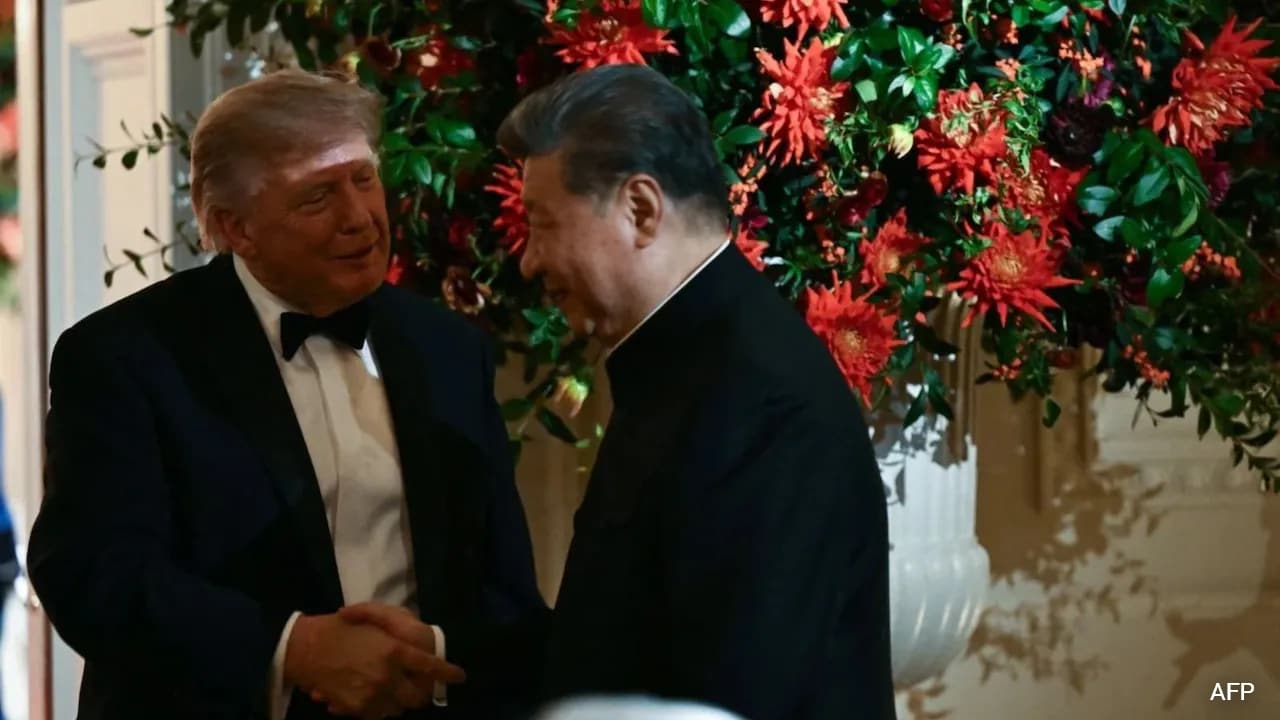
The headlines treated it like a bizarre diplomatic gaffe. When the story broke about Donald Trump asking Xi Jinping in the Oval Office whether China wanted to buy American weapons, the mainstream press chuckled. They painted it as a real estate developer treating geopolitics like a car dealership. They missed the entire point because they refuse to understand how leverage actually works in high-stakes negotiations.
I have spent years watching bureaucrats bumble through trade talks with zero skin in the game, treating diplomacy like an endless cocktail party. They think foreign policy is about polite communiqués and vague commitments to international norms. They are wrong.
Trump did not pitch hardware sales because he expected Beijing to whip out a checkbook for F-35s. That interpretation belongs in the amateur hour category of political analysis. The question was a classic diagnostic probe designed to expose the structural contradictions of the entire bilateral relationship.
Consider the baseline reality. For decades, Washington operated under a comforting delusion. The consensus held that commercial integration would automatically birth political liberalism in Beijing. Wall Street loved it because cheap labor padded margins. The defense establishment loved it because a rising tide of globalized manufacturing funded an ever-expanding Pentagon budget. Everyone got fat, happy, and intellectually lazy.
Then reality intruded.
When a superpower explicitly asks a strategic rival if they want to purchase its premier military technology, two things happen instantly. First, you force the counterparty to drop the diplomatic theater. Second, you place their defensive posture under an immediate spotlight.
China cannot buy American military hardware for reasons that have nothing to do with commercial terms and everything to do with ideological control and technological sovereignty. Their entire state-capitalist apparatus is built around indigenous substitution, intellectual property acquisition through forced joint ventures, and building an arsenal explicitly tailored to counter American power projection in the Indo-Pacific.
By floating the idea of an arms deal, Trump short-circuited the diplomatic pleasantries. He forced Beijing into a corner where they had to either acknowledge their status as an adversarial economic predator or pretend they were open to military interoperability with their primary geopolitical target. Both options are toxic to their domestic narrative.
Critics love to point out the obvious flaw. They scream that export controls and security laws legally prohibit selling advanced defense systems to a strategic competitor. Yes, congratulations on reading Wikipedia. Everyone with a rudimentary grasp of ITAR knows weapons sales to China are banned by US law.
That is precisely why the question was so effective. It was a rhetorical wedge designed to highlight the profound asymmetry in how the two nations view security and trade.
When you look at the broader landscape of modern statecraft, the lazy consensus always assumes that trade deficits and security competition exist in separate silos. Economists tell you to keep business and politics separate, as if corporations operating in authoritarian states are neutral actors. They are not. Every major Chinese firm is tethered to the party-state apparatus, bound by national intelligence laws that compel them to hand over data and capabilities upon demand.
Pretending otherwise is professional negligence.
The real lesson from that Oval Office exchange is that transactional diplomacy cuts through ideological fog faster than a hundred academic white papers. It forces the opposition to react to concrete commercial propositions rather than abstract principles.
If you want to understand how modern great power competition operates, stop listening to diplomats who think every problem can be solved with a joint statement. Look at who bears the cost when the music stops. American manufacturing hollowed out because leaders for thirty years prioritized short-term corporate earnings over long-term industrial capacity.
Trump understood that the relationship was adversarial long before it became fashionable in Washington think tanks to say so out loud. Asking about buying weapons was not a serious procurement proposal. It was a public stress test for a broken system.
The next time someone tells you that foreign policy should return to the quiet, predictable norms of the past, remember what those norms got us. They got us a dependent supply chain, a modernized adversary, and an industrial base struggling to catch up to the demands of a contested world.
Stop confusing politeness with competence.


