The economic relationship between Port of Spain and New Delhi has long been a story of untapped potential and lopsided balances. For years, the flow of goods has moved primarily in one direction, with Indian pharmaceuticals, vehicles, and textiles dominating the exchange. Now, Trinidad and Tobago is attempting a fundamental shift in its approach to the subcontinent. Dr. Roger Gopaul, the High Commissioner for Trinidad and Tobago to India, has made it clear that the era of passive observation is over. The mission is simple but grueling: convert a cultural affinity into a hard-currency trade surplus.
Success requires more than just diplomatic handshakes. It demands a total overhaul of how the Caribbean twin-island nation positions its manufacturing and energy sectors within the hyper-competitive Indian market.
Breaking the Energy Monoculture
Trinidad and Tobago has spent decades relying on its status as an energy powerhouse. However, selling energy to India is not as straightforward as it once was. India is aggressively diversifying its energy mix, chasing both green initiatives and cheaper Russian crude. For Port of Spain to compete, it must move beyond raw liquefied natural gas (LNG).
The real opportunity lies in downstream petrochemicals. India’s massive industrial growth requires a constant supply of methanol, urea, and ammonia. Trinidad and Tobago possesses one of the most sophisticated petrochemical clusters in the Western Hemisphere, centered around the Point Lisas Industrial Estate. The challenge is logistics. Shipping these products halfway across the globe incurs costs that can easily erase profit margins.
To solve this, exporters are looking at strategic storage hubs in the Middle East or Southeast Asia to shorten the final leg of the journey into Indian ports like Mundra or Nhava Sheva. Without a logistical rethink, Trinidadian goods remain a premium option in a market that remains obsessively price-sensitive.
The Pharmaceutical Pivot
While India is known as the "pharmacy of the world," the trade is not a one-way street. There is a growing demand in India for specialized chemicals used in drug formulation. Trinidadian manufacturers are beginning to explore how their chemical expertise can feed into the Indian supply chain. This isn't about selling finished pills to India; it’s about providing the high-quality chemical precursors that Indian giants like Sun Pharma or Dr. Reddy’s need to maintain their global dominance.
Agriculture and the Niche Market Strategy
Trinidad and Tobago cannot compete with India on volume when it comes to standard agricultural commodities. India is a titan of rice, wheat, and pulses. Instead, the focus is shifting toward high-value, protected-origin products.
The Moruga Scorpion pepper and Trinitario cocoa are prime examples. These are not bulk commodities; they are luxury ingredients. India’s middle class is expanding at a dizzying rate, and with that growth comes a taste for international flavors and premium goods.
- Trinitario Cocoa: Widely considered among the best in the world for fine chocolate production.
- Specialty Spirits: High-end Caribbean rums that compete with Scotch and Cognac for shelf space in Delhi’s elite bars.
- Agro-processing: Hot sauces and seasonings that cater to the Indian palate's love for heat, but with a distinct Caribbean profile.
The strategy here is "premiumization." You don't sell to the billion; you sell to the ten million who can afford the best. This requires rigorous branding and a refusal to compete on price alone. If a product is positioned as a commodity, it will fail in India. If it is positioned as an experience, it has a fighting chance.
Navigating the Bureaucratic Labyrinth
India is a notoriously difficult market to enter. The bureaucracy is a dense thicket of regulations, state-level taxes, and shifting import duties. For a small nation like Trinidad and Tobago, the sheer scale of the Indian administrative machine can be paralyzing.
High Commissioner Gopaul has emphasized the need for a Bilateral Investment Promotion and Protection Agreement (BIPPA). This is not just a piece of paper. It is a necessary shield for investors. Without a clear legal framework that protects assets and ensures fair arbitration, large-scale trade remains a high-stakes gamble.
Business leaders in Port of Spain are often wary of the "India risk." They see a market of 1.4 billion people but also see the stories of foreign firms trapped in decades-long litigation. To mitigate this, the High Commission is pushing for more frequent trade missions that go beyond New Delhi and Mumbai. The real growth is happening in "Tier 2" cities like Pune, Ahmedabad, and Hyderabad, where the competition is slightly less frantic and the hunger for foreign partnership is high.
The Role of the Diaspora
The cultural link between the two nations is a powerful, yet often underutilized, economic tool. Roughly 35% of Trinidad and Tobago's population is of Indian descent. This shared history creates an immediate level of trust and cultural fluency that other nations have to spend decades building.
However, sentimentality does not close deals. The diaspora can act as a bridge—providing local market intelligence and navigating social nuances—but the product still has to stand on its own merits. The goal is to move from "ancestral connection" to "strategic business partnership."
Beyond Physical Goods: The Service Export
The conversation about exports often ignores the most valuable commodity: expertise. Trinidad and Tobago has a century of experience in deep-water oil and gas exploration. As India looks to develop its own offshore reserves in the Krishna-Godavari Basin, there is a massive opening for Trinidadian consultancy and technical services.
Engineers, safety auditors, and project managers from the Caribbean are already working globally. Directing that human capital toward India could be more lucrative than shipping containers of physical goods.
This is a "weightless export." It doesn't get stuck in customs. It doesn't require a bulk carrier. It requires only the movement of knowledge and the digital infrastructure to support it. India’s energy sector is hungry for the kind of specialized operational knowledge that Trinidadian firms have refined in the Gulf of Paria.
The Reality of the Trade Imbalance
The numbers are currently grim. India’s exports to Trinidad and Tobago usually hover around several hundred million dollars annually, while the return flow is often a fraction of that. Closing this gap isn't about stopping Indian imports—which are vital for the Caribbean nation’s economy—but about aggressively scaling the value of what goes back.
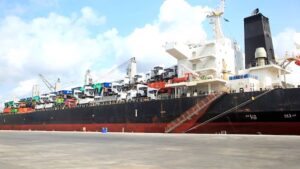
One major hurdle is the lack of a direct shipping route. Currently, most goods from the Caribbean must be transshipped through North America or Europe. This adds weeks to delivery times and significant costs to every invoice. Discussions about a direct maritime link or a hub-and-spoke model involving African ports are ongoing, but they require a level of capital investment that neither side has been willing to fully commit to yet.
Manufacturing Incentives and Local Content
For Trinidad and Tobago to export effectively, it must first produce more. The government in Port of Spain has been criticized for being slow to pivot away from the easy rents of the energy sector. To truly make an impact in India, there must be a domestic manufacturing renaissance.
This involves:
- Special Economic Zones (SEZs): Offering tax breaks specifically for firms that produce export-bound goods for the Asian market.
- R&D Grants: Funding for food scientists and chemists to adapt local products for Indian regulatory standards.
- Export Credit Insurance: Protecting small and medium-sized enterprises (SMEs) from the volatility of international payments.
If the domestic environment doesn't support the exporter, the diplomat in New Delhi is fighting a losing battle. The push for India must start in the industrial parks of Point Lisas and Arima.
The Manufacturing Reality Check
Many Trinidadian firms are simply too small to meet the volume requirements of a single Indian supermarket chain. If a buyer in Bengaluru wants ten containers of hot sauce a month, most local producers would be wiped out trying to fulfill the first order.
The solution is the formation of export consortia. By pooling resources, smaller producers can share the costs of marketing, shipping, and distribution. They can present a unified brand—"Taste of Trinidad"—rather than a dozen fragmented labels that lack the muscle to negotiate with Indian distributors. This collective approach is common among European exporters but has yet to take firm root in the Caribbean.
Intellectual Property as an Export
The music, film, and carnival industries of Trinidad and Tobago represent a massive intellectual property (IP) reservoir. India’s entertainment market is the largest on earth. While "Soca in Bollywood" sounds like a niche concept, the underlying potential for licensing rhythms, event management expertise, and festival production is enormous.
The successful export of the "Carnival model" to cities around the world proves it is a viable business. India’s burgeoning festival circuit is a natural fit for this kind of specialized entertainment service. This is not about art for art's sake; it is about the monetization of Caribbean creativity in a market that consumes content at an insatiable rate.
High-Stakes Diplomacy
The diplomatic mission in India is no longer about attending galas. It is about technical negotiation. The High Commission is increasingly functioning as a business consultancy, helping Trinidadian firms vet Indian partners and understand the intricacies of the Goods and Services Tax (GST) system.
The "Impact" Dr. Gopaul speaks of will be measured in the trade balance data five years from now. If the needle hasn't moved, it won't be for a lack of cultural warmth, but a failure of commercial coldness. Business in India is a marathon run at a sprinter's pace. It requires a physical presence, constant follow-up, and a willingness to adapt the product to the local context.
Trinidad and Tobago must decide if it wants to be a boutique provider of luxury goods or a specialized cog in India’s industrial machine. Trying to be both without a massive increase in production capacity is a recipe for mediocrity. The islands have the raw materials and the talent, but the window of opportunity is not infinite. India is signing trade deals with rivals at an unprecedented rate.
Wait too long, and the "Impact" will be nothing more than a footnote in a trade journal. The move must be made now, with capital and conviction.