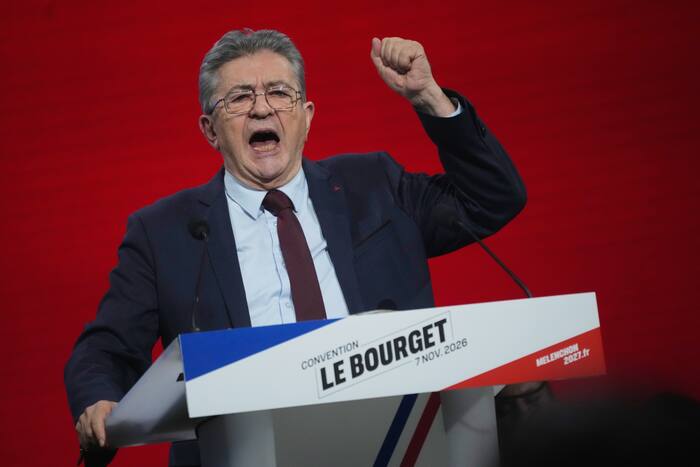
Jean-Luc Mélenchon spent five decades building a career on the promise of stopping the French far right, yet his refusal to step aside from presidential politics is the single greatest threat to keeping the Élysée Palace out of nationalist hands. By fracturing the French left and alienating moderate voters, his candidacy creates the exact arithmetic Marine Le Pen and Jordan Bardella need to win.
The irony is thick enough to choke a Parisian boulevard. For anyone who has covered French politics since the Mitterrand era, watching Mélenchon operate today feels like observing a master architect systematically dismantling the foundation of his own cathedral. He possesses an undeniable gift for oratory, a sharp instinct for working-class grievance, and a political machine in La France Insoumise (LFI) that can mobilize thousands at a moment's notice. Yet, the very traits that made him the undisputed tribune of the radical left have turned him into an electoral liability. In the two-round French presidential system, winning requires more than passion. It requires the ability to assemble a broad coalition in the runoff. Mélenchon has spent the last several years burning every bridge required to build one.
The Arithmetic of the Two-Round Trap
To understand why Mélenchon’s continued presence at the top of the ticket is so dangerous for his own side, you have to look at the cold mechanics of the Fifth Republic's electoral system. Unlike parliamentary systems where parties negotiate coalitions after the votes are counted, the French presidential race is a ruthless elimination tournament. Two candidates survive the first round. One takes everything in the second.
For decades, this system relied on an unwritten rule known as the republican front. When a far-right candidate reached the final round—as Jean-Marie Le Pen did in 2002, and his daughter Marine did in 2017 and 2022—voters from the mainstream left and center-right held their noses and voted for whoever stood against them. That wall has crumbled.
Mélenchon’s strategy rests on a dangerous gamble. He believes he can win the presidency strictly by maximizing turnout among disaffected youth, urban minorities, and the radicalized working class, bypassing the moderate center entirely. The math simply does not support this. Even in 2022, when he came agonizingly close to reaching the second round—falling short by just over 400,000 votes—polling consistently showed he would have been crushed by Emmanuel Macron in a head-to-head matchup. Today, the dynamic is even bleaker. Against a polished far-right candidate like Jordan Bardella or a normalized Marine Le Pen, Mélenchon no longer benefits from the automatic transfer of centrist votes.
Consider a hypothetical scenario based on recent polling trends. If the second round pits Mélenchon against a Rassemblement National (RN) candidate, millions of center-right and even center-left voters face a choice between two figures they view as existential threats to the Republic. Many will stay home. Worse, a measurable percentage of traditional conservative voters have signaled they would prefer the far right over LFI. Mélenchon has effectively inverted the republican front, turning himself into the candidate people vote against rather than the shield they rally behind.
From Mitterrand’s Loyalist to Populist Disruptor
You cannot grasp Mélenchon’s current posture without looking at where he started. He was not always an outsider throwing stones through the windows of the establishment. In the 1970s and 1980s, he was a disciplined soldier of the Socialist Party (PS), a protégé of François Mitterrand, and eventually a junior minister in Lionel Jospin’s government. He knew how to govern, how to compromise, and how to operate within the institutional guardrails of French democracy.
The rupture came in 2005 during the referendum on the European Constitutional Treaty. Mélenchon broke with his party to campaign for the "No" vote, realizing that the traditional social-democratic consensus was losing its grip on the French working class. Three years later, he walked out of the Socialist Party entirely to found the Left Party, modeling his approach on the left-wing populism gaining traction in Latin America.
That pivot was brilliant at the time. As the Socialist Party collapsed under the weight of François Hollande’s unpopular presidency, Mélenchon stepped into the vacuum. He recognized that the old left-right divide was being replaced by a clash between the globalized elite and the forgotten periphery. By adopting the tricolor flag alongside the red banner, and by substituting the "people versus the oligarchy" for traditional Marxist class struggle, he revitalized a dying movement.
However, the transition from institutional politician to populist disruptor carried a hidden cost. Populism requires permanent conflict. It thrives on purity tests, enemies, and absolute loyalty. Over time, Mélenchon stopped acting like a coalition builder and started behaving like a caudillo. Internal dissent within La France Insoumise was ruthlessly purged. Longtime allies—figures like Alexis Corbière, Raquel Garrido, and Clémentine Autain—were sidelined or expelled simply for questioning the leader's strategic direction. When a political movement becomes entirely subordinate to the ego and instincts of one aging man, it loses the capacity to correct course when it heads toward a cliff.
The Fracture of the New Popular Front
The tragedy of the current moment is that the French left actually proved it could win when it acted collectively. During the snap legislative elections of 2024, faced with the immediate prospect of a far-right majority in the National Assembly, the divided factions of the left scrambled together to form the New Popular Front (NFP). Socialists, Greens, Communists, and Mélenchon’s LFI agreed on a shared platform and fielded single candidates across districts. The strategy worked. It denied the Rassemblement National an absolute majority and stunned political observers across Europe.
Yet, the ink was barely dry on the election results before Mélenchon began undermining the very alliance that saved the left from irrelevance.
Instead of recognizing that the NFP succeeded precisely because it muted his polarizing persona, LFI immediately demanded the prime minister's seat for one of its own, refusing to compromise with the centrist bloc or even its own moderate partners. The coalition partners—particularly the Socialist Party under Olivier Faure and the Greens under Marine Tondelier—found themselves trapped in an impossible bind. If they break with Mélenchon, they risk splitting the left-wing vote and ensuring defeat in the first round of the presidential election. If they stay tethered to him, they absorb the toxic fallout of his rhetorical excesses.
The Rhetoric of Division
The friction is not merely tactical; it is deeply ideological and stylistic. Mélenchon’s strategy relies on what he calls "conflictualization"—the deliberate escalation of political tension to force voters to choose a side. In practice, this has led to a series of self-inflicted wounds that have horrified moderate allies and delighted right-wing media.
- Foreign Policy Ambiguity: Mélenchon’s historical skepticism toward NATO, his past reluctance to condemn authoritarian regimes aligned against the West, and his framing of the war in Ukraine have alienated pro-European social democrats.
- Secularism and Identity: France’s strict model of secularism (laïcité) is a third rail in domestic politics. By aggressively courting voters in the banlieues and abandoning the traditional left’s universalist approach to secularism, LFI has provoked fierce backlash from older, traditional left-wing voters who view the shift as an endorsement of identity politics.
- Institutional Antagonism: Repeated attacks on the police, the judiciary, and mainstream journalists have made it easy for opponents to paint LFI as an anti-system party no different in temperament from the far right.
Every time Mélenchon doubles down on a controversial statement, the Socialist mayors in provincial towns and the Green legislators in Paris have to spend weeks answering for him. They are forced to defend positions they do not hold, alienating the exact suburban and rural voters needed to win a national majority.
The Normalization of the Far Right
While the left tears itself apart over purity and leadership, the Rassemblement National has executed one of the most disciplined rebranding campaigns in modern European history. For years, Marine Le Pen worked to "de-demonize" the party founded by her father, stripping away its overt anti-Semitism and neo-fascist baggage while keeping its hardline stance on immigration and national identity intact.
Jordan Bardella, the party's young, media-savvy president, has taken that normalization a step further. Dressed in tailored suits and fluent in the language of social media, Bardella presents the far right not as a radical insurgency, but as a respectable, government-in-waiting alternative to the chaos of the Macron years and the perceived extremism of Mélenchon.
This creates a devastating visual contrast for the average French voter. On one side stands a disciplined, unified nationalist party projecting calm and order. On the other stands a fractured left dominated by a combative septuagenarian shouting into microphones about revolution and the Sixth Republic.
The far right no longer needs to convince the majority of France that its economic program is sound or that its social policies are humane. It simply needs to point at Mélenchon and ask the electorate who looks more dangerous. In 2022, Emmanuel Macron successfully used the threat of the far right to rally reluctant left-wing voters to his side. Today, the far right is using the threat of Mélenchon to rally reluctant center-right voters to theirs.
The Succession Crisis Nobody Will Resolve
Ask any senior figure in the French Socialist or Green parties privately what needs to happen for the left to win the presidency, and you will get the same answer. Mélenchon must step aside. He has run three times—in 2012, 2017, and 2022. He has lost three times. In any normal democratic party, three consecutive presidential defeats would trigger an immediate, mandatory transition to a new generation of leadership.
LFI is not a normal democratic party. It is a movement built entirely around its founder. There are no internal primaries, no party congresses where leadership is contested, and no formal mechanisms to replace Mélenchon if he decides to run a fourth time. Even his designated lieutenants—figures like Manuel Bompard, Mathilde Panot, or François Ruffin—have either remained strictly loyal to the patriarch or, in Ruffin’s case, been forced to break away entirely to pursue a more inclusive, working-class strategy.
François Ruffin represents the road not taken. A former documentary filmmaker and deputy from the deindustrialized Somme region, Ruffin understands how to speak to rural and blue-collar voters who have defected to the far right. He advocates for a left that embraces national pride, respects traditional values, and focuses relentlessly on wages and working conditions rather than cultural warfare. Yet, because Ruffin dared to suggest that Mélenchon had become an obstacle to victory, the LFI apparatus turned on him with vicious efficiency, labeling him a traitor to the cause.
Without a unified primary process to select a consensus candidate—someone capable of holding the urban base of LFI while reassuring the moderate electorate of the Socialists and Greens—the left is marching toward a suicidal split. If Mélenchon runs alongside a moderate left-wing rival like Raphaël Glucksmann or Bernard Cazeneuve, the two candidates will cannibalize each other's vote share. Neither will make it out of the first round. The second round will feature a contest between the center-right and the far right, leaving millions of left-wing voters completely unrepresented on the final ballot.
A Legacy Hanging in the Balance
History is rarely kind to politicians who overstay their welcome. François Mitterrand understood when to pass the torch, even as his health failed him in his final term. Jacques Chirac knew the limits of his political capital. Even Jean-Marie Le Pen was eventually forced out of the party he created so that his daughter could make it electable.
Jean-Luc Mélenchon stands at a similar crossroads, though he refuses to acknowledge the signpost. He sees himself as the indispensable man of French politics, the only leader with the ideological clarity and historical weight to confront the rise of fascism in Europe. That self-perception is precisely what blinds him to the reality on the ground.
You do not defeat a rising nationalist movement by shrinking your own coalition. You do not protect democratic institutions by constantly delegitimizing them. And you certainly do not stop the far right from taking power by making yourself the single best argument for their election. If Mélenchon insists on carrying the banner one last time, he will not be remembered as the tribune who fought the far right for half a century, but as the man who finally opened the doors of the Élysée Palace to let them inside.


