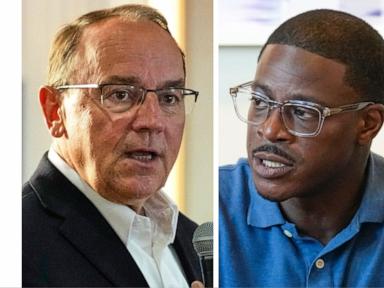
When U.S. Representative Tom Tiffany stepped onto the campaign trail for Wisconsin governor, he walked a tightrope that would make any seasoned strategist sweat. Despite holding a coveted endorsement from Donald Trump and building a reputation as a loyal ally in Washington, Tiffany tried to create breathing room between himself and the president on key issues like Iran and data centers.
In a state where razor-thin margins are the norm, Tiffany argued that voters weren't picking a president in November 2026. They were choosing a governor.
That pitch ran headfirst into political reality. Democratic nominee David Crowley, the Milwaukee County executive who succeeded retiring Gov. Tony Evers, kept tying Tiffany straight to Trump and economic frustration over inflation, gas prices, and conflict abroad. When the dust settled on Election Day, Crowley defeated Tiffany 54% to 46%, turning what many expected to be a nail-biter into a decisive eight-point win.
Why Tiffany Pulled Back From Trump on Key Issues
Anyone watching Wisconsin politics knows how tricky it is to run statewide. Five of the last seven presidential elections in the state were decided by less than a single percentage point. Trump carried Wisconsin in 2016 and 2024 after losing it in 2020, proving just how elastic the electorate can be.
Even in a place where Trump has real strength, midterm waves and voter fatigue change the math fast. Tiffany wasn't running away from his conservative roots. Far from it. He campaigned hard on freezing property taxes, banning sanctuary cities, boosting manufacturing, and painting Crowley as weak on crime.
Still, Tiffany broke with Trump on data centers and foreign entanglements involving Iran. Honestly, it makes sense why. Data centers spark fierce local pushback over power grid strain, water use, and farmland across rural and exurban Wisconsin, while voters weary of higher gas prices and overseas conflict don't always reward blind allegiance to Washington.
By telling voters they were picking a state executive rather than rendering a verdict on the White House, Tiffany tried to shrink the national headwinds hitting his campaign. That strategy works until your opponent turns every ad into a referendum on those exact headwinds.
How David Crowley United Democrats and Flipped the Script
For a while, Democrats had their own messy puzzle to solve. Gov. Tony Evers announced he wouldn't seek a third term, opening the executive mansion for the first time in sixteen years. In the primary, Crowley had to beat back a surge from democratic socialist Francesca Hong, even drawing an unusual primary backing from Evers to consolidate mainstream support.
Once the primary ended, Democrats closed ranks quickly. Hong stepped up to campaign alongside Crowley, and party leaders rallied behind a message built around everyday costs:
- Expanding Medicaid coverage to get more residents insured
- Increasing state funding for local public schools
- Lowering child care barriers for working families
Tiffany tried to counter by hammering Crowley over a Milwaukee County jail tablet program that allowed inmates to message users, forcing Crowley to suspend messaging features after sharp criticism. Tiffany also labeled Crowley as overly friendly to data center expansion.
Yet Crowley's focus on affordability and kitchen-table stability connected across metro hubs and swing areas alike. Marquette Law School polling in mid-to-late October showed Crowley moving from a tight three-point edge in September up to a 51% to 44% lead among likely voters. The polls weren't kidding. Crowley pulled in 1,440,993 votes to Tiffany's 1,227,677.
The Myth of the Guaranteed Wisconsin Nail-Biter
Conventional wisdom says every major Wisconsin race is a heart-stopping cliffhanger. Tony Evers won in 2018 by just 1.1 points against Scott Walker, and even his 3.4-point win in 2022 was called a landslide by local standards.
So plenty of pundits assumed November 2026 would come down to a few thousand ballots in Dane or Milwaukee counties. Instead, Crowley's eight-point margin gave Democrats something rare in modern Wisconsin politics: breathing room. It also handed Democrats continuous control of the governor's office for more than eight straight years for the first time in the state's 178-year history.
What went wrong for the GOP pitch? You can't easily outrun national economic anxiety and presidential alignment in a midterm cycle when voters already feel squeezed at the pump and grocery store. Creating distance on a couple of policy lines doesn't erase years of vocal alignment.
Lessons for Future Battleground Campaigns
If you follow campaign strategy, watch statehouse races, or try to read where swing voters are heading next, this race left a few clear takeaways:
- Test your national anchor early. If you rely on a polarizing national figure's endorsement in a purple state, figure out before October how you'll answer for their least popular policies.
- Pair crime and local issues with cost-of-living relief. Attacking an opponent's record on public safety or infrastructure can win news cycles, as Tiffany did with the tablet controversy, but voters still weigh household expenses heavily.
- Don't assume historical closeness guarantees a photo finish. Past razor-thin margins in Wisconsin don't put a ceiling on a wave election when turnout and persuasion break one way.
Check certified county-by-county election returns from the Wisconsin Elections Commission or track nonpartisan election data via Ballotpedia to see how rural turnout, suburban shifts, and metro margins shaped the final tally across all 72 counties.


