The Boredom of Precision
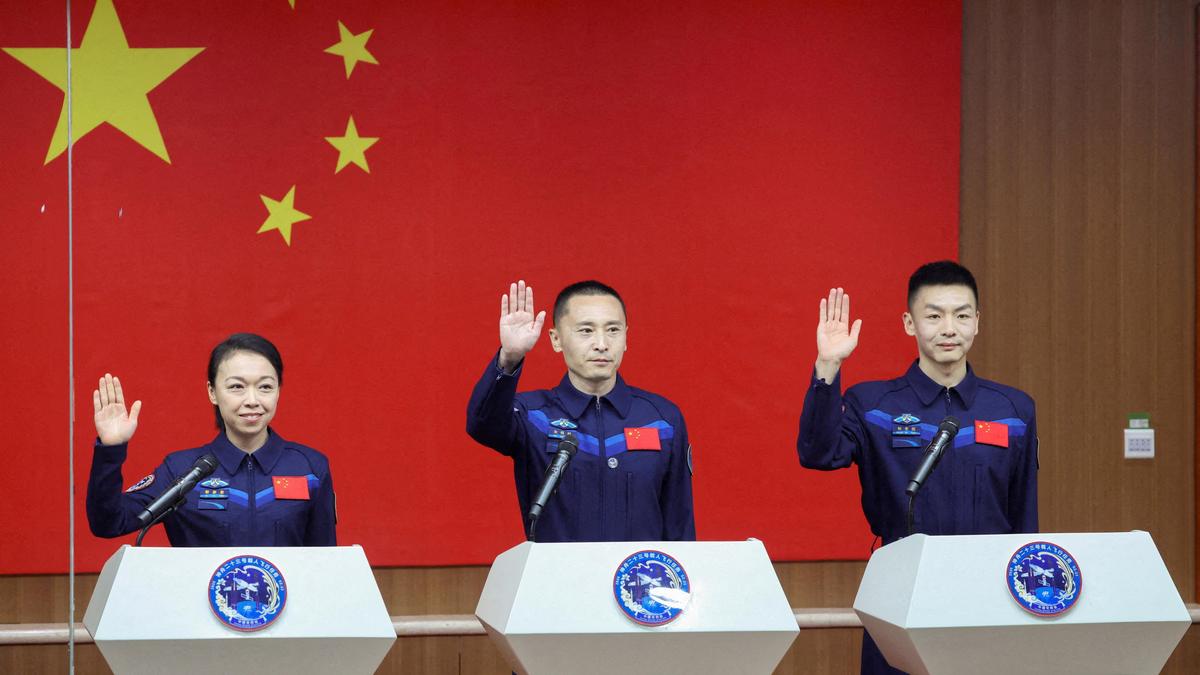
On May 24, a Long March 2F rocket will ignite at the Jiuquan Satellite Launch Center, pushing the Shenzhou 23 spacecraft and three taikonauts into low Earth orbit. The Western aerospace press will run its predictable playbook. They will track the orbital insertion parameters, note the duration of the crew handover at the Tiangong space station, and marvel at the "rapid rise" of China’s space capabilities.
It is lazy journalism. It misses the point entirely. For a more detailed analysis into this area, we suggest: this related article.
The upcoming Shenzhou 23 launch is not a breakthrough. It is something far more dangerous to Western aerospace dominance: it is routine. While NASA scrambles to manage commercial crew delays, leaking spacesuits, and the budgetary black hole of the Artemis program, Beijing has quietly turned human spaceflight into an assembly line.
The real story of Shenzhou 23 isn’t the launch itself. It is the structural, institutional advantage of a space program that values iterative monotony over political theater. To get more context on the matter, detailed coverage is available at TechCrunch.
The Myth of the "Space Race"
Mainstream coverage frames every Tiangong mission through the lens of a 1960s-style space race. Commentators love to debate whether China is "catching up" to the International Space Station (ISS). This premise is fundamentally flawed.
You cannot race an opponent who is playing a completely different game.
+------------------+-----------------------------+-----------------------------+
| Feature          | International Space Station | Tiangong Space Station      |
+------------------+-----------------------------+-----------------------------+
| Philosophy       | Maximum Scientific Scope    | Lean Logistics & Autonomy   |
| Maintenance Load | High (Aging infrastructure) | Low (Modular, standardized) |
| Supply Chain     | Fragmented (Multi-nation)   | Vertically Integrated       |
+------------------+-----------------------------+-----------------------------+
The ISS is a marvel of engineering, but it is also a diplomatic compromise wrapped in a logistical nightmare. It requires constant, expensive maintenance just to keep the lights on. I have watched Western aerospace giants burn through hundreds of millions of dollars trying to upgrade legacy systems on the ISS, tangled in the red tape of international treaties and shifting congressional funding.
China avoided this trap. Tiangong is intentionally smaller than the ISS. It is not designed to be a sprawling orbital science bazaar. It is designed to be a highly efficient, modular outpost that one nation can supply, maintain, and expand without needing permission from a volatile coalition of partners.
When Shenzhou 23 docks, it won't be breaking new scientific ground. It will be executing a standardized logistics protocol. That predictability is what should terrify Western planners, not the prospect of Chinese boots on the Moon.
Dismantling the "Copycat" Narrative
Walk into any legacy defense contractor's boardroom, and you will still hear the comforting lie that China only progresses by copying Soviet and American designs. They point to the Shenzhou’s passing resemblance to the Russian Soyuz capsule as proof.
This is a cope. It is an expensive, arrogant misunderstanding of iterative engineering.
Yes, the early Shenzhou architecture borrowed heavily from the Soyuz. But while Russia left the Soyuz largely unchanged for decades, China used that baseline to build a completely independent supply chain. The internal avionics, environmental control systems, and docking mechanisms of Shenzhou 23 are generations ahead of anything flying out of Baikonur.
Consider the automated docking sequence. Where older systems relied on heavy human intervention and radar systems prone to interference, China's current architecture utilizes advanced optical and LiDAR guidance systems that complete the rendezvous profile in a fraction of the time, consuming far less fuel.
They did not reinvent the wheel; they optimized the manufacturing pipeline. While the West focused on designing revolutionary, reusable starships that dominate social media feeds but struggle with regulatory and technical bottlenecks, China perfected the boring art of building reliable, disposable hardware at scale.
The Cost of the PR Space Program
The Western approach to space has become dangerously tethered to public relations. Every NASA milestone must be wrapped in a narrative of cosmic inspiration to justify its budget to taxpayers. The result is a system that prioritizes flashy, high-risk leaps over steady infrastructure building.
Look at the numbers. The United States still spends significantly more on space than China. But where does that money go? It goes to cost-plus contracts that incentivize legacy aerospace firms to drag out development timelines. It goes to managing the competing political interests of states that demand rocket components be manufactured in their specific districts.
China’s space program operates under no such constraints. The China Manned Space Agency (CMSA) operates with a unified command structure and a guaranteed multi-decade horizon. They do not have to worry about a change in administration canceling their program every four years.
This structural stability allows them to execute a relentless launch cadence. Shenzhou 23 is part of a rigid, twice-yearly crew rotation schedule that functions with the regularity of a Swiss train line.
The False Promise of Total Commercialization
The counter-argument from Western tech optimists is always the same: Silicon Valley will save us. They point to the rise of commercial launch providers as the ultimate shield against state-run space programs.
This view ignores the brutal reality of orbital mechanics and economics.
Commercial space flight has undoubtedly lowered the cost to low Earth orbit, but commercial companies are still businesses. They are driven by quarterly revenue, launch contracts, and satellite internet deployment. They are not built to sustain long-term, non-commercial orbital infrastructure unless the government writes the checks.
When the ISS is decommissioned at the end of the decade, the West plans to rely on commercial space stations to fill the void. It is a massive gamble. Building and maintaining a habitat in microgravity is a notoriously difficult way to turn a profit. If those commercial stations fail to materialize or prove economically unviable, Tiangong will be the only fully operational space station left in low Earth orbit.
At that point, international science will look to Beijing, not Washington.
The Actionable Reality
Stop analyzing Chinese launches for signs of technological wizardry. You won’t find any. You will find standard aluminum alloys, proven hypergolic propellants, and predictable orbital trajectories.
Instead, look at the cadence. Look at the factory floors.
If Western aerospace wants to maintain its lead, it must stop hunting for the next technological silver bullet and start fixing its broken procurement and manufacturing systems. We need fewer press releases about conceptual starships and more focus on the unglamorous work of streamlining supply chains, slashing regulatory overhead, and building hardware that launches on time, every time.
The Shenzhou 23 mission is a warning disguised as a routine event. The threat isn't that China is doing something impossible. The threat is that they are doing something ordinary, and doing it without stopping.