The heavy oak doors of a federal courthouse do not just keep the weather out. They act as a physical manifestation of a boundary line, a concrete division between two entirely different universes of law. On one side sits the sprawling machinery of the federal judiciary, a system designed with sweeping mandates, lifetime-appointed judges, and a macro-level view of constitutional questions. On the other side sits the local municipal or state court—dusty, immediate, crowded with local DAs, state statutes, and the gritty, localized friction of day-to-day prosecution.
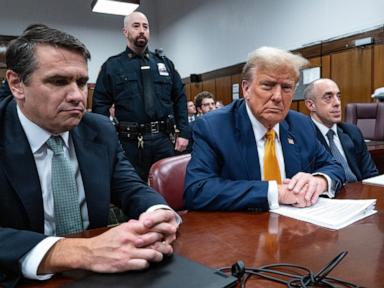
For months, an invisible war had been waged over where a single man’s legal gravity would pull him. The defense wanted the altitude of the federal system. They wanted the air to thin out. They wanted the stage to expand. But the gavel has fallen downward, not upward. A federal judge looked at the petition to transplant a state-level criminal hush money prosecution into federal chambers and firmly closed the door. The case stays put.
To understand why this matters, you have to step away from the cable news tickers and think about how a courtroom actually smells. It smells like old paper, floor wax, and floor-to-ceiling anxiety. Picture a hypothetical defense attorney—let us call him Marcus, though he represents a composite of seasoned litigators who have walked these marble corridors for decades. Marcus knows that jurisdiction is not merely a matter of geography; it is a matter of weather. State court is a thunderstorm. Federal court is a climate.
When you are fighting charges brought by a local district attorney, you are playing a home game for the local electorate. The jurors walk the same streets, buy the same morning coffee, and hold deeply entrenched opinions forged by local media markets. But federal court offers a broader jury pool, a different set of procedural protections, and crucially, the potential defense of federal supremacy—the idea that a state cannot prosecute a federal official for actions intertwined with their federal duties.
That was the anchor of the strategy. The legal team argued that the actions in question—payments made in the waning days of an election cycle—were tied to the high-stakes theater of the presidency. Therefore, the argument went, the federal umbrella should shield the defendant from state-level penalties. It was a bold, structural chess move.
The judge disagreed.
Think about what happens when a court rejects a removal petition. It is a moment of profound gravity. The legal machinery grinding away in Manhattan does not pause, does not reset, and does not care about the national spotlight. It simply grinds on. The state judge, state prosecutors, and state rules remain the undisputed masters of the domain.
This refusal is not merely procedural housekeeping. It is a statement on the limits of executive shielding. By keeping the trial anchored in the state system, the judiciary drew a sharp line around where local accountability begins and ends. It tells every politician, past and present, that local laws written by state legislatures carry a distinct, inescapable weight. You cannot simply appeal to a higher, broader authority to wish away the jurisdiction of a local prosecutor.
There is a quiet tragedy in the relentless churn of the American legal system. We treat these monumental rulings like sports scores, flashing them across screens for twenty minutes before moving on to the next crisis. But beneath the headlines lies a fundamental tension about who holds the power to judge power.
Consider the sheer exhaustion of the logistics. Security perimeters, road closures, press scrums, and the endless filing of motions that read like academic treatises on constitutional law. Every single day, bailiffs unlock doors and walk defendants past a gauntlet of cameras. The psychological toll on the participants is immense. Yet, the system demands that we pretend it is all business as usual. It never is.
When the federal court declined to step in, it preserved the traditional boundaries of federalism. The Founding Fathers, arguing in the Federalist Papers about the delicate balance between state and federal authority, could scarcely have imagined a scenario quite like this one. Yet, the architecture they built held. State crimes, tried in state courts, judged by state citizens.
The defense will find other avenues, other motions, other appellate courts to knock upon. That is the nature of modern high-stakes litigation. It never truly ends until the final appeal is exhausted and the gavel strikes for the last time. But for now, the terrain is fixed. The trial remains where it started, bound to the geography of local law, waiting for the next chapter to unfold under the unforgiving lights of a state courtroom.
The flashbulbs will still blind the sidewalk outside. The anchors will still lean into their microphones to parse every whispered objection. But inside the well of the court, the reality is much simpler, and much heavier. The law has spoken, and it has told everyone in the room that some lines cannot be crossed, and some boundaries cannot be moved.