At 11:58 PM on a humid Wednesday night in Bengaluru, Aarav—a hypothetical composite of thousands of twenty-something software engineers staring at their living room televisions across India—is watching a tiny digital clock tick backward. His PlayStation 5 hums softly beneath the screen. Two hundred and twelve gigabytes of pre-loaded code sit encrypted on his solid-state drive, waiting for a single cryptographic key to turn over from Rockstar Games.
Wait.
Think about what thirteen years actually feels like in human time. When Grand Theft Auto V first arrived in September 2013, Aarav was fourteen years old, begging his parents for an allowance outside a cramped electronics shop in Koramangala while smartphones barely had front-facing cameras and 4G internet was a rumor. Back then, playing an American crime satire in India felt like peering through frosted glass at a party happening on another planet—late shipments, region-locked discs, grey-market markups, and sluggish broadband connections that turned a midnight launch into a three-day ordeal.
Now, at 12:00 AM IST on Thursday, November 19, 2026, the glass shatters. While players in New York and London are still stuck in their Wednesday afternoon commutes, millions of living rooms from Mumbai to Delhi unlock the gates to Vice City and the sun-drenched, chaotic state of Leonida at the exact stroke of local midnight.
The Weight of a Thirteen-Year Pause
Most news reports treat the arrival of Grand Theft Auto VI as a spreadsheet exercise: an estimated 14.94 million pre-orders, roughly $1.45 billion in pre-launch revenue, a standard price tag hovering at $79.99—or roughly ₹6,700 to ₹7,000 on local storefronts—and a staggering 212-gigabyte storage footprint. Numbers are neat. Numbers don't sweat at midnight.
To understand why an entire generation of Indian players—alongside a few daring tech startups in Bengaluru and Gurugram that actually declared November 19 a company holiday—treated this release like a national festival, you have to understand what waiting does to anticipation. Thirteen years is longer than the entire lifespan of the PlayStation 4. It is long enough for teenagers who once stole virtual cars on borrowed consoles to grow up, survive a global pandemic, land jobs, buy their own PlayStation 5 or Xbox Series X|S hardware, and finally afford the game without asking anyone's permission.
I remember sitting on a bedroom floor in 2013, staring at a scratched dual-layer DVD installation bar that refused to budge past forty-two percent while a ceiling fan clicked rhythmically overhead. Back then, gaming in India was largely treated as a guilty distraction, something you hid behind closed doors before board exams. Nobody built careers around streaming. Nobody talked about fiber-optic bandwidth or solid-state read speeds over dinner.
Contrast that memory with the ten-day countdown leading up to November 19, 2026. When Rockstar opened digital pre-loads on November 10—at midnight local time for PlayStation 5 owners and 5:30 AM IST for Xbox Series X|S players—telecom networks across Indian metros registered noticeable midnight spikes as gigabytes poured down fiber lines. Even buyers who opted for physical boxed editions shipped from retailers on November 12 discovered a telling reality of modern media: inside the plastic case sat no shiny disc, only a slip of paper carrying a download code.
Why Console Exclusivity Hurts Right Now
Not everyone got an invitation to the midnight party, though, and if you listen closely to gaming forums in India, beneath the euphoria lies a quiet, sharp frustration.
The PC wall.
For decades, India has been a PC-first gaming market. Millions of students and young professionals built custom desktops or bought mid-range gaming laptops for work and study, relying on them as their primary window into high-end titles. Yet when Grand Theft Auto VI went live on November 19, 2026, it arrived strictly on PlayStation 5, PS5 Pro, and Xbox Series X|S. Rockstar Games has offered zero confirmed release date for a PC version.
Picture a college student in Pune—let us call her Meera, another composite of very real voices flooding Reddit and Discord this week—who spent two years saving internship stipends to build a capable PC rig, only to watch her console-owning friends stream live gameplay from Vice City while her own screen stays dark. Rockstar's staggered release strategy is nothing new; historically, the studio treats console hardware as a controlled laboratory, squeezing every ounce of performance out of uniform chips before tackling the messy universe of varying PC graphics cards months or years later.
Think of it like a chef perfecting a signature dish in a single, calibrated kitchen before publishing the recipe for home cooks with wildly different ovens. Logically, it makes sense. Emotionally, when your social feeds are flooded with clips of Lucia and Jason tearing down neon-lit Leonida highways, logic offers cold comfort.
Inside the Machine of Modern Satire
Once the clock strikes midnight and the opening frames load, the immediate shock isn't just the visual fidelity—it is how uncomfortably close the mirror feels.
When GTA V mocked social media in 2013 through a fictional network called Lifeinvader, smartphones were still polite tools we checked between real-life conversations. Thirteen years later, our lives happen inside vertical video feeds. Rockstar’s designers clearly spent the last decade watching how algorithmic outrage, clout-chasing live streamers, and viral absurdity colonized human attention.
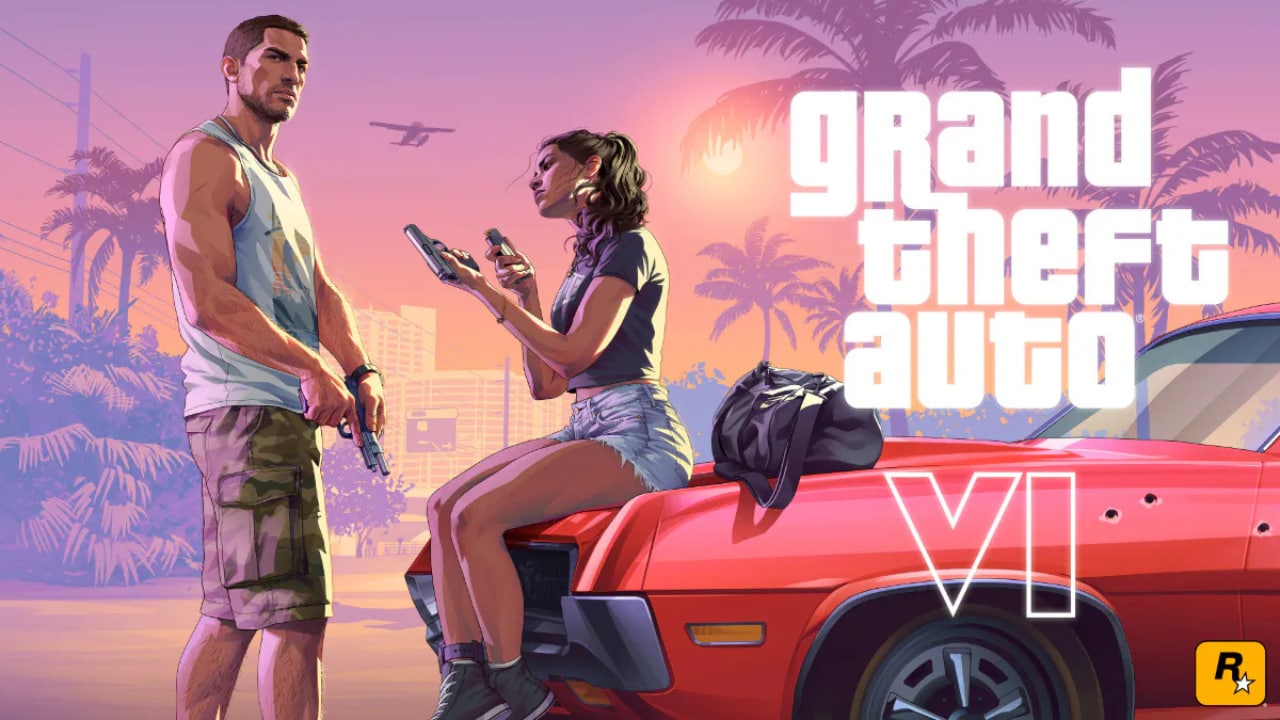
In GTA VI, the phone in Lucia’s or Jason’s hand isn't just a menu for calling a cab or triggering a mission; it is a living, breathing feed of in-world short-form videos, chaotic local broadcasts, and live-streamed delusions. You can even slip on virtual earbuds and listen to Vice City’s radio stations while walking down the beach on foot. It is a funny, slightly unsettling nesting doll: millions of real-world creators live-streaming themselves playing a game that mercilessly parodies people who live-stream their own bad decisions.
And here is where the time-zone geography of a global launch creates its own strange magic. Because Rockstar rolled out the unlock at midnight local time across regions rather than waiting for a single American clock, the sun—or rather, the digital moon—moved westward across the globe. Players in Auckland, Sydney, and Tokyo stepped onto the streets of Vice City first. By the time 12:00 AM IST hit New Delhi, Bengaluru, and Chennai, Indian players were diving in hours ahead of Europe and nearly half a day before Los Angeles. For once, Indian fans weren't dodging spoilers posted by Western audiences; they were the ones sending first impressions out into the world.
What Comes After the Midnight Rush
Still, honesty demands admitting a strange vulnerability that always follows a decade-long wait. When a cultural event is inflated for thirteen years by leaked development clips, delay announcements, and breathless speculation, no piece of software—no matter how brilliantly engineered—can entirely match the mythological creature living inside our heads.
Storage drives had to be gutted just to make room for those 212 gigabytes. Families had to negotiate living-room television time. Consoles had to be dusted off, updated, and cleared of older titles. There is a very real fatigue that sits right alongside the thrill, a quiet question lingering behind the hype: Can a video game ever truly justify thirteen years of our lives?
Maybe that is the wrong question. Nobody actually spent thirteen years staring at a calendar. We grew up. We changed cities, switched jobs, lost touch with old friends, and made new ones. Games like Grand Theft Auto rarely matter because of their polygon counts or their billion-dollar opening weekends. They matter because they act as accidental time capsules—shared coordinates where people scattered across time zones and adulthood can meet for a few hours after midnight and remember what it felt like to be completely, unironically excited.
At 12:04 AM in Bengaluru, the decryption bar hits one hundred percent. The room goes dark except for the electric pink and ocean blue glow of Vice City washing over Aarav’s face, and somewhere across the city, a hundred thousand thumbs press forward on a left analog stick at the exact same second.