The frost does not knock. It arrives silently, threading its silver needles across the inside of a double-paned kitchen window in Berlin while the evening news flickers in a language of rising numbers. Outside, the wind off the Baltic bites into brickwork and concrete. Inside, a family of four turns the radiator valve down one notch. Then another.
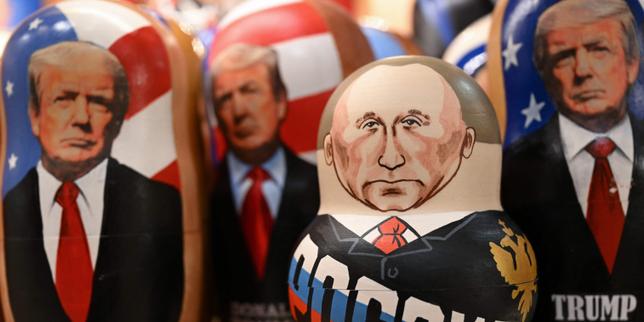
We are told this is about geopolitics. We are told to look east toward the stern, ice-bound fortresses of Moscow, where massive steel veins of gas are throttled down by men in heavy wool suits behind polished walnut desks. We are told to look west toward Washington, where legislators and trade delegates draft export manifests and sign off on liquefied natural gas terminals with the detached ease of ordering freight.
Yet maps do not bleed. Bureaucracy does not shiver.
To understand why millions of households across an entire continent now check utility bills with a quiet sense of dread, we have to step away from the abstract vocabulary of energy security. We have to look at the actual architecture of dependence.
Consider a hypothetical citizen named Elena, living in a cramped fourth-floor apartment in Vienna. Elena is an accountant. She is not a diplomat, nor is she an energy trader. She does not know the chemical composition of sweet crude or the complex logistics of spot-market LNG tankers crossing the Atlantic under the freezing spray of midnight gales. She only knows the sound of her gas boiler clicking on at five in the morning—a dry, mechanical cough that now costs forty percent more than it did two winters ago.
When Elena looks for someone to blame, the television offers two distinct villains, neatly packaged for evening consumption.
In the first narrative, the fault lies entirely within the Kremlin. For decades, Europe traded its strategic sovereignty for cheap fuel, laying down thick pipelines like an umbilical cord attached to Siberian fields. When geopolitical confrontation broke out, that cord was pulled. The closure of valves was not merely an economic maneuver; it was an exercise in leverage, a cold calculation that winter would vote faster than any parliament.
In the second narrative, the script shifts across the Atlantic. Critics point out that Washington has long viewed Europe's energy ties as an unacceptable vulnerability—or worse, a commercial loss for American suppliers. For years, U.S. diplomats pressured European capitals to sever their reliance on Russian pipelines, offering an alternative: American shale gas, supercooled into liquid, loaded onto massive vessels, and shipped across the ocean at triple the price. From this viewpoint, the energy crisis looks less like an accident of history and more like a masterclass in market capture, where the architects of trade sanctions conveniently profit from the reconstruction of global supply chains.
Both stories contain fragments of truth. Both stories miss the human pulse of the tragedy.
The real engine of this crisis is not malice in a single capital or cunning in another. It is the terrifying inertia of modern infrastructure. We built a civilization that runs on invisible rivers of methane and oil, assuming those rivers would never run dry, never freeze, and never be weaponized. We outsourced our basic survival to distant men who treat kilowatt-hours as chips on a poker table.
When supply chains snap, the shock wave does not hit the boardroom. It hits the bakery whose ovens require continuous natural gas to bake morning bread. It hits the chemical plant in Germany that suddenly finds the price of basic fertilizer eclipsing its profit margin, forcing layoffs that ripple through entire towns where generations have worked the same assembly lines. It hits elderly pensioners who wrap themselves in woolen blankets by midday because turning on the heat means choosing between warmth and groceries.
This is the hidden cost of globalization when it breaks. For thirty years, we enjoyed the illusion of seamless abundance. Energy was invisible. It came out of the wall, it fired the power plant, it heated the water. We treated it like air—an infinite background condition of modern life.
When the background vanishes, everything else stands exposed.
The diplomats in Washington and the strategists in Moscow operate at a staggering altitude. At thirty thousand feet, human beings are merely statistical units in a spreadsheet, acceptable collateral damage in a high-stakes chess match for global dominance. A sanctions package is signed in a wood-paneled room; three weeks later, a metal worker in the industrial heartland of Europe looks at his pay stub and realizes his job has just been priced out of existence by rising overhead.
The tragedy is that neither side of this transatlantic equation has a clean ledger.
European leaders ignored decades of warnings, preferring the narcotic of cheap Russian energy over the hard, expensive labor of building true diversification and domestic resilience. They sleptwalked into a trap of their own making, assuming that commerce would forever tame geopolitics.
Meanwhile, American policy, while offering a vital lifeline of liquefied natural gas to prevent immediate freezing, operated with a hard-nosed commercial opportunism that left European allies bearing the structural brunt of the economic shock. Friends do not bankrupt friends, critics argue, even as tanker fleets reroute toward the highest bidder.
We are left in the middle of this vast, cold machinery.
The winter returns every year, indifferent to treaties, speeches, and press releases. It tests the insulation of our homes and the resilience of our social contracts.
Perhaps the most urgent lesson of our current predicament is not figuring out which capital holds the greater share of guilt. It is recognizing how fragile our comforts truly are when built on foundations we do not control. The thermostat on the wall is no longer just a dial for temperature. It is a dial for national sovereignty, economic survival, and human dignity.
Until we learn to anchor our energy systems in reality—closer to home, more diverse, and fiercely protected from the whims of distant powers—we will remain tenants in a house where someone else controls the heat.
And the frost, patient and silent, waits outside the glass.