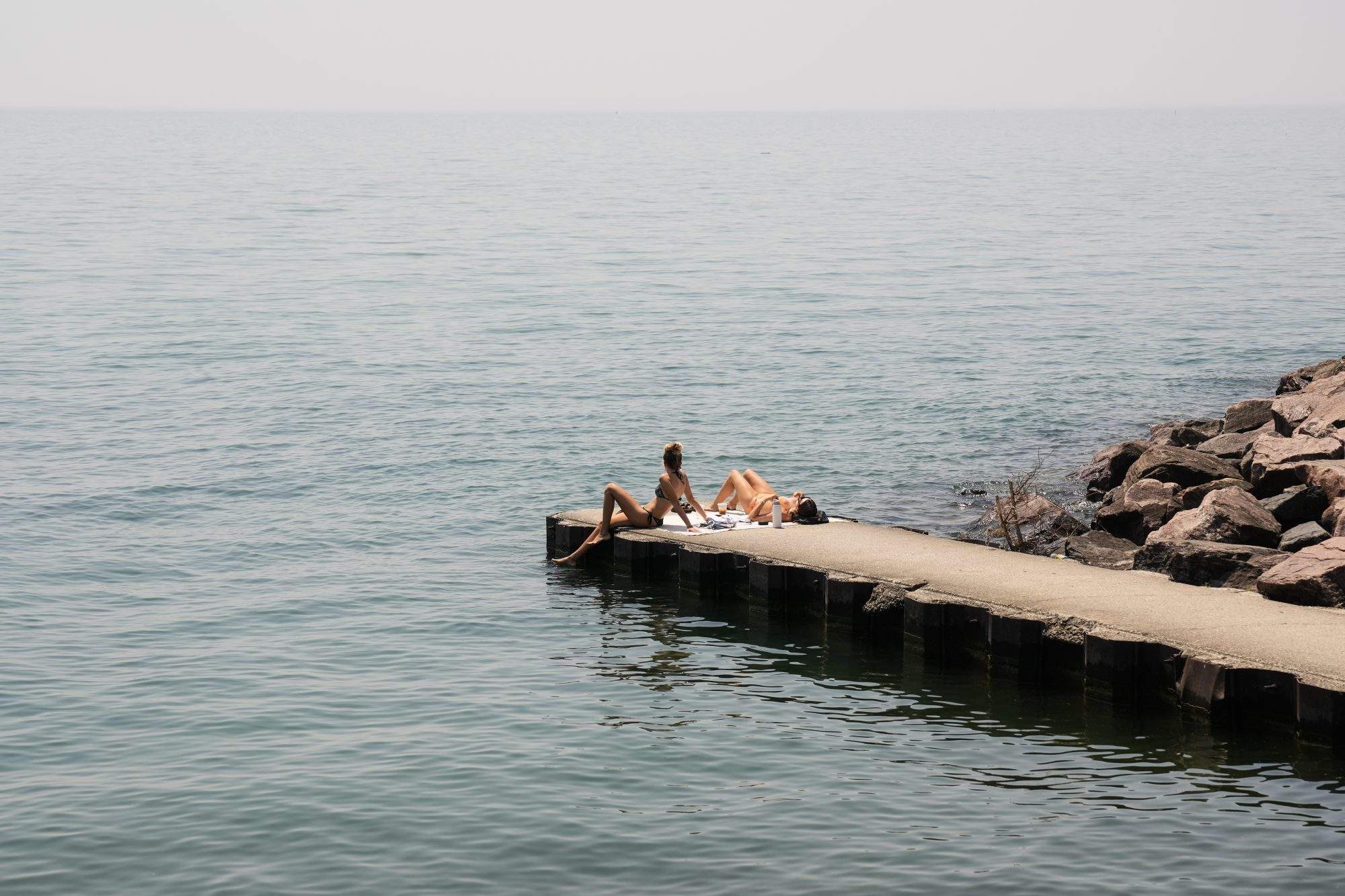
The operational capacity of a modern metropolis is fundamentally bound by its thermal limits. When Environment and Climate Change Canada (ECCC) issues an orange-level heat warning for the Greater Toronto Area, it is not merely signaling uncomfortable weather; it is identifying a systemic hazard that threatens municipal infrastructure, public health systems, and energy grids simultaneously. An orange designation indicates a prolonged, high-intensity thermal event lasting three or more days, projected to cause significant, widespread disruption.
To evaluate the city’s defensive posture during this event, we must look past superficial emergency declarations and isolate the mechanical, physiological, and logistical bottlenecks that govern urban crisis management.
The Thermodynamic Bottleneck: Why Overnight Minimums Dictate Mortality
Public discussions regarding heat waves focus almost exclusively on peak daytime maximums. In Toronto's current activation, temperatures are modeled to reach 31°C to 34°C, scaling to 37°C in concentrated urban pockets. However, from a physiological and epidemiological standpoint, the primary driver of heat-induced mortality is the overnight minimum temperature.
The human body relies on a thermal gradient to shed heat via sweat evaporation and vasodilation. When ambient temperatures drop significantly below core body temperature during nocturnal hours, the cardiovascular system recovers from daytime thermal stress. The current ECCC orange alert highlights a critical failure in this recovery cycle: overnight lows are projected to hover between 21°C and 25°C.
This lack of nocturnal cooling creates a compounding physiological debt. When ambient nighttime temperatures stay above 20°C, the thermal gradient narrows. The body must maintain an elevated heart rate and sustained vasodilation throughout the night. For vulnerable demographics—specifically older adults, individuals with pre-existing cardiovascular conditions, and those experiencing homelessness—this uninterrupted exertion triggers acute cardiovascular failure or heat stroke before peak daytime temperatures return.
The Tri-Pillar Heat Relief Architecture
The City of Toronto’s Heat Relief Strategy operates as a distributed network designed to lower the ambient temperature of at-risk populations. The efficacy of this infrastructure relies on three core operational pillars:
Hydration Logistics
The city has deployed four mobile water trailers equipped with hydration fountains and bottle-filling stations at key transit nodes: Nathan Phillips Square, Mel Lastman Square, the East York Civic Centre, and Barbara Hall Park. These assets are supplemented by a baseline network of over 700 functioning park water fountains. This infrastructure aims to counteract the increased rate of fluid loss through respiration and perspiration, which can escalate from a standard 100 mL per hour to over 1,000 mL per hour under intense thermal loads.
Thermal Refuges
The network features more than 500 designated indoor cooling spaces, including public libraries, community centers, and pools. To accommodate the extended duration of the orange alert, major civic hubs—including Metro Hall and the Scarborough, Etobicoke, York, and East York Civic Centres—have extended operational hours to 9:30 p.m.
Targeted Outreach and Shell Spaces
The city has added approximately 100 emergency spaces to its shelter system and established a dedicated 24-hour cooling site at 136 Spadina Road. Street outreach teams are tasked with navigating the urban core to distribute water and coordinate the voluntary transport of unhoused individuals into these conditioned environments.
Systemic Vulnerabilities and Structural Latency
While the multi-pillar response strategy appears comprehensive on paper, an analytical stress test reveals structural bottlenecks that limit its real-world execution.
The first limitation lies in the geographical and economic friction of access. A cool space is structurally useless if a vulnerable individual cannot safely travel to it. The transit network itself becomes a vulnerability during an orange-level event. High ambient temperatures degrade track infrastructure through thermal expansion, inducing localized travel delays. Furthermore, the physical act of walking to a cooling center across an urban heat island exposes high-risk populations to the exact thermal stress the strategy seeks to avoid.
The second limitation involves the systemic policy conflict within multi-unit residential housing. Toronto currently lacks a universal maximum temperature bylaw for rental units. While landlords are legally mandated to maintain minimum heating thresholds in winter, there is no symmetrical requirement to cap indoor summer temperatures. In high-rise concrete apartment blocks lacking central HVAC infrastructure, internal units function as thermal batteries, absorbing solar radiation during the day and trapping heat overnight. This transforms private dwellings into high-risk environments, leaving low-income tenants reliant on suboptimal mitigation tools like portable fans, which fail to cool the body effectively once ambient indoor temperatures cross 35°C.
The third bottleneck is the compounding stress on critical infrastructure. ECCC warns that orange alerts frequently correlate with localized water shortages, brownouts, and power outages. The surge in air conditioning demand creates a peak load scenario for the electrical grid. If a localized transformer failure occurs during a multi-day heat event with 24°C overnight lows, the cooling centers themselves lose operational viability unless backed up by industrial-grade generator systems.
Operational Directives for Municipal Mitigation
To transition from a reactive emergency stance to a resilient urban defense framework, municipal authorities must optimize resource allocation based on predictive risk modeling.
First, the city must implement high-frequency, targeted welfare checks focused specifically on isolated seniors and high-density, unconditioned rental properties. Relying on voluntary public compliance or passive outreach is insufficient when heat-induced cognitive decline impairs an individual's ability to recognize symptoms of heat stroke.
Second, the geographic deployment of mobile cooling assets must be dynamically adapted to match concurrent major events. The presence of the FIFA World Cup 2026 matches and Canada Day celebrations in Toronto introduces unprecedented density to the urban core. The mobile water trailer at Nathan Phillips Square must remain fixed to manage these massive crowds, while secondary assets must be rapidly repositioned based on real-time micro-climate data indicating where the urban heat island effect is most severe. Emergency management teams must treat high-density fan zones and outdoor venues as high-risk vectors for mass heat exhaustion, necessitating proactive medical triage positioning alongside hydration assets.